Dinosaur Bones Found In Africa

BSC Insights Admin
September 30, 2026
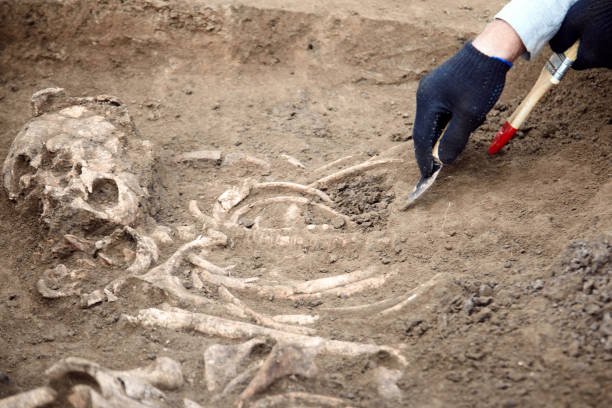
Yes, an incredible array of dinosaur bones have been found in Africa, making the continent a vital epicenter for understanding prehistoric life on Earth. These fossil discoveries span various geological periods, from the Triassic to the Cretaceous, providing paleontologists with crucial insights into the evolution, diversity, and global distribution of dinosaurs before, during, and after the breakup of the supercontinent Gondwana. Africa's rich paleontological record continues to reveal astonishing creatures, from colossal long-necked sauropods to formidable predatory theropods, shedding light on ancient ecosystems and the continent's unique role in shaping Earth's biological history.
The Gondwanan Legacy: Africa's Prehistoric Past
Africa's geological history is inextricably linked to the supercontinent Gondwana, which began to fragment hundreds of millions of years ago. This ancient landmass, comprising present-day Africa, South America, Antarctica, Australia, Madagascar, and the Indian subcontinent, played a significant role in the initial distribution and subsequent diversification of dinosaur species. The geological formations across the African continent preserve an unparalleled chronicle of this past, with sediments laid down in ancient riverbeds, lakes, and coastal areas becoming perfect traps for the fossilization of prehistoric flora and fauna.
A Continent Adrift: Tectonic Plates and Fossil Preservation
The slow but relentless movement of tectonic plates has profoundly influenced where dinosaur fossils are found today. As Gondwana broke apart, Africa became an isolated landmass for millions of years, leading to the evolution of unique dinosaur lineages. The varied geological conditions across different regions of Africa, from arid deserts to ancient rift valleys, offered diverse environments conducive to fossil preservation. Areas like the vast Sahara Desert, once lush and fertile, and the ancient floodplains of Southern Africa, are now arid landscapes that expose long-buried fossil layers, making them prime hunting grounds for paleontologists. The processes of burial, mineralization, and erosion have worked in concert to bring these ancient treasures to the surface, offering scientists a window into worlds long past.
Early Discoveries and Pioneering Paleontologists
The exploration of Africa's dinosaur legacy began in earnest during the late 19th and early 20th centuries. Early expeditions, often led by European researchers, brought the first significant dinosaur fossils to international attention. One of the most famous early sites is the Tendaguru Formation in Tanzania, where massive dinosaur bones were unearthed by German expeditions between 1909 and 1912. These initial findings revealed some of the largest land animals to ever walk the Earth, including the colossal sauropod Giraffatitan (formerly identified as Brachiosaurus brancai) and the armored stegosaur Kentrosaurus. These pioneering efforts laid the groundwork for modern paleontology on the continent, sparking global interest in African dinosaur discoveries and highlighting the continent's immense scientific potential.
Major Dinosaur Discoveries Across African Regions
Africa is a continent of immense geological and ecological diversity, and its dinosaur fossil record reflects this complexity. Discoveries have been made across various regions, each offering unique insights into the types of dinosaurs that roamed particular environments during different epochs.
North Africa: Giants of the Sahara
The vast expanses of North Africa, particularly the Sahara Desert regions of Egypt, Morocco, Algeria, and Niger, have yielded some of the most spectacular dinosaur discoveries. These finds include some of the largest predatory dinosaurs ever known. The Kem Kem Beds in Morocco, for instance, are renowned for their fossils from the Late Cretaceous period.
- Spinosaurus: Perhaps the most famous African dinosaur, Spinosaurus aegyptiacus, discovered in Egypt and later extensively in Morocco, was a colossal semi-aquatic theropod. Distinguished by its enormous sail-like structure on its back and a crocodile-like snout, it was likely the largest carnivorous dinosaur, even bigger than T-Rex. Its adaptations for a life spent partially in water, including dense bones and paddle-like tail, make it a truly unique find.
- Carcharodontosaurus: Rivaling Spinosaurus in size, Carcharodontosaurus saharicus was another apex predator of North Africa, found in Morocco and Niger. Its name, meaning "shark-toothed lizard," aptly describes its serrated, blade-like teeth, perfectly suited for slicing through flesh.
- Ouranosaurus: Discovered in Niger, Ouranosaurus nigeriensis was a distinctive herbivore with a large, sail-like structure on its back, similar to Spinosaurus but likely serving a different purpose, possibly for display or thermoregulation.
- Aegyptosaurus: A medium-sized sauropod, Aegyptosaurus baharijensis, found in Egypt, contributes to our understanding of the plant-eating giants of the region.
Southern Africa: Cradle of Ancient Life
Southern Africa boasts a remarkably rich fossil record, particularly from the Triassic and Early Jurassic periods, making it a critical region for understanding the early evolution of dinosaurs. The Karoo Basin in South Africa and Lesotho is especially prolific.
- Massospondylus: One of the most common and well-studied early sauropodomorphs, Massospondylus carinatus, has been found in abundance in South Africa and Lesotho. Its fossils, including eggs and hatchlings, provide invaluable insights into early dinosaur development and behavior.
- Heterodontosaurus: This small, agile ornithischian dinosaur, Heterodontosaurus tucki, found in South Africa, is notable for its unique dental battery featuring different types of teeth, suggesting an omnivorous diet.
- Lesothosaurus: A small, bipedal herbivore from Lesotho, Lesothosaurus diagnosticus, represents one of the earliest ornithischian dinosaurs.
- Euskelosaurus: Another large sauropodomorph from South Africa and Zimbabwe, Euskelosaurus browni, highlights the diversity of early long-necked dinosaurs in the region.
East Africa: Rift Valley Revelations
East Africa, particularly the regions around the Great Rift Valley, offers significant insights into the Jurassic period. The Tendaguru Formation in Tanzania is often dubbed "Africa's Jurassic Park" due to its remarkable density and diversity of large dinosaur fossils.
- Giraffatitan: As mentioned, Giraffatitan brancai, a colossal sauropod from Tanzania, stood as one of the tallest land animals ever, with a neck that could reach immense heights, feeding on high foliage.
- Kentrosaurus: This distinctive stegosaur, Kentrosaurus aethiopicus, also from Tanzania, possessed a row of plates along its back and formidable spikes on its tail, used for defense against predators.
- Malawisaurus: One of the earliest titanosaurs, Malawisaurus dixeyi, discovered in Malawi, provides crucial information on the evolution of this widespread group of sauropods.
- Rukwatitan: A more recent discovery from Tanzania, Rukwatitan bisepultus, is a large titanosaur that underscores the ongoing potential for significant finds in the region.
West and Central Africa: Uncharted Territories
While North, South, and East Africa have yielded numerous findings, West and Central Africa remain relatively less explored paleontologically. However, regions in Angola, Nigeria, and other countries hold immense potential for future discoveries. Geologically similar formations exist, suggesting that these areas could eventually reveal a wealth of new dinosaur species, further completing the global picture of prehistoric life.
The Significance of African Dinosaur Fossils
The discovery of dinosaur bones found in Africa is not merely about finding large, fascinating creatures; it holds profound scientific significance that extends beyond the continent's borders. These fossils provide critical pieces to the puzzle of Earth's ancient history, influencing our understanding of global biogeography, paleoenvironments, and evolutionary pathways.
Understanding Global Biogeography
African dinosaur fossils are instrumental in understanding the global distribution of species before and during the breakup of Gondwana. The similarities between certain African dinosaurs and those found in South America, India, and Antarctica provide direct evidence for the interconnectedness of these landmasses millions of years ago. For example, the presence of certain sauropod and theropod families in both Africa and South America strengthens the theory of a unified southern supercontinent, helping scientists reconstruct ancient continental configurations and migratory routes of prehistoric fauna. These findings allow paleontologists to trace evolutionary lines across now-separated continents, painting a clearer picture of how life diversified across a dynamic planet.
Insights into Paleoenvironments and Ecosystems
The context in which African dinosaur bones are found offers invaluable insights into the ancient environments and ecosystems of the continent. Fossils of semi-aquatic predators like Spinosaurus, alongside ancient fish, crocodiles, and other aquatic life, indicate the presence of extensive river systems and wetlands in what is now the arid Sahara. Similarly, the diverse herbivore populations found in Southern and East Africa suggest lush, forested landscapes capable of supporting vast herds. By studying the associated flora and microfossils, scientists can reconstruct ancient climates, vegetation patterns, and food webs, understanding how these ecosystems functioned and responded to environmental changes over geological timescales. This environmental reconstruction is crucial for comprehending the complex interplay between life and its surroundings in Earth's deep past.
Evolutionary Pathways and Biodiversity
Africa's unique evolutionary isolation for millions of years after the breakup of Gondwana led to the development of distinct dinosaur lineages. The discoveries here highlight unique adaptations and evolutionary pathways not seen elsewhere. The sheer biodiversity represented in the African fossil record, from tiny ornithischians to gigantic sauropods and formidable theropods, showcases the continent's role as a major evolutionary hub. Studying these unique species helps paleontologists understand the mechanisms of evolution, speciation, and extinction, contributing significantly to the broader narrative of life on Earth. Each new fossil contributes to a more complete phylogenetic tree of dinosaurs, revealing surprising relationships and evolutionary novelties.
Challenges and Future of Paleontology in Africa
Despite the remarkable discoveries, paleontological research in Africa faces significant challenges. However, the future holds immense promise for uncovering even more incredible secrets.
Logistical Hurdles and Funding
Paleontological fieldwork in Africa is often hampered by substantial logistical hurdles. Remote locations, harsh environmental conditions, lack of infrastructure, and political instability in some regions can make expeditions difficult and dangerous. Furthermore, securing adequate funding for research, equipment, and training remains a persistent challenge for many African institutions and researchers. This often necessitates international collaborations, which, while beneficial, can sometimes overshadow local expertise and capacity building.
Collaborative Efforts and Local Empowerment
To overcome these challenges, increasing emphasis is being placed on international collaborative efforts. Partnerships between African and international research institutions facilitate knowledge exchange, provide access to resources, and foster capacity building. Crucially, there's a growing movement towards local empowerment, training African paleontologists, technicians, and educators. This ensures that the continent's rich fossil heritage is managed, studied, and preserved by its own experts, fostering sustainable research programs and inspiring future generations of African scientists.
Promising New Frontiers
The vastness of Africa means that much of its landmass remains unexplored paleontologically. Areas in West and Central Africa, for instance, are relatively untapped but hold immense potential for significant discoveries. Advances in remote sensing technology, such as satellite imagery and drone surveys, are making it possible to identify promising new fossil localities in previously inaccessible regions. As more resources are directed towards these areas and local expertise grows, the likelihood of unearthing groundbreaking new dinosaur bones in Africa will undoubtedly increase, continuing to reshape our understanding of prehistoric life.
Notable African Dinosaurs and Their Characteristics
Here is a summary of some of the most iconic dinosaur species whose fossil bones have been discovered in Africa, highlighting their unique features and the regions where they were found:
| Dinosaur Name | Type | Key Features | Primary Discovery Regions |
|---|---|---|---|
| Spinosaurus | Theropod (Carnivore) | Largest known carnivorous dinosaur, distinctive sail, crocodile-like snout, adapted for semi-aquatic life. | Egypt, Morocco |
| Carcharodontosaurus | Theropod (Carnivore) | Massive apex predator with serrated blade-like teeth, rivaled T-Rex in size. | Morocco, Niger, Tunisia |
| Giraffatitan | Sauropod (Herbivore) | One of the tallest dinosaurs, long neck for high browsing, formerly identified as Brachiosaurus. | Tanzania |
| Massospondylus | Sauropodomorph (Herbivore/Omnivore) | Early long-necked dinosaur, abundant fossil record including eggs, crucial for early dinosaur evolution. | South Africa, Lesotho, Zimbabwe |
| Kentrosaurus | Stegosaur (Herbivore) | Armored dinosaur with plates along its back and large defensive spikes on its tail. | Tanzania |
| Ouranosaurus | Hadrosauriform (Herbivore) | Distinguished by a tall, sail-like structure or hump on its back, likely for display or thermoregulation. | Niger |
Conclusion
The ongoing discovery of dinosaur bones in Africa paints a vivid and increasingly detailed picture of a continent that was once a vibrant hub of prehistoric life. From the imposing predators of the Sahara to the towering sauropods of East Africa and the early dinosaur ancestors of the south, Africa's fossil record is indispensable to global paleontology. These finds not only captivate our imagination but also provide essential scientific data, helping us understand continental drift, ancient ecosystems, and the grand tapestry of evolution. As research continues and collaborative efforts expand, Africa will undoubtedly continue to reveal even more of its profound dinosaur secrets, solidifying its place as a cornerstone in the study of Earth's ancient past.
Enjoyed this read?
Share it with your friends and colleagues.