Does Africa Have A President

BSC Insights Admin
September 30, 2026
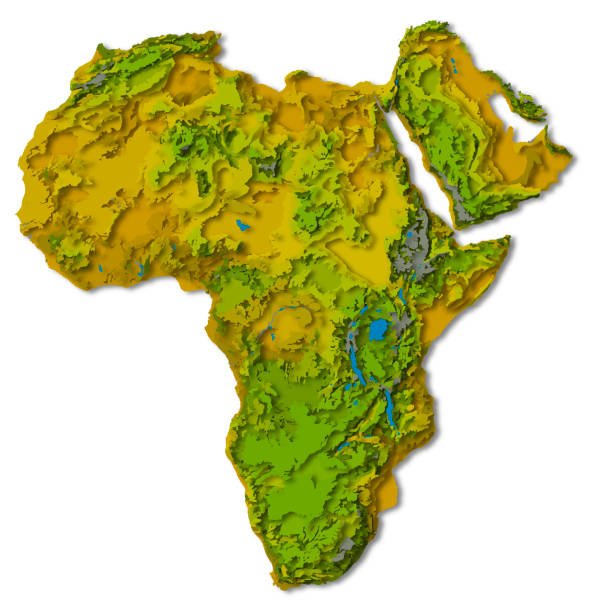
No, Africa does not have a single president. Africa is a vast continent comprising 54 distinct and sovereign countries, each with its own independent government, constitution, and head of state or head of government. While there is no single individual leading the entire continent, the African Union (AU) serves as a continental body promoting unity, peace, and development among its member states, with its own chairperson who leads the AU Commission, an administrative role distinct from a continental president.
Understanding Africa's Political Landscape: A Continent of Nations
To grasp why Africa does not operate under a single presidential authority, it’s crucial to understand its fundamental nature. Africa is not a country; it is the world's second-largest continent, boasting an incredible array of cultures, languages, economies, and political systems. Each of the 54 recognized African countries, from Algeria in the north to South Africa in the south, and from Senegal in the west to Somalia in the east, operates as an independent nation-state.
This means that every country within Africa has its own democratically elected (or otherwise appointed) head of state, typically referred to as a president or prime minister, responsible for governing their respective nation. For example, Nigeria has its president, Egypt has its president, Kenya has its president, and so on. These leaders are accountable to their own citizens and sovereign within their borders, making the concept of a single President of Africa incompatible with the current international system of nation-states.
The Diversity of African Governance
The political structures across the continent are incredibly diverse. Some nations are presidential republics, others are parliamentary republics, and a few maintain monarchical systems or transitional governments. This rich tapestry of governance reflects the unique historical, cultural, and socio-economic trajectories of each state. The idea of unifying such disparate systems under one individual leader would be an immense, if not impossible, undertaking given the strong emphasis on national sovereignty that defines modern international relations.
The continent's political landscape is also characterized by various regional economic communities and political blocs, such as the Economic Community of West African States (ECOWAS), the Southern African Development Community (SADC), and the East African Community (EAC). These regional organizations facilitate cooperation and integration among neighboring countries, addressing specific regional challenges and opportunities. While they foster unity, they do not diminish the ultimate authority of individual national governments or suggest a move towards a unified continental presidency.
The African Union (AU): A Collaborative Framework, Not a Central Government
The institution most often confused with a potential "government of Africa" is the African Union (AU). Founded in 2002 as the successor to the Organisation of African Unity (OAU), the AU is a powerful and influential intergovernmental organization comprising all 55 African member states (including the Sahrawi Arab Democratic Republic). Its primary objectives are to promote unity and solidarity among African states, coordinate and intensify their cooperation and efforts to achieve a better life for African peoples, defend the sovereignty, territorial integrity and independence of its Member States, and promote peace, security, and stability on the continent.
It is critical to distinguish between the AU's organizational structure and the concept of a continent-wide government. The AU functions more like the United Nations or the European Union, serving as a platform for cooperation and collective action rather than a federal government with executive authority over individual nations.
The Role of the AU Chairperson and the President of the AU Commission
Within the African Union, there are two key leadership roles that might sometimes be confused by outsiders looking for a "President of Africa":
- Chairperson of the African Union: This is a largely ceremonial and representative role. The Chairperson is a head of state or government from one of the AU member states, elected by the Assembly of the African Union for a one-year term. Their primary function is to chair the meetings of the Assembly, represent the Union at various international forums, and promote the AU's objectives. This role rotates among the continent's leaders, emphasizing collective leadership rather than individual supremacy. They are the political leader of the AU assembly but not of the continent.
- President of the African Union Commission: The Commission is the AU's secretariat and executive arm, essentially its bureaucracy. The President of the AU Commission is the chief executive officer, responsible for the day-to-day administration of the AU, managing its budget, and implementing decisions made by the Assembly and Executive Council. This is an administrative and managerial position, typically held by an experienced diplomat or politician, elected for a four-year term. While a highly influential figure in continental governance, they are the head of an organization, not the head of a continent of nations.
Neither of these roles bestows the power to govern individual African nations or their citizens. Their authority is derived from and limited by the consensus and mandates provided by the sovereign member states.
Key Organs and Decision-Making in the AU
The decision-making process within the AU reflects its intergovernmental nature. The most supreme decision-making body is the Assembly of the African Union, which comprises the heads of state and government of all member states. It is within this assembly that collective decisions are made on critical issues affecting the continent, from peace and security to economic integration and social development.
Other vital organs include:
- The Executive Council: Composed of the foreign ministers of member states, it prepares the work of the Assembly.
- The Pan-African Parliament (PAP): A legislative advisory body intended to provide a common platform for African peoples to participate in governance.
- The Peace and Security Council (PSC): An organ responsible for promoting peace, security, and stability in Africa, and addressing conflicts.
- The African Court of Human and Peoples' Rights: An international court established to protect human and peoples' rights in Africa.
These institutions underscore the collaborative and consensus-driven approach to pan-African leadership, reinforcing the idea that continental affairs are managed through shared responsibility and diplomatic negotiation among sovereign entities, not by a single dominant figure.
Historical Context: Dreams of Unity and the Reality of Sovereignty
The idea of a politically united Africa, sometimes conceptualized as a "United States of Africa" with a single head, has deep roots in Pan-Africanism. Visionaries like Kwame Nkrumah, Ghana's first president, passionately advocated for a unified continental government as a means to consolidate independence, amplify Africa's voice on the world stage, and accelerate development. These aspirations were powerful during the decolonization era, symbolizing a rejection of colonial fragmentation and an embrace of a shared African identity.
However, the practicalities of achieving such a union proved immensely complex. The newly independent states, having fought hard for their sovereignty, were naturally keen to preserve their newfound autonomy. Concerns over national identity, economic disparities, diverse political ideologies, and logistical challenges in governing such a vast and varied territory meant that a fully federal continent with a single president never materialized. Instead, the focus shifted towards intergovernmental cooperation, leading to the formation of the OAU and subsequently the AU, which prioritizes the sovereignty of its member states while fostering solidarity and collective action.
Challenges to a Single Continental President
Several significant challenges stand in the way of Africa ever having a single president:
- National Sovereignty: Each African nation fiercely guards its independence and right to self-determination. Ceding executive power to a continental leader would be seen as a relinquishment of hard-won sovereignty.
- Diversity: The immense cultural, linguistic, religious, and economic diversity across 54 countries makes governance by a single entity incredibly challenging. What policies would suit all?
- Logistics and Bureaucracy: Administering a continent of over 1.3 billion people, vast distances, and differing legal systems under one central government would create an unprecedented bureaucratic and logistical nightmare.
- Economic Disparities: Significant variations in economic development, resource distribution, and industrialization across Africa would make it difficult for a single government to implement equitable and effective economic policies for all.
- Political Will: Despite calls for deeper integration, the political will among current heads of state to establish a genuinely federal system with a powerful central executive remains limited, prioritizing national interests.
These factors reinforce the current model of an intergovernmental organization facilitating cooperation among sovereign states, rather than a centralized super-state with a single executive.
Continental Governance Compared: Africa vs. Europe
While often compared, the African Union's structure differs significantly from other regional blocs, particularly the European Union (EU). The EU, through decades of deeper integration, has developed institutions with supranational powers, including a directly elected European Parliament, a powerful European Commission (executive body), and a European Council where heads of state/government meet. Even then, the EU does not have a single "President of Europe" in the traditional sense of a head of state with direct executive authority over all member nations.
The AU, by design, places a stronger emphasis on the sovereignty of its member states. Its decisions are primarily implemented through national governments, and its budget relies heavily on contributions from member states, underscoring its role as a facilitator and coordinator rather than a super-state. This difference highlights Africa's chosen path for continental leadership – one of collaboration and consensus among independent nations.
The Importance of African Unity and Collaborative Leadership
Despite the absence of a single continental president, the spirit of unity and collaboration is incredibly strong and vital for Africa's future. The African Union and its various organs provide critical platforms for African leaders to:
- Address Shared Challenges: Coordinate responses to issues like climate change, pandemics, terrorism, and regional conflicts that transcend national borders.
- Promote Economic Integration: Facilitate intra-African trade through initiatives like the African Continental Free Trade Area (AfCFTA), aiming to create a single market for goods and services.
- Amplify Africa's Voice: Present a united front on global issues, strengthening the continent's influence in international diplomacy and multilateral organizations.
- Foster Peace and Security: Deploy peacekeeping missions and mediate conflicts, working towards a stable and secure continent.
- Drive Development Agendas: Collaborate on infrastructure projects, education, healthcare, and sustainable development goals through Agenda 2063.
This collaborative model of African leadership demonstrates that effective continental governance does not require a single president. Instead, it thrives on the collective commitment of sovereign nations to work together for shared prosperity and stability. The strength of Africa lies in its diversity and the willingness of its independent states to forge common pathways to progress.
Conclusion: Collective Leadership for a Diverse Continent
In conclusion, the answer to the question, does Africa have a president, is unequivocally no. Africa is a continent of 54 independent and sovereign nations, each with its own head of state responsible for its internal governance. While there is no single individual leading the entire continent, the African Union (AU) stands as a testament to the continent's commitment to unity, peace, and development. The AU has a Chairperson who presides over its Assembly of Heads of State and a President of the AU Commission who manages its administrative affairs, neither of whom holds executive power over individual member states.
The model of continental governance in Africa is characterized by collaboration, consensus, and respect for national sovereignty, rather than a centralized presidential system. This framework allows the diverse nations of Africa to address common challenges and pursue shared goals while preserving their distinct identities and autonomy. The future of Africa's leadership continues to be vested in the collective hands of its sovereign nations, working together through robust intergovernmental institutions like the African Union.
Enjoyed this read?
Share it with your friends and colleagues.