Early Human Fossils Found In Africa

BSC Insights Admin
September 30, 2026
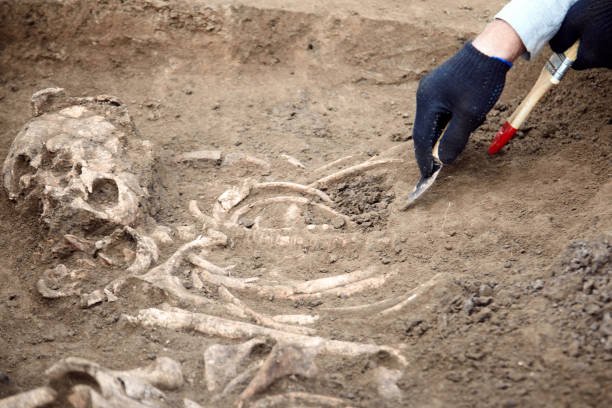
Africa is unequivocally recognized as the cradle of humanity, a designation earned through an unparalleled wealth of
early human fossils found in Africa. These pivotal discoveries provide irrefutable evidence of the earliest stages of human evolution, painting a detailed picture of our ancestors, their lifestyles, and their journey from ape-like creatures to modern humans. Understanding where and how these significant fossils were unearthed is crucial for piecing together the complex puzzle of human origins and migration.
Why Africa is the Cradle of Humanity
The scientific consensus firmly places Africa at the origin point of the human lineage, primarily due to the extraordinary concentration and diversity of hominin fossils discovered across the continent. For millions of years, Africa's diverse environments, from dense forests to expanding savannas, provided the ideal conditions for the evolution of our earliest ancestors. Geological factors, such as the Great Rift Valley, have also played a crucial role in exposing ancient rock layers, making these invaluable fossils accessible to paleontologists.
The term 'hominin' refers to the group consisting of modern humans, extinct human species, and all our immediate ancestors, including members of the genera Homo, Australopithecus, Paranthropus, and Ardipithecus. The fossil record in Africa, stretching back over 7 million years, chronicles critical evolutionary milestones such as the emergence of bipedalism, the development of tool use, and the expansion of brain size. These African archaeological sites offer a continuous narrative of human development that is unmatched anywhere else in the world.
Key Discoveries and Sites of Early Human Fossils in Africa
The discovery of early human fossils in Africa has been a collaborative effort spanning decades, involving numerous dedicated paleoanthropologists and their teams. The continent can be broadly divided into key regions that have yielded the most significant finds.
East Africa: A Hotbed of Hominin Evolution
The Great Rift Valley, a vast geographical trench stretching from Ethiopia to Mozambique, is particularly rich in hominin fossils. Its geological activity has created ideal conditions for the preservation and subsequent exposure of ancient remains.
-
Olduvai Gorge, Tanzania
Often dubbed the "Grand Canyon of human evolution," Olduvai Gorge is a pivotal site. Louis and Mary Leakey's pioneering work here in the mid-20th century led to the discovery of Paranthropus boisei (initially "Nutcracker Man") in 1959 and, most famously, Homo habilis ("handy man") in 1960. Homo habilis is significant for being one of the earliest known species to use stone tools, marking a critical step in human technological development. The Leakeys' work established the profound antiquity of tool-making hominins in Africa.
-
Koobi Fora, Kenya
On the eastern shore of Lake Turkana, Koobi Fora has been a treasure trove of early human remains, largely thanks to the efforts of Richard Leakey (son of Louis and Mary). This region has yielded important specimens of Homo habilis, Homo rudolfensis, and early forms of Homo erectus. These finds have illuminated the diversity of hominin species coexisting in East Africa between 2 and 1.5 million years ago.
-
Hadar and the Awash Valley, Ethiopia
The Afar Depression in Ethiopia is home to some of the most iconic discoveries. In 1974, Donald Johanson and his team found "Lucy" (AL 288-1), a remarkably complete skeleton of Australopithecus afarensis at Hadar. Dated to approximately 3.2 million years ago, Lucy provided undeniable evidence of habitual bipedalism in an early hominin. Later discoveries in the broader Awash Valley include earlier hominins like Ardipithecus ramidus, dating back 4.4 million years, pushing back the timeline for key evolutionary traits even further.
South Africa: The Cradle of Humankind
While East Africa often grabs headlines, Southern Africa has also played a crucial role, particularly in understanding later australopithecines and early Homo species. The Cradle of Humankind, a UNESCO World Heritage Site, encompasses several cave systems that have preserved millions of years of history.
-
Sterkfontein, Swartkrans, and Kromdraai Caves
These limestone caves are part of the Cradle of Humankind. Robert Broom discovered Paranthropus robustus at Kromdraai in 1938. Sterkfontein has yielded an incredible number of Australopithecus africanus fossils, including "Mrs. Ples" and the nearly complete skeleton "Little Foot," dating over 3 million years ago. These finds demonstrated the widespread nature of early hominin populations across different African landscapes and provided detailed insights into their anatomy and locomotion.
-
Malapa Cave
Discovered by Lee Berger's son in 2008, Malapa revealed exquisitely preserved partial skeletons of a new species, Australopithecus sediba. Dated to around 2 million years ago, A. sediba exhibits a fascinating mosaic of features, showing characteristics of both earlier australopithecines and later Homo, suggesting it might be a transitional form or a close relative to the lineage leading to humans.
-
Rising Star Cave
Another monumental discovery by Lee Berger's team in 2013-2014, Rising Star Cave contained thousands of fossil elements belonging to at least 15 individuals of a new species, Homo naledi. The morphology of H. naledi is remarkably primitive in some respects (small brain size) yet surprisingly modern in others (hand and foot anatomy), and its context deep within a cave system suggests complex behaviors, possibly including intentional burial, at a surprisingly early date (236,000 to 335,000 years ago).
Major Early Hominin Species Revealed by African Fossils
The rich collection of early human fossils found in Africa allows scientists to trace the evolutionary tree of humanity. Here are some of the key species:
- Sahelanthropus tchadensis (Chad): Dated ~7-6 million years ago. Possibly the earliest known hominin, showing potential for bipedalism based on skull features, though debated.
- Orrorin tugenensis (Kenya): Dated ~6 million years ago. Femur morphology suggests early bipedal locomotion.
- Ardipithecus kadabba and Ardipithecus ramidus (Ethiopia): Dated ~5.8-4.4 million years ago. Show a mosaic of ape and hominin features, strongly indicating bipedalism in a wooded environment.
- Australopithecus anamensis (Kenya/Ethiopia): Dated ~4.2-3.9 million years ago. Direct ancestor to A. afarensis, robust evidence for bipedalism.
- Australopithecus afarensis (Ethiopia/Tanzania): Dated ~3.9-2.9 million years ago. Famous for "Lucy" and the Laetoli footprints, definitive evidence of habitual bipedalism.
- Australopithecus africanus (South Africa): Dated ~3.3-2.1 million years ago. Gracile australopithecine, similar in many ways to A. afarensis, reinforcing the spread of bipedal hominins.
- Paranthropus aethiopicus, P. boisei, P. robustus (East & South Africa): Dated ~2.7-1.2 million years ago. These "robust" australopithecines were characterized by massive chewing muscles and large teeth, adapted for a diet of tough, fibrous plants. They represent a side branch of the hominin family tree.
- Homo habilis (East & South Africa): Dated ~2.4-1.4 million years ago. The earliest species definitively assigned to our genus Homo, known for making and using simple stone tools (Oldowan technology).
- Homo rudolfensis (East Africa): Dated ~1.9 million years ago. Coexisted with H. habilis, debated classification but suggests greater diversity within early Homo.
- Homo erectus (Africa, Asia): Dated ~1.9 million - 110,000 years ago. The first hominin to leave Africa, master of Acheulean tool technology, and possibly control fire.
- Homo naledi (South Africa): Dated ~335,000-236,000 years ago. A highly enigmatic species with a mix of primitive and modern features, suggesting complex behaviors.
- Homo sapiens (Africa, global): Originating ~300,000 years ago in Africa. Our own species, distinguished by advanced cognitive abilities, complex culture, and global migration.
Methods and Technologies in Paleoanthropology
The discovery and analysis of early human fossils in Africa rely on sophisticated scientific methods. Paleoanthropologists employ a multidisciplinary approach to unearth, date, and interpret these ancient remains.
Dating techniques are fundamental. Absolute dating methods like radiometric dating (e.g., Argon-Argon dating for volcanic ash layers) provide precise ages for fossils trapped between dated strata. Relative dating techniques, such as stratigraphy (studying layers of rock), help establish the sequence of events. These methods allow researchers to place fossils accurately within the evolutionary timeline.
Fossil excavation and preservation require meticulous care. Once a fossil locality is identified, often through surface surveys, teams carefully excavate, document, and stabilize fragile remains. Fossils are then transported to laboratories for cleaning, reconstruction, and analysis. Modern imaging technologies, such as CT scans and micro-CT scans, allow scientists to study internal structures of fossils without damaging them, providing insights into brain size, diet, and locomotion. The emerging field of ancient DNA (aDNA) analysis, though challenging with very old and poorly preserved African samples, promises to unlock further genetic insights into our past.
Impact and Significance of African Fossil Discoveries
The continuous stream of fossil discoveries in Africa has profoundly reshaped our understanding of human evolution. These findings have provided concrete answers to long-standing questions and opened new avenues for research.
- Understanding Human Evolution and Bipedalism: Fossils like Lucy (A. afarensis) and Little Foot (A. africanus) decisively demonstrated that bipedalism evolved millions of years before significant brain enlargement. This overturned earlier assumptions that brain size increase was the primary driver of early human evolution.
- Dietary Changes and Tool Use: The presence of Oldowan tools alongside Homo habilis fossils at Olduvai Gorge provided the earliest definitive evidence of systematic tool manufacture, indicating a shift towards a more meat-inclusive diet and complex problem-solving.
- Brain Evolution and Cognitive Development: While early hominins had relatively small brains, the progression from Australopithecus to early Homo and eventually to Homo erectus and Homo sapiens shows a clear trend of increasing brain size and complexity. Discoveries like those of Homo naledi, with its small brain but potentially complex behaviors, challenge simplistic views of this trajectory.
- The "Out of Africa" Theory: The sheer volume and antiquity of early human fossils in Africa strongly support the "Out of Africa" theory, which posits that modern humans (Homo sapiens) originated in Africa and subsequently dispersed to populate the rest of the world. The oldest definitive Homo sapiens fossils, found in Morocco and Ethiopia, further solidify Africa's role as our species' birthplace.
Challenges and Future Directions in Paleoanthropology
Despite the remarkable progress, the study of early human fossils in Africa faces ongoing challenges. Political instability, conflicts, and economic limitations in some regions can hinder research and site protection. The preservation of fragile fossil sites against erosion, climate change, and human activity also remains a critical concern. Ensuring that research benefits local communities and fosters African leadership in paleoanthropology is an ethical imperative.
Future research will undoubtedly integrate increasingly sophisticated technologies, such as advanced genetic sequencing, lidar mapping of remote areas, and artificial intelligence for data analysis. The exploration of under-sampled regions of Africa also holds immense potential for new groundbreaking discoveries. The continuous quest to uncover more ancient hominins and understand their stories promises to deepen our appreciation of the human journey.
Conclusion
The story of human origins is intrinsically linked to the continent of Africa. The extraordinary abundance of early human fossils found in Africa has not only confirmed its status as the cradle of humanity but has also provided invaluable insights into the complex tapestry of our evolutionary past. From the emergence of bipedalism to the development of tool-making and the eventual rise of our own species, each fossil discovery adds another crucial piece to the grand narrative of human evolution. Ongoing research, fueled by new technologies and dedicated scientists, continues to reveal more about our ancient ancestors, reinforcing Africa's irreplaceable role in understanding what it means to be human.
Enjoyed this read?
Share it with your friends and colleagues.