Is There Earthquakes In Africa

BSC Insights Admin
October 01, 2026
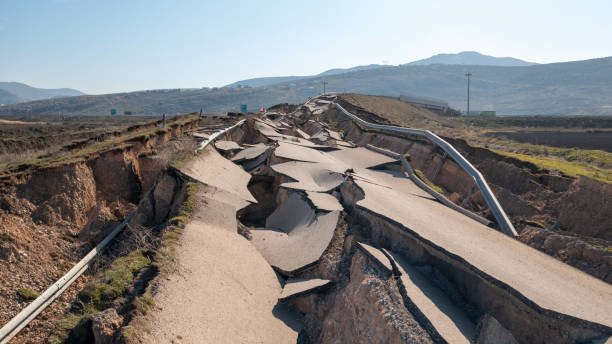
Yes, earthquakes do occur in Africa, a continent often perceived as seismically stable compared to other regions like the Pacific Ring of Fire. While the frequency and magnitude of African earthquakes might be lower on average than highly active zones, seismic activity in Africa is a significant geological reality, primarily driven by the ongoing rifting of the continent along the East African Rift System. Understanding the causes, locations, and impacts of these seismic events is crucial for residents and infrastructure development across the continent.
The Tectonic Landscape of Africa: A Continent in Motion
Africa rests predominantly on the African Plate, one of Earth's major tectonic plates. While large parts of the plate are considered stable interior (cratons), the continent is far from static. The dynamic interactions at its boundaries and significant internal stresses lead to varying degrees of seismic activity across Africa. The most dramatic geological event shaping Africa's seismic profile is the ongoing process of continental rifting.
- Divergent Plate Boundary: The East African Rift System (EARS): This is the most prominent feature responsible for earthquakes on the continent. Here, the African Plate is slowly splitting apart, creating a series of valleys, volcanoes, and fault lines stretching thousands of kilometers.
- Convergent and Transform Boundaries: Along Africa's northern edge, the African Plate collides with the Eurasian Plate, leading to seismicity in countries like Morocco, Algeria, and Tunisia. To the south, interactions with the Antarctic and South American plates also contribute, though less dramatically, to some localized tremors.
- Intraplate Seismicity: Even away from major plate boundaries, earthquakes can occur due to stresses accumulating within the plate itself, often reactivating ancient fault lines.
The continuous movement and interaction of these forces mean that Africa is a continent with a dynamic geological heartbeat, manifested through detectable seismic events.
The East African Rift System (EARS): Africa's Primary Earthquake Zone
The East African Rift System (EARS) is an active continental rift zone that represents a place where the African continent is literally pulling apart. This immense geological feature, stretching approximately 6,500 kilometers from the Afar Triple Junction in the north through Ethiopia, Kenya, Tanzania, and into Mozambique, is the most significant source of earthquakes in East Africa.
How the EARS Generates Earthquakes
The rifting process involves the stretching and thinning of the Earth's crust. As the crust thins, it fractures into a complex network of normal faults. When these faults slip, they release accumulated stress in the form of seismic waves, causing rift valley earthquakes. This process is accompanied by significant volcanic activity in many areas, particularly in Ethiopia, Kenya, and Tanzania.
Key Characteristics of EARS Seismicity:
- Magnitude: Earthquakes in the EARS typically range from small, imperceptible tremors to moderate events (magnitudes 5.0-6.5). Larger earthquakes (magnitude 7.0 and above) are less common but have occurred historically and pose significant risks.
- Depth: Most earthquakes along the East African Rift are shallow, occurring at depths of 10-30 kilometers. Shallow earthquakes tend to cause more intense ground shaking and localized damage than deeper ones of the same magnitude.
- Location: Seismic activity is concentrated along the two main branches of the rift: the Eastern Rift (passing through Ethiopia, Kenya, and Tanzania) and the Western Rift (extending through Uganda, Rwanda, Burundi, and the Democratic Republic of Congo).
Countries highly prone to earthquakes due to the EARS include Ethiopia, Kenya, Tanzania, Uganda, Rwanda, Burundi, Democratic Republic of Congo (DRC), Malawi, Mozambique, and Djibouti. The ongoing expansion of the rift means that this region will continue to experience seismic events for millions of years to come.
Causes of Earthquakes in Africa Beyond the Rift System
While the EARS is the dominant factor, other geological processes contribute to earthquakes in Africa:
1. North African Plate Boundary Interactions
Along its northern boundary, the African Plate is converging with the Eurasian Plate. This collision results in significant compressional stress, leading to mountain building (e.g., Atlas Mountains) and frequent, sometimes powerful, earthquakes in North Africa. Countries like Morocco, Algeria, and Tunisia are particularly vulnerable to these events.
2. Intraplate Stresses and Ancient Fault Lines
Even in areas far from active plate boundaries, earthquakes can occur due to stresses within the African Plate itself. The continent is crisscrossed by ancient fault lines and weak zones from past geological events. These dormant faults can be reactivated by modern tectonic stresses, leading to localized intraplate seismicity. Examples include events in parts of South Africa and West Africa.
3. Reservoir-Induced Seismicity
Human activities can also trigger earthquakes, a phenomenon known as reservoir-induced seismicity. The immense weight of water in large dam reservoirs can increase stress on underlying fault lines, leading to tremors. While generally lower in magnitude, these can still cause concern in localized areas, such as those near the Kariba Dam between Zambia and Zimbabwe.
Historical Earthquakes and Notable Seismic Events in Africa
Africa has a history of significant earthquakes that underscore the continent's seismic vulnerability:
- 1960 Agadir Earthquake, Morocco: This devastating magnitude 5.7 earthquake struck the city of Agadir, Morocco, causing widespread destruction and claiming an estimated 12,000 to 15,000 lives. It remains one of Africa's deadliest earthquakes.
- 2003 Boumerdès Earthquake, Algeria: A powerful magnitude 6.8 earthquake hit northern Algeria, resulting in over 2,200 fatalities and extensive damage, particularly in the coastal areas.
- 2006 Mozambique Earthquake: A magnitude 7.0 earthquake struck remote areas of Mozambique. Despite its high magnitude, its remote location minimized fatalities, but it caused significant structural damage and ground deformation.
- 2009 Karonga Earthquakes, Malawi: A series of significant tremors, including a magnitude 6.0 event, affected the Karonga district along the Western Rift. These events caused significant displacement and damage to homes.
- 2016 Kagera Earthquake, Tanzania: A magnitude 5.9 earthquake struck the Kagera region, near the border with Uganda, causing over a dozen fatalities and widespread destruction of homes and infrastructure.
- 2018 Lake Kivu Earthquake, DRC/Rwanda: A magnitude 5.5 earthquake near Lake Kivu, part of the Western Rift, caused damage in Goma (DRC) and Rubavu (Rwanda), highlighting the ongoing activity in this densely populated area.
These examples illustrate that while less frequent than in other regions, African earthquakes can be highly destructive, particularly when they occur in populated areas with vulnerable infrastructure.
Seismic Monitoring and Research in Africa
Effective seismic monitoring in Africa is critical for understanding earthquake patterns, assessing hazards, and improving preparedness. Many African nations, often with international collaboration, are investing in seismological observatories and research:
- Regional Networks: Initiatives like the AfricaArray program aim to expand seismic monitoring across the continent, providing crucial data on plate movements and earthquake occurrences.
- Data Collection: Seismometers record ground motion, allowing scientists to pinpoint earthquake epicenters, depths, and magnitudes. This data is vital for creating seismic hazard maps.
- Challenges: Despite advancements, significant gaps remain in seismic network coverage, particularly in remote areas. Limited resources, technical expertise, and infrastructure can hinder comprehensive monitoring.
Ongoing research helps scientists better understand the complex tectonics of the African Plate, leading to more accurate predictions of potential seismic activity and informing building codes and urban planning.
Impact and Risk Assessment of Earthquakes in Africa
The impact of earthquakes in Africa can be severe, especially in regions with high population density and inadequate infrastructure.
Key Areas of Concern:
- Structural Damage: Many buildings in seismically active parts of Africa are not constructed to withstand earthquake forces, leading to collapses and extensive damage.
- Loss of Life and Injury: Collapsing structures are the primary cause of fatalities and injuries during earthquakes.
- Economic Disruption: Earthquakes can damage vital infrastructure such as roads, bridges, power lines, and communication networks, disrupting economic activity and hindering relief efforts.
- Tsunamis: While continental, some coastal areas in North Africa or East Africa near the Indian Ocean could theoretically be affected by distant tsunamis, or very localized events from large offshore seismic activity.
- Secondary Hazards: Earthquakes can trigger landslides, rockfalls, and liquefaction, especially in mountainous or water-saturated areas, compounding the damage.
- Social Impact: Displacement of populations, loss of livelihoods, and psychological trauma are significant long-term consequences.
Understanding these risks is the first step toward developing effective mitigation strategies and building more resilient communities.
Earthquake Preparedness and Mitigation Strategies in Africa
Effective earthquake preparedness in Africa is essential to reduce the impact of future seismic events. This requires a multi-faceted approach involving governments, communities, and individuals.
Key Strategies Include:
- Seismic Building Codes: Implementing and enforcing strict building codes that account for local seismic hazards is paramount. Retrofitting existing vulnerable structures is also critical.
- Public Awareness and Education: Educating communities about earthquake safety, including "Drop, Cover, and Hold On" procedures, identifying safe zones, and creating family emergency plans, empowers individuals to protect themselves.
- Emergency Response Planning: Developing robust emergency response plans, including search and rescue capabilities, medical aid, and provision of temporary shelter and supplies, can significantly reduce post-earthquake casualties.
- Land-Use Planning: Avoiding the construction of critical infrastructure (hospitals, schools) on or near active fault lines or in areas prone to secondary hazards (landslides) can save lives.
- Early Warning Systems: While challenging to implement comprehensively, developing localized early warning systems could provide precious seconds of warning, allowing for protective actions.
- Regional Cooperation: Given that seismic zones often cross national borders, regional collaboration on monitoring, data sharing, and emergency response training is vital.
Investment in these areas can transform vulnerability into resilience, safeguarding lives and development gains across seismically active regions of Africa.
Future of Seismic Activity in Africa
The geological processes driving earthquakes in Africa are slow but continuous. The East African Rift System will continue to expand, slowly pulling the continent apart, a process that may eventually lead to the formation of a new ocean basin over tens of millions of years. This ongoing rifting ensures that seismic activity in East Africa will persist.
While the exact timing and magnitude of future large African earthquakes cannot be predicted, scientific understanding allows for robust hazard assessments. Continued monitoring, research, and investment in resilient infrastructure and preparedness measures are crucial to minimize the impact of these inevitable natural phenomena.
Conclusion
In summary, the answer to "Is there earthquakes in Africa?" is a definitive yes. While not as universally seismic as some other continents, Africa experiences significant and often destructive earthquakes, predominantly driven by the dynamic forces of the East African Rift System. From the moderate tremors that shape the Rift Valley landscape to the powerful events impacting North African cities, seismic activity is an inherent part of the continent's geology. Understanding the causes, such as divergent plate tectonics and intraplate stresses, is key to assessing the earthquake risk in Africa. Through enhanced seismic monitoring, robust building codes, and comprehensive community preparedness, Africa can continue to build resilience against the powerful, yet predictable, forces that shape its land.
Enjoyed this read?
Share it with your friends and colleagues.