Did Everyone Originate From Africa

BSC Insights Admin
October 01, 2026
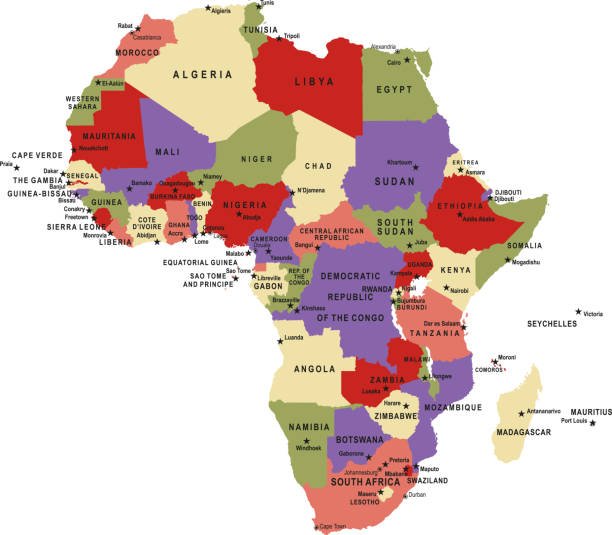
Yes, scientific evidence overwhelmingly indicates that all modern humans originated from Africa. This foundational concept in human evolutionary biology, often referred to as the Out of Africa theory or recent African origin model, posits that Homo sapiens evolved in Africa approximately 300,000 years ago and subsequently dispersed across the globe. Our shared ancestry can be traced back to a relatively small population in Africa, supported by a wealth of genetic, fossil, and archaeological evidence.
The Scientific Consensus: Out of Africa Theory
The Out of Africa theory is the prevailing model describing the origin and early migrations of anatomically modern humans. It suggests that all living humans are descended from a single population of Homo sapiens that developed in Africa. From this African homeland, groups of early humans undertook multiple waves of migration, eventually populating every continent. This theory stands in strong contrast to older hypotheses, such as the Multiregional Hypothesis, which proposed that modern humans evolved simultaneously in different regions of the world from local populations of archaic hominins. However, extensive research over the past few decades has largely discredited the Multiregional Hypothesis for modern humans, solidifying the single origin hypothesis in Africa.
Key Pillars of Evidence for African Origins
Understanding human origins in Africa relies on a multi-disciplinary approach, combining insights from genetics, palaeoanthropology, and archaeology. Each field provides crucial pieces of the puzzle, reinforcing the narrative of a recent African origin.
Genetic Evidence: Tracing Our Ancestry
Genetic studies have provided some of the most compelling evidence for the Out of Africa theory. By analyzing variations in human DNA, scientists can reconstruct the evolutionary history of our species.
- Mitochondrial DNA (mtDNA): Mitochondrial DNA is inherited exclusively from the mother, without recombination. By tracking mutations in mtDNA across different human populations, geneticists have traced all modern human maternal lineages back to a single common ancestor who lived in Africa roughly 150,000 to 200,000 years ago. This individual is famously known as Mitochondrial Eve, though she was not the only woman alive at the time, but rather the most recent common ancestor from whom all living humans descend through their mothers.
- Y-Chromosome DNA: Similarly, the Y-chromosome is passed down exclusively from father to son. Studies of Y-chromosomal DNA have revealed that all modern human paternal lineages converge on a common ancestor, dubbed Y-chromosomal Adam, who also lived in Africa, though potentially at a slightly different time than Mitochondrial Eve, estimated to be between 200,000 and 300,000 years ago.
- Genetic Diversity: A fundamental principle supporting the African origin is the observation that genetic diversity is greatest among populations within Africa. As populations migrate away from their place of origin, they typically carry only a subset of the genetic diversity present in the original population (the founder effect). The decreasing genetic diversity seen in populations further away from Africa strongly supports an African bottleneck and subsequent dispersal, as each migration event led to a reduction in genetic variation.
- Ancient DNA Studies: Advances in analyzing ancient DNA have further strengthened the case. Comparisons of the genomes of modern humans with those of archaic hominins like Neanderthals and Denisovans show that while there was some interbreeding, the vast majority of our genome comes from the African Homo sapiens lineage, not from a direct evolutionary line from these archaic groups in Europe or Asia.
Fossil Record: The Bones of Our Past
The fossil record provides direct physical evidence of early human existence and evolution. Africa holds the richest and oldest trove of Homo sapiens fossils.
- Oldest Homo Sapiens Fossils: Discoveries like the Jebel Irhoud fossils in Morocco, dated to approximately 315,000 years ago, and the Omo Kibish remains in Ethiopia, dated to around 195,000 years ago, represent the earliest known anatomically modern human remains. These findings are consistent with genetic estimates for the origin of our species.
- Evolutionary Trajectory: The progression of hominin fossils in Africa shows a clear evolutionary trajectory towards modern human anatomy, including features such as a rounded skull, a less prominent brow ridge, and a distinct chin. This continuous record within Africa supports a localized origin before global dispersal.
Archaeological Evidence: Tools, Culture, and Innovation
Beyond bones and genes, archaeological findings further solidify Africa's role as the cradle of humanity.
- Stone Tools: The earliest and most complex stone tool technologies, such as the Acheulean industry, developed in Africa over a million years ago, long before Homo sapiens emerged. While not exclusively tied to modern humans, the sophistication and longevity of African tool traditions highlight an environment ripe for cognitive development.
- Symbolic Behavior and Art: Early evidence of symbolic thought, such as engraved ochre and shell beads, has been found in African sites dating back tens of thousands of years before similar complexities appear in other parts of the world. These findings suggest the early development of cognitive abilities essential for modern human culture.
The Great Human Migration: Journeys Out of Africa
Once Homo sapiens had established themselves in Africa, various waves of early human migration began to spread across the continents. While the exact routes and timings are subject to ongoing research, a general picture has emerged.
The First Major Exoduses
It is believed that the first significant waves of human diaspora out of Africa occurred between 60,000 and 70,000 years ago. These early migrants likely took a 'Southern Route' along the coast of the Arabian Peninsula, eventually reaching Asia and Australia.
- Populating Asia and Australia: From the Arabian Peninsula, humans rapidly spread throughout Asia. Remarkably, Australia was colonized by sea-faring people by at least 50,000 years ago, indicating sophisticated navigational skills for the time.
- Movement into Europe: Subsequent migrations, possibly along different routes (including a northern route through the Levant), led to the peopling of Europe. Here, Homo sapiens encountered and eventually largely replaced Neanderthals, with some limited interbreeding occurring.
- Crossing into the Americas: The final major continent to be settled was the Americas. It is widely accepted that people crossed the Bering Strait land bridge (Beringia), which connected Siberia and Alaska, during periods of lower sea levels, likely beginning around 15,000 to 20,000 years ago, or even earlier via coastal routes.
Each stage of migration involved adaptation to new climates, landscapes, and available resources, driving further genetic and cultural changes within these expanding populations.
Understanding Human Diversity Post-Migration
If everyone originated from Africa, how do we explain the vast physical and genetic diversity seen across human populations today? This diversity is a testament to thousands of years of evolution, adaptation, and genetic processes occurring after the initial dispersals from Africa.
- Natural Selection: As humans moved into different environments, natural selection played a role in shaping traits suitable for survival. For example, variations in skin pigmentation are strongly linked to UV radiation levels. Populations living closer to the equator retained darker skin (high melanin) for protection against intense UV, while those migrating to higher latitudes evolved lighter skin to facilitate Vitamin D synthesis in lower light conditions.
- Genetic Drift: Random fluctuations in gene frequencies, known as genetic drift, are particularly impactful in small, isolated populations. As groups broke off and migrated, their smaller gene pools were more susceptible to these random changes, leading to the development of unique genetic markers in different populations.
- Sexual Selection: Preferences for certain traits in mates can also influence the frequency of genes in a population over time, contributing to local variations.
It is crucial to understand that while these differences exist, they represent superficial variations on a deeply shared genetic blueprint. The concept of 'race' as a biological category is largely a social construct, as genetic differences within so-called racial groups are often greater than differences between them. Our shared African heritage underscores the fundamental unity of humanity.
Addressing Common Misconceptions
A frequent question arising from the African origin of humans is, "If everyone came from Africa, why aren't all people 'black'?" This misconception stems from a misunderstanding of how evolution and adaptation work over long timescales.
As discussed, skin color is an adaptive trait influenced by geography and UV radiation. The range of skin tones observed globally today reflects millennia of natural selection acting on populations as they dispersed into diverse environments. Early Homo sapiens in Africa likely had dark skin, which was advantageous in high-UV equatorial regions. As groups migrated north into areas with less sunlight, lighter skin evolved to allow for more efficient Vitamin D production. This is just one visible example of how populations adapted to their new surroundings, showcasing the incredible plasticity of the human genome over time.
Another point of clarity involves the distinction between Homo sapiens and earlier hominins. While other hominin species, such as Homo erectus, also migrated out of Africa much earlier (over a million years ago), these earlier migrations did not lead to modern humans. Modern humans, Homo sapiens, are the result of a more recent evolutionary event *within* Africa, and it was *these* specifically modern humans who then populated the globe.
The Significance of Our Shared African Heritage
The scientific understanding that all humans originated from Africa carries profound significance. It reinforces the concept of a single human family, underscoring our fundamental interconnectedness despite geographical, cultural, or superficial physical differences. This shared deep history calls for a recognition of our common heritage and mutual respect.
Continued research into human evolution Africa is vital. Every new fossil discovery, every ancient DNA analysis, and every archaeological excavation adds more detail to this incredible story of global migration and adaptation. It allows us to piece together the narrative of how a small population in Africa came to populate every corner of the Earth, demonstrating humanity's remarkable resilience, adaptability, and capacity for exploration.
Conclusion
In summary, the question "Did everyone originate from Africa?" is met with a resounding scientific 'yes.' Decades of rigorous research across genetics, palaeoanthropology, and archaeology have converged to establish the Out of Africa theory as the most robust explanation for the origin of modern humans. From the genetic trail left by Mitochondrial Eve and Y-chromosomal Adam, to the oldest Homo sapiens fossils unearthed in African soil, and the rich tapestry of genetic diversity found on the continent, all evidence points to Africa as the birthplace of our species. This shared beginning highlights the unity of all people and the extraordinary journey our ancestors undertook to populate the world, making the narrative of human origin Africa a truly global story.
Enjoyed this read?
Share it with your friends and colleagues.