First Fossil Found In Africa

BSC Insights Admin
October 01, 2026
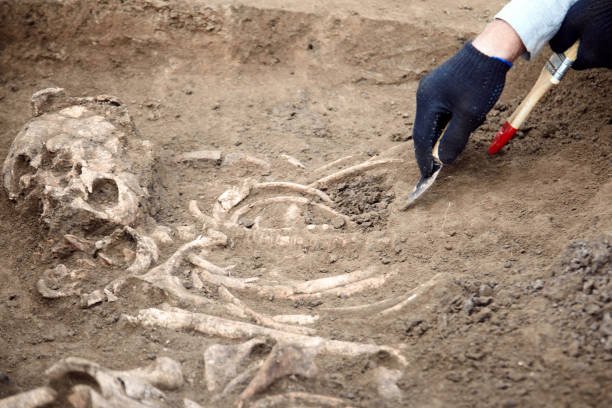
The quest to understand human origins fundamentally shifted with the discovery of the first significant fossil evidence in Africa. These groundbreaking finds unequivocally established Africa as the Cradle of Humanity, forever changing our understanding of where, when, and how our earliest ancestors evolved. Far from a single isolated find, the term "first fossil found in Africa" often refers to a series of monumental paleontological discoveries that collectively illuminated the intricate tapestry of hominin evolution.
For centuries, the prevailing scientific belief, particularly in Europe, posited that humanity's birthplace lay outside Africa. This hypothesis was largely based on limited evidence and, unfortunately, reinforced by prevailing colonial-era biases. However, the early 20th century brought forth a wave of extraordinary fossil discoveries across Africa that challenged these deeply entrenched ideas, providing irrefutable proof of our African genesis.
The Taung Child: A Pivotal African Discovery
One of the most significant early discoveries that unequivocally pointed towards Africa as the birthplace of humankind was the unearthing of the Taung Child in 1924. This fossil, a remarkably well-preserved skull of a juvenile hominin, was found by quarry workers in Taung, South Africa, and subsequently brought to the attention of Australian anatomist Raymond Dart.
Raymond Dart and Australopithecus africanus
Raymond Dart's meticulous study of the Taung Child revealed a creature with a fascinating mix of ape-like and human-like features. Critically, the position of the foramen magnum (the hole at the base of the skull where the spinal cord connects) suggested that the creature walked upright, a hallmark of bipedalism. Dart controversially named this new species Australopithecus africanus, meaning "southern ape of Africa," asserting its hominin status and African origin.
Initially, Dart's findings were met with widespread skepticism and even ridicule from the scientific establishment, particularly in Britain. Many prominent paleoanthropologists favored European or Asian sites for human origins, and the relatively small brain size of the Taung Child seemed to contradict the prevailing wisdom that large brains preceded bipedalism. Despite the initial resistance, further discoveries in South Africa, such as those made by Robert Broom at Sterkfontein and Kromdraai, gradually corroborated Dart's claims, solidifying Australopithecus africanus's place in the human family tree and underscoring Africa's unparalleled significance.
The Leakey Legacy and East Africa's Rift Valley
While South Africa provided the initial shockwaves, the vast plains of East Africa, particularly within the Great Rift Valley, would soon become the epicenter of unparalleled paleoanthropological research. The work of the Leakey family—Louis and Mary Leakey, and later their son Richard—at sites like Olduvai Gorge in Tanzania and Koobi Fora in Kenya, revolutionized our understanding of early human evolution.
Olduvai Gorge: A Window into Early Hominin Life
Mary Leakey's discovery of the skull of "Zinjanthropus" (now Paranthropus boisei) in 1959 at Olduvai Gorge marked a turning point. This robust hominin, with its massive jaws and teeth, provided further evidence of diverse hominin species inhabiting East Africa millions of years ago. Crucially, its association with early stone tools indicated a level of technological capability among our ancient relatives.
The subsequent discovery of Homo habilis (the "Handy Man") by Louis and Mary Leakey in the early 1960s was even more profound. With a slightly larger brain size than the australopithecines and clear evidence of tool-making (hence the name), Homo habilis was considered by many to be the first species in our own genus, Homo. These discoveries firmly placed Africa at the forefront of the human evolutionary narrative, highlighting a complex evolutionary landscape with multiple hominin lineages coexisting.
Lucy: A Global Icon from Hadar, Ethiopia
Perhaps no single fossil discovery has captured the public imagination and scientific significance quite like Lucy. Uncovered in 1974 by Donald Johanson and Tom Gray in the Afar Region of Ethiopia, Lucy represents a remarkably complete skeleton of an adult female Australopithecus afarensis.
The Significance of Lucy (AL 288-1)
Lucy's skeleton, comprising nearly 40% of the original bone structure, provided irrefutable evidence of habitual bipedalism. Her pelvis, femur, and tibia all exhibited clear adaptations for walking upright, while her relatively small brain size further cemented the idea that bipedalism evolved well before the significant expansion of the hominin brain. This discovery was a watershed moment, showing that early human ancestors were walking effectively on two legs over 3 million years ago.
The name "Lucy" itself, inspired by the Beatles song "Lucy in the Sky with Diamonds" playing at the expedition camp, helped to personalize this ancient ancestor and make her relatable to a global audience. Lucy became an ambassador for human origins, showcasing Africa's unparalleled fossil record to the world.
Beyond the Icons: Other Critical African Fossil Sites
While Taung, Olduvai Gorge, and Hadar are iconic, numerous other sites across Africa have yielded invaluable insights into human evolution. The sheer volume and diversity of fossils recovered paint a comprehensive picture of our ancient past.
Important African Paleoanthropological Sites:
- Sterkfontein Caves, South Africa: Part of the Cradle of Humankind UNESCO World Heritage Site, it has yielded the richest cache of Australopithecus fossils, including "Mrs. Ples" and the nearly complete "Little Foot" skeleton. These finds span millions of years, providing continuous evidence of hominin presence.
- Koobi Fora, Kenya: Located on the eastern shore of Lake Turkana, this site has been instrumental in uncovering multiple early hominin species, including early members of the genus Homo, providing crucial evidence for their diversity and coexistence.
- Laetoli, Tanzania: Famous for the remarkably preserved hominin footprints discovered by Mary Leakey in 1978. These footprints, dating back 3.6 million years, offer direct evidence of bipedal locomotion from Australopithecus afarensis, solidifying the interpretation drawn from Lucy's skeletal remains.
- Dmanisi, Georgia: While outside Africa, the discoveries here of early Homo erectus-like hominins, potentially descendants of African populations, highlight the initial dispersal of hominins out of Africa, underscoring the continent's role as the source population.
Understanding the Hominin Timeline and Evolution
The cumulative effect of these African fossil discoveries has allowed scientists to construct a robust, albeit still evolving, timeline of hominin evolution. The earliest known potential hominins, such as Sahelanthropus tchadensis (from Chad, circa 7 million years ago) and Orrorin tugenensis (from Kenya, circa 6 million years ago), suggest that the split from our last common ancestor with chimpanzees occurred in Africa during the late Miocene epoch.
The subsequent Pliocene and early Pleistocene epochs witnessed a radiation of australopithecines and early Homo species across the African continent. This complex family tree includes:
- Early Hominins: Sahelanthropus, Orrorin, Ardipithecus (e.g., Ardi from Ethiopia)
- Gracile Australopithecines: Australopithecus anamensis, Australopithecus afarensis (Lucy), Australopithecus africanus (Taung Child)
- Robust Australopithecines (Paranthropus): Paranthropus aethiopicus, Paranthropus boisei, Paranthropus robustus
- Early Homo: Homo habilis, Homo rudolfensis, Homo erectus
The evidence from these fossils strongly supports the "Out of Africa" theory, which postulates that modern humans (Homo sapiens) also originated in Africa and subsequently dispersed across the globe in one or more waves.
The Impact of African Fossil Discoveries
The continuous stream of fossil discoveries in Africa has had a profound impact, not only on the field of paleoanthropology but also on our broader understanding of human identity and history. These finds have:
- Rewritten Human History: They provided empirical data to replace speculative theories about human origins.
- Challenged Eurocentric Views: They shifted the geographical focus of human evolution definitively to Africa.
- Illuminated Evolutionary Processes: They offered insights into the sequence of human traits development, such as bipedalism preceding significant brain expansion.
- Promoted Conservation: They highlight the immense scientific and cultural value of Africa's geological and paleontological heritage, spurring efforts for its preservation.
Preserving Our Ancient Heritage
The preservation of these invaluable fossil sites and the ongoing research are crucial for future generations. Challenges such as erosion, climate change, and human impact threaten these fragile windows into our past. International collaborations, local community involvement, and robust funding are essential for ensuring that Africa continues to yield its secrets and enlighten us about our shared human journey.
In conclusion, the concept of the "first fossil found in Africa" is not a singular event but rather a narrative woven from dozens of spectacular discoveries. From the Taung Child to Lucy and the countless fragments of our ancient ancestors found across the continent, Africa's fossil record stands as an unparalleled testament to the origins and evolution of humanity. These groundbreaking finds have provided irrefutable evidence that Africa is indeed the birthplace of humankind, shaping our scientific understanding and reinforcing our shared ancestry as a global species. The ongoing research continues to unveil new chapters in this incredible story, promising even deeper insights into our earliest beginnings on the African continent.
Enjoyed this read?
Share it with your friends and colleagues.