First Human Remains Found In Africa

BSC Insights Admin
September 30, 2026
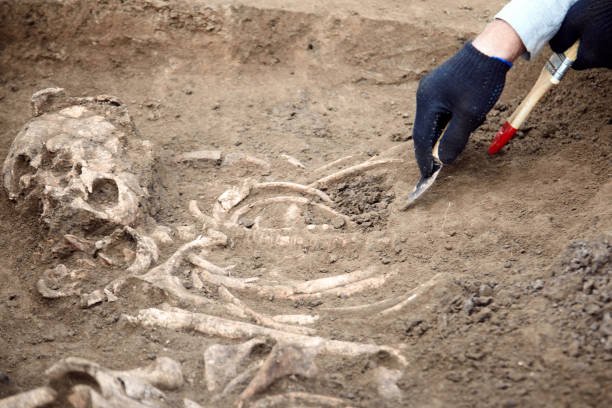
The First Human Remains Found in Africa: Unearthing Humanity's Origins
The discovery of the first human remains in Africa holds immense significance, as Africa is widely recognized as the Cradle of Humankind. These ancient fossil finds provide compelling evidence that our earliest ancestors originated on the African continent, charting the complex evolutionary journey from ape-like creatures to modern humans. Paleoanthropological research in Africa has continuously unveiled crucial pieces of the puzzle, revealing insights into bipedalism, tool-making, cognitive development, and the eventual dispersal of Homo sapiens across the globe.
Understanding the history of these monumental discoveries allows us to trace our lineage back millions of years. Scientists have painstakingly pieced together fragmented fossils, stone tools, and environmental clues to reconstruct the lives and environments of our ancient kin. The narrative of human evolution is richly embedded within the diverse landscapes of East, South, and North Africa, where the ground has yielded some of the most profound insights into who we are and where we come from.
Africa: The Indisputable Cradle of Humankind
The concept of Africa as the origin of humanity is not merely a theory but a conclusion supported by decades of extensive archaeological and paleontological evidence. For over a century, scientists have been excavating sites across the continent, unearthing fossils that predate any comparable finds elsewhere in the world. This wealth of evidence places the earliest stages of hominin evolution firmly within African borders.
Key factors contributing to Africa's role as the birthplace of humanity include:
- Geological Stability: Certain regions, particularly the East African Rift Valley, have undergone geological processes that have both preserved ancient remains and brought them to the surface, making them accessible for discovery.
- Favorable Climate: The diverse African climates over millions of years supported a wide range of environments, from dense forests to open savannas, which likely played a crucial role in shaping hominin adaptations, such as bipedalism.
- Longevity of Hominin Presence: The sheer timeline of hominin presence in Africa, spanning approximately 7 million years, far exceeds that of any other continent.
The term hominin refers to the group consisting of modern humans, extinct human species, and all our immediate ancestors, including members of the genera Homo, Australopithecus, Paranthropus, and Ardipithecus. The story of these early hominins is primarily an African story.
Landmark Discoveries: Tracing Early Hominin Evolution in Africa
The annals of paleoanthropology are filled with the names of intrepid researchers and the sites where their world-changing discoveries were made. These finds represent critical junctures in our understanding of early hominids in Africa.
The Taung Child: A Glimpse of Australopithecus africanus
One of the earliest and most significant finds was the Taung Child, discovered in 1924 in Taung, South Africa, by workers at a limestone quarry. Raymond Dart, an anatomy professor at the University of the Witwatersrand, recognized the significance of the fossilized skull of a young hominin. He named it Australopithecus africanus, meaning "southern ape of Africa."
- Discovery Date: 1924
- Location: Taung, South Africa
- Significance: The Taung Child, estimated to be 2.8 million years old, showed a combination of ape-like and human-like features. Crucially, the position of the foramen magnum (the hole at the base of the skull where the spinal cord connects) suggested that the creature walked upright on two legs, a defining characteristic of hominins. This discovery challenged the prevailing belief that large brains evolved before bipedalism.
Initially met with skepticism, Dart's claims were later vindicated by further discoveries, including "Mrs. Ples" (a more complete skull of an adult Australopithecus africanus) found in Sterkfontein, another South African site now part of the Cradle of Humankind World Heritage Site.
Lucy: The Icon of Bipedalism (Australopithecus afarensis)
Perhaps the most famous fossil discovery is "Lucy," an approximately 3.2-million-year-old partial skeleton of an Australopithecus afarensis female, found in 1974 by Donald Johanson and Tom Gray in the Afar Region of Ethiopia.
- Discovery Date: 1974
- Location: Hadar, Afar Region, Ethiopia
- Significance: Lucy's skeletal structure, particularly her pelvis and leg bones, provided definitive proof of habitual bipedalism. Her species, Australopithecus afarensis, is now considered a strong candidate for an ancestor to the genus Homo. The remarkably complete nature of her skeleton allowed scientists to reconstruct many aspects of her locomotion and lifestyle.
Further evidence of early bipedalism came from the Laetoli footprints in Tanzania, discovered by Mary Leakey's team in 1978. These fossilized footprints, preserved in volcanic ash, are roughly 3.6 million years old and show three hominins walking upright, providing direct evidence of bipedal gait from the same period as Australopithecus afarensis.
Homo habilis: The "Handy Man"
Moving further along the evolutionary timeline, the discovery of Homo habilis marked a critical shift. Louis and Mary Leakey unearthed remains at Olduvai Gorge, Tanzania, in the early 1960s, alongside primitive stone tools.
- Discovery Date: Early 1960s
- Location: Olduvai Gorge, Tanzania
- Significance: Dating back approximately 2.4 to 1.6 million years ago, Homo habilis ("handy man") is recognized as one of the earliest members of our own genus, Homo. Its association with rudimentary stone tools (Oldowan technology) strongly suggests that this species was the first to regularly manufacture and use tools for various tasks, demonstrating a significant leap in cognitive ability and behavioral complexity. This species had a slightly larger brain than the australopithecines.
Homo erectus: The First Global Traveler
Homo erectus represents another pivotal stage in human evolutionary history in Africa, characterized by a larger brain, more advanced tool-making, and importantly, the ability to migrate out of Africa.
- Discovery Date: Various, starting from the 1970s and 1980s for significant African finds.
- Location: East Africa (e.g., Lake Turkana, Kenya)
- Significance: The discovery of "Turkana Boy" (also known as Nariokotome Boy) in 1984 by Richard Leakey's team near Lake Turkana, Kenya, provided the most complete Homo erectus skeleton ever found. Dating to about 1.5 million years ago, this nearly complete adolescent skeleton revolutionized our understanding of Homo erectus body proportions, growth patterns, and overall adaptive capabilities. Homo erectus was the first hominin to control fire, develop more sophisticated Acheulean tools, and disperse widely across Asia and Europe.
Homo sapiens: Our Direct Ancestors
The final chapter of human origins in Africa involves the emergence of anatomically modern humans, Homo sapiens. Evidence for the earliest Homo sapiens continues to be refined, but Africa remains the primary location for their emergence.
- Omo Kibish, Ethiopia: Discoveries in the Omo Valley, dating to approximately 233,000 to 196,000 years ago, represent some of the earliest widely accepted remains of Homo sapiens.
- Herto, Ethiopia: Fossils found at Herto, dated to about 160,000 years ago, are also classified as early Homo sapiens (sometimes referred to as Homo sapiens idaltu). These individuals show mosaic features, suggesting a transition towards fully modern human morphology.
- Klasies River Mouth, South Africa: Archaeological sites here contain remains and artifacts dating back around 120,000 to 70,000 years ago, providing evidence of early modern human behavior, including sophisticated hunting, foraging, and perhaps symbolic thought.
These findings collectively reinforce the "Out of Africa" theory, which posits that modern humans originated in Africa and then migrated to other continents, eventually replacing earlier hominin populations.
Methods of Discovery and Analysis in Paleoanthropology
The process of unearthing and interpreting ancient human remains is a multidisciplinary endeavor, relying on sophisticated scientific techniques. Paleoanthropologists, archaeologists, geologists, and molecular biologists all contribute to painting a comprehensive picture.
- Survey and Excavation: Identifying promising sites often involves geological surveys, remote sensing, and surface collection of artifacts or fossils, followed by meticulous excavation.
- Dating Methods: Precisely dating fossil finds is crucial. Common methods include:
- Potassium-Argon (K-Ar) Dating: Used for volcanic rocks, effective for samples millions of years old, often associated with East African sites.
- Argon-Argon (Ar-Ar) Dating: A more refined version of K-Ar dating.
- Uranium-series Dating: Suitable for carbonates (e.g., cave deposits, teeth).
- Paleomagnetism: Dating based on reversals in Earth's magnetic field recorded in sedimentary layers.
- Electron Spin Resonance (ESR) and Optically Stimulated Luminescence (OSL): Used for dating quartz or enamel in teeth.
- Taphonomy: The study of how organisms decay and become fossilized, providing clues about the depositional environment and post-mortem processes.
- Comparative Anatomy: Analyzing the morphology of fossil bones to understand locomotion, diet, brain size, and relationships between species.
- Genetics (Ancient DNA): While rarely preserved in very old African fossils due to climate, ancient DNA analysis from younger sites can provide insights into population movements and relationships.
These methods allow researchers to not only pinpoint the age of the fossils but also reconstruct the paleoenvironments, diet, health, and behaviors of these ancient hominins, offering a deeper understanding of the selective pressures that drove their evolution.
The Ongoing Quest and Future Discoveries
Despite the incredible progress made, the search for new fossil finds in Africa continues with unwavering determination. Vast areas of the continent remain unexplored, holding potential for even older or more complete remains that could further refine our understanding of human origins. Modern technologies, such as advanced imaging techniques, drone mapping, and more precise dating methods, are continually enhancing the pace and accuracy of discoveries.
Challenges include the vastness of the search areas, geopolitical instability in some regions, and the delicate nature of preserving and excavating fragile fossils. However, international collaborations and dedicated local teams are making continuous strides, ensuring that Africa remains at the forefront of paleoanthropological research.
- New Species: The possibility of discovering entirely new hominin species or additional branches on the human evolutionary tree remains high.
- Early Stone Tools: Finding even older evidence of tool use could push back the timeline for cognitive development.
- Environmental Context: Better understanding the ecological conditions that fostered hominin evolution is a constant area of research.
The Enduring Legacy of Africa's Ancient Remains
The discovery of the first human remains in Africa and the subsequent wealth of fossil evidence have irrevocably reshaped our understanding of human history. These finds are not merely scientific curiosities; they are profound testaments to our shared heritage, illustrating the remarkable journey of adaptation, innovation, and resilience that defines humanity. Africa's geological bounty continues to serve as the world's most vital archive of our evolutionary past, constantly reminding us of our deep roots on this continent and the interconnectedness of all human life.
From the bipedal strides of Lucy to the tool-making prowess of Homo habilis and the global migrations of Homo erectus and Homo sapiens, the story of human evolution is a compelling narrative etched in the ancient soils of Africa. The ongoing scientific pursuit ensures that this extraordinary story will continue to unfold, offering ever-deeper insights into the origins and journey of humankind.
Enjoyed this read?
Share it with your friends and colleagues.