Fold Mountains Found In Africa

BSC Insights Admin
October 09, 2026
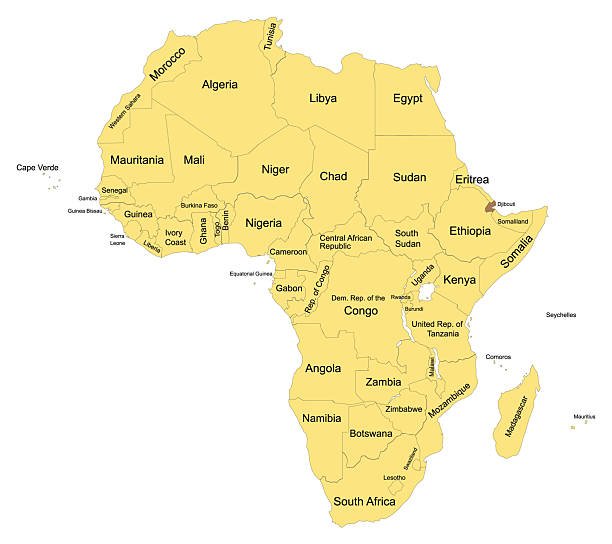
Fold mountains are indeed found in Africa, primarily represented by the impressive Atlas Mountains in the continent's northwest and the ancient Cape Fold Belt in the south. These significant geological features are formed through intense compression and folding of the Earth's crust, typically at convergent plate boundaries, and they offer compelling insights into Africa's complex tectonic history. While Africa is often associated with volcanic peaks and vast plateaus, its fold mountain ranges stand as testament to powerful past collisions that shaped its diverse landscapes.
What Are Fold Mountains? A Geological Primer
Fold mountains are the most common type of mountain range on Earth, characterized by their wavy, folded layers of rock. They form when two or more of Earth's tectonic plates collide, creating immense compressional forces. This pressure causes the layers of rock, particularly sedimentary rocks that were once laid down in marine basins, to buckle and fold rather than simply fracture. This process, known as orogeny (mountain building), can take millions of years.
During the formation of fold mountains, rocks are contorted into various structures:
- Anticlines: Upward-arching folds where rock layers are pushed upwards.
- Synclines: Downward-arching folds, forming troughs where rock layers dip downwards.
- Monoclines: A bend in rock strata that is restricted to one limb of an anticline or syncline.
- Nappes: Large-scale recumbent folds where rock layers have been overturned and thrust horizontally over other rock units.
The intensity of folding can vary greatly, from gentle undulations to highly complex, overturned folds. The eroded remnants of these folded structures are what we see as mountain ranges today, providing vital clues about the planet's dynamic geological past and the incredible forces at play beneath its surface.
The Majestic Atlas Mountains: Africa's Premier Fold Range
The Atlas Mountains represent Africa's most extensive and geologically recent fold mountain system. Stretching for approximately 2,500 kilometers (1,600 miles) across Northwest Africa, they are a dominant feature of the landscape.
Location and Extent
The Atlas range traverses three North African countries: Morocco, Algeria, and Tunisia. They separate the Mediterranean and Atlantic coastlines from the vast Sahara Desert, playing a crucial role in the region's climate and ecosystems.
Geological History and Formation
The formation of the Atlas Mountains in Africa is primarily linked to the ongoing collision between the African and Eurasian tectonic plates. This collision began during the Cenozoic Era, roughly 65 million years ago, and continues to this day. The African plate is subducting beneath the Eurasian plate, leading to compressional forces that uplifted and folded the sedimentary rocks accumulated in the ancient Tethys Sea basin.
Key phases of Atlas orogeny:
- Paleozoic Era: Older, Variscan orogeny formed foundational massifs (Anti-Atlas).
- Mesozoic Era: Relatively quiet period with sedimentation.
- Cenozoic Era (Miocene to Present): Main phase of folding and uplift due to Africa-Eurasia collision, forming the High Atlas, Middle Atlas, and Saharan Atlas.
The **tectonic activity** continues, evidenced by frequent seismic activity in the region, particularly in Morocco.
Sub-ranges and Peaks
The Atlas system is not a single range but a series of parallel chains, each with distinct characteristics:
- High Atlas: Located in central Morocco, home to North Africa's highest peak, Jebel Toubkal (4,167 meters or 13,671 feet). This range is heavily glaciated in its highest parts.
- Middle Atlas: Also in Morocco, known for its extensive cedar forests and volcanic plateaus.
- Saharan Atlas: Running through Algeria and into Tunisia, this range forms the northern edge of the Sahara Desert, creating an important barrier.
- Anti-Atlas: An older, more eroded range in southern Morocco, separated from the High Atlas by the Sous Valley. Geologically, it represents the ancient core that was uplifted and reactivated during the Cenozoic Atlas orogeny.
Environmental and Cultural Significance
The Atlas Mountains Africa play a vital role in the region. They act as a significant climatic barrier, trapping moisture from the Atlantic and Mediterranean, resulting in fertile agricultural lands on their northern flanks and a stark rain shadow effect leading to the aridity of the Sahara to the south. The mountains are also biodiversity hotspots, harboring unique flora and fauna adapted to high altitudes and varying climates.
Culturally, the Atlas has been home to the indigenous Berber people for millennia, whose traditional way of life, including pastoralism and subsistence farming, is deeply intertwined with the mountain environment. The mountains also hold significant mineral resources, including phosphates, iron ore, and lead.
The Ancient Cape Fold Belt: A Southern Gem
In stark contrast to the relatively youthful Atlas Mountains, the Cape Fold Belt in Southern Africa represents an ancient and deeply eroded fold mountain system. It showcases a different chapter of Africa's **geological formation**.
Location and Extent
The Cape Fold Belt South Africa is located along the southwestern and southern coast of South Africa, predominantly within the Western and Eastern Cape provinces. It forms a dramatic backdrop to the famous Garden Route and Winelands regions.
Geological History and Formation
The Cape Fold Belt began forming much earlier than the Atlas, primarily during the Permian and Triassic periods, roughly 300 to 230 million years ago. Its formation is linked to the closure of the ancient Agulhas Sea and the collision of the Gondwana supercontinent, specifically when the Falkland Plateau (part of what is now South America) impinged upon the southwestern margin of the African plate.
The vast quantities of sediments, primarily sandstones and shales of the Cape Supergroup and Karoo Supergroup, which had accumulated in a basin along the southern margin of Gondwana, were intensely folded, faulted, and uplifted during this orogenic event. Over subsequent geological eras, erosion has sculpted these folded layers into the rugged ranges visible today.
Key Ranges and Features
The Cape Fold Belt comprises several prominent mountain ranges, each with unique characteristics:
- Swartberg Mountains: Famous for the dramatic Swartberg Pass and the Cango Caves, showcasing deeply eroded valleys and high peaks.
- Cederberg Mountains: Known for their spectacular sandstone formations, rock art, and unique fynbos vegetation.
- Outeniqua Mountains: Forming part of the picturesque Garden Route, contributing to the region's high rainfall.
- Langeberg Mountains: A long, relatively continuous range dominating the landscape east of Cape Town.
These ranges are characterized by their distinctive parallel ridges and valleys, a classic manifestation of folded rock strata, and are a key component of South Africa's diverse topography.
Economic and Ecological Importance
The Cape Fold Belt is critical to South Africa's economy and ecology. The mountains act as significant water catchment areas, feeding rivers that supply the fertile agricultural lands, including the renowned Western Cape Winelands. Ecologically, the region is a global biodiversity hotspot, particularly for the unique fynbos biome, which contains thousands of endemic plant species. These mountains also provide stunning landscapes for tourism and outdoor activities.
Other Notable Mountainous Regions in Africa and Important Distinctions
While the Atlas Mountains and the Cape Fold Belt are the prime examples of fold mountains found in Africa, it's crucial to understand that not all of Africa's impressive peaks are formed by folding. The continent boasts a variety of mountain types resulting from different geological processes.
The Drakensberg Mountains (Southern Africa)
The Drakensberg Mountains, meaning 'Dragon's Mountains' in Afrikaans, are Southern Africa's highest range, forming a massive escarpment. However, they are predominantly not fold mountains. Their formation is largely attributed to the erosion of an uplifted plateau composed of resistant basaltic lavas, which cap softer sedimentary rocks of the Karoo Supergroup. While there is underlying geological complexity and some regional tilting, the prominent escarpment features are primarily a result of faulting and prolonged erosion, not compressional folding on the scale seen in the Atlas or Cape Fold Belt.
East African Rift Valley Mountains (e.g., Kilimanjaro, Mount Kenya)
Many of Africa's most famous and highest mountains, such as Mount Kilimanjaro, Mount Kenya, and Mount Elgon, are volcanic in origin. They are associated with the tectonic activity of the East African Rift Valley, where the African plate is slowly splitting apart. These are not fold mountains but rather large stratovolcanoes or block-faulted mountains (horsts and grabens) formed by extensional forces, where blocks of the Earth's crust are lifted or dropped along faults.
Ahaggar and Tibesti Massifs (Sahara)
The Ahaggar (Hoggar) Mountains in southern Algeria and the Tibesti Mountains in northern Chad are vast, rugged mountain ranges in the Sahara Desert. These are primarily ancient volcanic massifs and uplifted basement rocks, not formed by recent compressional folding. They represent older geological structures and more recent volcanic activity.
Understanding these distinctions is key to appreciating the full spectrum of Africa's geological history and the diverse processes that have shaped its majestic topography.
The Impact of Fold Mountains on African Landscapes and Life
The presence of African fold mountains has had profound and far-reaching impacts on the continent's geography, climate, biodiversity, and human development.
Climate Influence
As seen with the Atlas Mountains, these ranges create significant rain shadow effects. The windward sides receive higher rainfall, fostering lush vegetation and agriculture, while the leeward sides become arid or desert-like. This influences hydrological cycles, river systems, and the availability of water resources for communities and ecosystems.
Biodiversity Hotspots
Mountainous regions often serve as refugia for unique species and promote speciation due to isolation and varied microclimates. The Atlas and Cape Fold Belt are both recognized as biodiversity hotspots, hosting numerous endemic plant and animal species found nowhere else on Earth. The fynbos biome of the Cape Fold Belt, in particular, is one of the most biodiverse floral kingdoms globally.
Resource Reservoirs
Fold mountains are frequently associated with valuable mineral deposits. The geological processes of compression and metamorphism can concentrate ores. For instance, the Atlas Mountains contain deposits of phosphates, iron, lead, and zinc. These resources are economically significant for the countries they traverse.
Human Settlement and Culture
The rugged terrain of fold mountains has historically offered protection and isolation, leading to the development of distinct cultures and traditional ways of life, such as those of the Berber people in the Atlas. Mountain valleys and plateaus also provide fertile ground for agriculture and support pastoral communities. They often serve as natural boundaries and have influenced historical trade routes and migration patterns.
Tourism and Recreation
The stunning landscapes, challenging peaks, and rich cultural heritage of Africa's fold mountains attract tourists and adventurers. Trekking in the High Atlas to ascend Jebel Toubkal, exploring the dramatic passes of the Swartberg Mountains, or enjoying the scenic beauty of the Cederberg are popular activities, contributing to local economies and promoting conservation efforts.
Exploring Africa's Fold Mountains: Tips for Travelers
For those eager to experience the grandeur of fold mountains found in Africa, here are a few tips to enhance your adventure:
- Plan Your Route: Research specific trails, passes, and natural attractions within the Atlas Mountains (Morocco, Algeria) or the Cape Fold Belt (South Africa).
- Best Time to Visit: For the Atlas, spring (April-May) and autumn (September-October) offer pleasant temperatures. For the Cape Fold Belt, late spring (October-November) and early autumn (March-April) are ideal for hiking.
- Guided Tours: Consider hiring local guides, especially for challenging treks, to ensure safety, learn about local culture, and benefit from their expertise on flora, fauna, and geology.
- Appropriate Gear: Pack layers of clothing, sturdy hiking boots, sun protection, and plenty of water, as mountain weather can be unpredictable.
- Respect Local Culture: Be mindful of local customs, especially in traditional Berber villages in the Atlas.
- Environmental Awareness: Practice leave-no-trace principles to preserve these beautiful and fragile environments.
Conclusion
In conclusion, the answer to the question, "Are fold mountains found in Africa?" is a resounding yes. Africa is home to magnificent fold mountain ranges, most prominently the Atlas Mountains in the north and the Cape Fold Belt in the south. These geological wonders are not only breathtaking landscapes but also provide invaluable insights into the immense forces of plate tectonics and the continent's dynamic past. From their role in shaping climate and biodiversity to influencing human cultures and economies, Africa's fold mountains are integral to its natural heritage and continue to be areas of significant scientific, ecological, and cultural importance.
Enjoyed this read?
Share it with your friends and colleagues.