Is There A Gaza In Africa

BSC Insights Admin
October 01, 2026
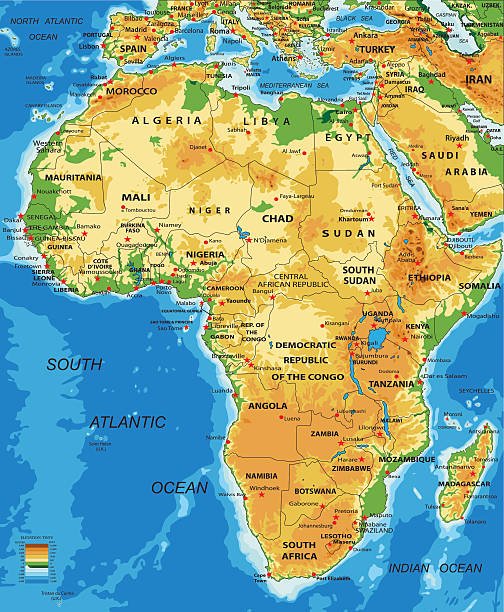
The question, "Is there a Gaza in Africa?" is a pertinent one, often stemming from a search for parallels in global geopolitical complexities. The direct answer is no; there is no territory in Africa that is an exact equivalent or counterpart to the Gaza Strip in terms of its unique geographical, historical, political, and demographic circumstances. While Africa certainly has regions grappling with territorial disputes, enclaves, and protracted conflicts, none precisely mirror the highly specific and internationally recognized characteristics of the Gaza Strip as a densely populated, blockaded Palestinian territory.
This article aims to provide an authoritative examination of why such a direct comparison is not accurate, while exploring the diverse geopolitical landscapes of Africa. We will delve into the defining features of the Gaza Strip and then contrast these with various African regions that, at first glance, might seem to share some characteristics, ultimately highlighting the crucial differences that make Gaza a singular case.
Understanding the Gaza Strip: A Unique Context
To fully comprehend why there isn't a Gaza Strip in Africa, it's essential to first understand what defines Gaza itself. The Gaza Strip is a small Palestinian territory on the eastern coast of the Mediterranean Sea, bordering Egypt on the southwest and Israel on the east and north. It is one of the most densely populated areas in the world, home to over two million Palestinians, many of whom are refugees from the 1948 Arab-Israeli War and their descendants.
Geographical and Political Status of Gaza
Geographically, Gaza is a narrow strip of land approximately 41 kilometers long and 6 to 12 kilometers wide. Its coastal location has historically made it a strategic trade route, but today, its borders with Israel and Egypt are heavily controlled, and it faces a land, air, and sea blockade. This blockade has profoundly impacted the lives of its inhabitants, limiting movement, trade, and access to essential resources, contributing to significant humanitarian challenges. The Gaza political status is complex; while it is administered by Hamas, an internationally recognized Palestinian Authority exists for other Palestinian territories, and its sovereignty remains highly contested, with Israel maintaining significant control over its borders, airspace, and maritime access.
Key Characteristics Defining Gaza
Several critical factors make the Gaza Strip distinct:
- Territorial Dispute and Occupation: Gaza is internationally considered an occupied territory by Israel, a status that shapes almost every aspect of its existence. This is a central element of the broader Israeli-Palestinian conflict.
- High Refugee Population: A significant majority of Gaza's population comprises registered refugees who were displaced from other parts of historical Palestine. Their right of return is a core issue.
- Sustained Blockade: The ongoing blockade has created what many describe as an open-air prison, severely restricting economic development and daily life.
- Intense International Focus: Due to its central role in the Middle East conflict, Gaza receives continuous global attention, diplomatic efforts, and humanitarian aid.
- Specific Historical Trajectory: From Ottoman rule to the British Mandate, Egyptian administration, Israeli occupation, and eventually Palestinian self-rule under severe constraints, Gaza's history is unique.
These combined elements create a unique geopolitical entity that is not easily replicated anywhere else, including the diverse continent of Africa. When people ask about an African Gaza equivalent, they are often searching for a place that shares a combination of these extreme pressures and specific historical context.
Exploring African Geopolitical Landscapes: Similarities and Crucial Differences
Africa is a vast continent with 54 recognized countries, each with its own rich history, diverse cultures, and complex geopolitical challenges. While one might look for regions with high population density, territorial disputes, or humanitarian crises, a direct parallel to the Gaza Strip remains elusive.
Geographical Enclaves and Exclaves in Africa
Africa does host several geographical anomalies, including enclaves and exclaves, which are territories geographically separated from the main part of their country or entirely surrounded by another. However, their political status, historical background, and humanitarian situations differ significantly from Gaza.
- Cabinda (Angola): The province of Cabinda is an exclave of Angola, separated from the rest of the country by a strip of the Democratic Republic of Congo. Rich in oil, Cabinda has historically been a source of separatist movements and conflict with the Angolan government. While it's geographically detached and has experienced conflict, it is an integral part of Angola's sovereign territory, not an occupied or blockaded entity in the same international legal sense as Gaza. The Cabinda Angola situation is driven by resource control and historical grievances within a sovereign state, rather than an international occupation by a foreign power.
- Ceuta and Melilla (Spain in Morocco): These are two Spanish autonomous cities located on the northern coast of Africa, bordering Morocco. They represent the last European colonial outposts on mainland Africa and are claimed by Morocco. While they are enclaves surrounded by another country and are subjects of territorial dispute, their status is that of fully integrated parts of Spain, with European Union protections, and their populations do not live under a blockade or occupation akin to Gaza. The context of Ceuta Melilla Spain is one of historical colonial inheritance and border control, not a protracted ethno-national conflict and occupation.
These examples illustrate that while geographical separation and territorial claims exist, the defining characteristics of Gaza—its status as an occupied territory, the blockade, and the specific dynamics of the Israeli-Palestinian conflict—are absent.
Regions of Conflict and Displacement in Africa
Africa has unfortunately witnessed numerous protracted conflicts, leading to immense suffering, internal displacement, and refugee crises. These African conflict zones often involve complex ethnic, political, and economic factors, but their nature and international status differ from Gaza.
- Eastern Democratic Republic of Congo (DRC): This region has been plagued by decades of conflict involving numerous armed groups, often fueled by control over mineral resources and ethnic tensions. It has resulted in millions of deaths and massive displacement, leading to one of the world's worst humanitarian crises. While the humanitarian scale is immense, the DRC conflict is largely internal or regional, not defined by an external power's occupation and blockade of a single, internationally recognized disputed territory.
- Somalia: Decades of civil war, clan-based conflicts, and the rise of extremist groups have destabilized Somalia, creating a fragile state and recurring humanitarian emergencies. While there is significant external influence and international intervention, Somalia's challenges revolve around state-building, governance, and internal security, rather than the occupation of a distinct, internationally bounded territory like Gaza. The Somalia geopolitical context is one of state collapse and internal struggle.
- The Sahel Region: Countries like Mali, Burkina Faso, and Niger are experiencing escalating violence, insurgencies, and humanitarian crises driven by extremist groups, climate change, and weak governance. The challenges are vast and multi-faceted, affecting large geographical areas and multiple nations, fundamentally different from Gaza's specific situation.
These regions, while experiencing immense suffering and displacement, do not fit the description of an occupied, blockaded, and densely populated enclave subject to a specific, decades-long ethno-national conflict with an external state over its sovereignty.
Disputed Borders and Self-Determination Movements
Africa also has examples of territories seeking self-determination or where borders remain contested, but again, the specifics diverge from Gaza.
- Western Sahara: This territory in Northwest Africa is largely controlled by Morocco, but its sovereignty is disputed by the Polisario Front, which seeks independence. It is recognized by some countries as an independent state (SADR) and by others as part of Morocco. While this is a clear case of an unresolved territorial status and a struggle for self-determination, the nature of the control, the demographic makeup, and the absence of a naval/air blockade differentiate it significantly from Gaza. The Western Sahara status is an ongoing decolonization issue rather than an occupied Palestinian territory.
- Somaliland: A self-declared independent state in the Horn of Africa, Somaliland has its own government, currency, and military but lacks widespread international recognition. Its situation is one of de facto independence and a quest for formal recognition, rather than an occupied territory facing a blockade by an external power.
Factors Shaping Territorial Realities in Africa vs. Gaza
The differences between African geopolitical realities and the Gaza Strip stem from distinct historical and political trajectories.
Colonial Legacy and Post-Colonial Borders
Most African borders were drawn by European colonial powers, often without regard for ethnic or cultural lines. This post-colonial borders Africa issue has been a root cause of numerous interstate and intrastate conflicts, leading to arbitrary divisions and challenges to national cohesion. Gaza's borders, while also influenced by colonial powers (British Mandate), are more defined by the outcomes of specific wars and ongoing security concerns of a neighboring state.
Resource Scarcity and Geopolitical Competition
Many African territorial disputes are exacerbated by competition over natural resources like oil, minerals, and water, or by land tenure issues. While resources play a role in the broader Middle East conflict, Gaza's situation is primarily driven by historical claims, national identity, and security concerns, rather than direct control over vast natural resources within the strip itself.
Internal Dynamics and External Influences
African conflicts often involve complex internal dynamics, including ethnic rivalries, political grievances, and the struggles of emerging democracies. External actors certainly play a role, but the core issues are frequently rooted in internal governance and historical injustices within the continent. Gaza, while having internal political divisions, is fundamentally shaped by its relationship with an external occupying power and the broader Middle East conflict, making it a distinct case of occupation and blockade.
Why the Analogy of "Gaza in Africa" Doesn't Quite Fit
Ultimately, the reason there is no direct "Gaza in Africa" lies in the specific confluence of factors that define the Gaza Strip. No single African territory encapsulates the unique combination of:
- A tiny, exceptionally densely populated coastal enclave.
- Subject to a sustained and comprehensive blockade by an external power.
- Populated overwhelmingly by refugees from a specific historical conflict.
- The focus of an ongoing, internationally recognized, and highly contentious ethno-national conflict.
- Administered by an entity with limited international recognition, within a broader occupied territory.
While African countries face immense challenges, including humanitarian crises, displacement, and territorial disputes, these are driven by different historical circumstances, political structures, and international legal frameworks. To compare them directly to Gaza would be to oversimplify the distinct complexities of both. Africa's challenges are unique to its colonial past, post-independence struggles, and internal dynamics, just as Gaza's situation is specific to the Israeli-Palestinian conflict.
Conclusion: Understanding Africa's Complexities Beyond Simple Analogies
In conclusion, while the question "Is there a Gaza in Africa?" is a natural one when trying to find global analogies for complex geopolitical situations, the answer remains unequivocally no. The Gaza Strip possesses a unique set of geographical, historical, political, and humanitarian characteristics that do not have a direct parallel on the African continent. Africa, with its vast diversity, presents its own unique set of geopolitical challenges, including various forms of enclaves, conflict zones, and territorial disputes. However, these situations are shaped by distinct historical legacies, internal political dynamics, and international relations that set them apart from the highly specific context of the Gaza Strip. Understanding each region on its own terms, rather than through potentially misleading analogies, is crucial for accurate geopolitical analysis and effective policy-making.
Enjoyed this read?
Share it with your friends and colleagues.