Is There Glaciers In Africa

BSC Insights Admin
October 01, 2026
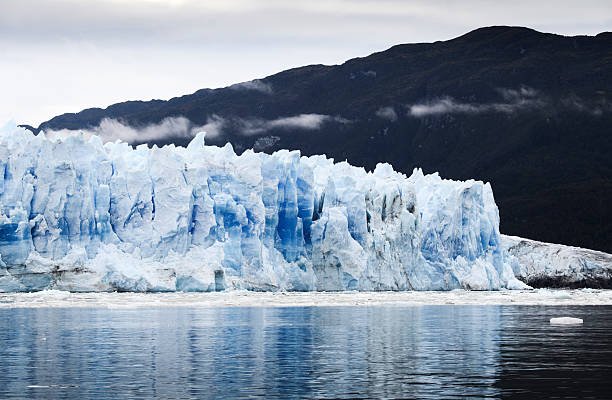
Yes, there are glaciers in Africa, but their existence is precarious and their numbers are dwindling at an alarming rate. Contrary to popular belief that Africa is solely a continent of deserts and savannas, several of its highest peaks host rare tropical glaciers, primarily found on Mount Kilimanjaro, Mount Kenya, and the Rwenzori Mountains. These magnificent ice formations are not merely geological marvels; they are critical indicators of global climate change and vital sources of freshwater for surrounding ecosystems and communities. However, decades of rising global temperatures and altered weather patterns have pushed these iconic ice caps to the brink of disappearance, painting a stark picture of the environmental challenges facing our planet.
Understanding the presence and rapid retreat of African glaciers provides crucial insights into the broader impacts of climate change. While significantly smaller than polar ice caps or Himalayan giants, the glaciers in Africa represent a unique climate phenomenon, surviving at the equator's doorstep due to extreme elevation. Their ongoing melt has profound implications, from altering regional water cycles to threatening biodiversity and local livelihoods. This article delves into where these last vestiges of ice can be found, the scientific reasons behind their decline, and the potential consequences for the continent.
The Last Glacial Strongholds of Africa
Africa's glaciers are found on three distinct mountain ranges, each presenting a unique high-altitude environment. These peaks rise dramatically from the landscape, creating conditions cold enough to sustain ice formations, even in the tropics.
Mount Kilimanjaro: Africa's Iconic Ice Cap
Mount Kilimanjaro, standing majestically in Tanzania at 5,895 meters (19,341 feet), is the highest peak in Africa and perhaps the most famous home to African glaciers. Its distinctive flat-topped Kibo cone once boasted a significant ice cap, which has been a prominent feature for centuries. Scientific observations, including those from historical photographs and geological surveys, reveal a dramatic and continuous retreat of these glaciers over the last century.
Historically, Kilimanjaro's summit was almost entirely covered by a thick ice sheet. Today, what remains are scattered patches and isolated ice fields, primarily on the northern and southern flanks of Kibo's crater rim. Key remaining glaciers include:
- Furtwängler Glacier: Once a substantial ice field in the Kibo crater, it has significantly shrunk and fragmented.
- Northern Ice Field (NIF): A large, relatively flat ice sheet on the northern side.
- Southern Ice Field (SIF): Consisting of several distinct remnants on the southern side, including the Rebmann and Heim glaciers.
Research indicates that Kilimanjaro has lost approximately 85% of its ice cover since 1912, with the rate of retreat accelerating in recent decades. Projections suggest that the glaciers on Mount Kilimanjaro could completely vanish within the next few decades, possibly by 2040 or 2060. The loss is primarily attributed not just to melting but also to sublimation, where ice directly converts to water vapor, exacerbated by reduced snowfall and increased solar radiation.
Mount Kenya: A Vanishing Legacy
Mount Kenya, Africa's second-highest peak at 5,199 meters (17,057 feet), located in Kenya, is another vital site for tropical glaciers. This ancient, eroded stratovolcano once harbored numerous glaciers nestled between its jagged peaks. These glaciers are essential for feeding the streams and rivers that flow down its slopes, supporting a rich biodiversity and agricultural communities.
The glaciers on Mount Kenya, such as the Lewis Glacier, Tyndall Glacier, and Darwin Glacier, have experienced an even more severe decline than those on Kilimanjaro. The Lewis Glacier, the largest of the remaining ice bodies, has been meticulously studied and documented. Its area has shrunk by over 90% since the late 19th century, serving as a stark reminder of the rapid warming occurring at high altitudes.
Scientists have observed that the rate of ice loss on Mount Kenya is among the highest globally, proportionally. Many of the smaller glaciers have already disappeared entirely, leaving behind barren rock faces. The complete disappearance of Mount Kenya's remaining ice is anticipated within the next decade or two, further highlighting the fragility of these unique ecosystems.
The Rwenzori Mountains (Mountains of the Moon): Tropical Glaciers in Peril
Straddling the border between Uganda and the Democratic Republic of Congo, the Rwenzori Mountains, often dubbed the "Mountains of the Moon," are famous for their unique Afro-alpine vegetation and their role as the source of the Nile. These mountains are home to Africa's third significant cluster of glaciers in Africa, located on peaks like Mount Stanley (Margherita Peak, 5,109 meters/16,762 feet), Mount Speke, and Mount Baker.
Unlike the isolated ice caps of Kilimanjaro and Mount Kenya, the Rwenzori glaciers are typically smaller valley glaciers. Historically, they were extensive, covering significant portions of the upper peaks. However, like their counterparts, the Rwenzori glaciers have undergone a drastic reduction in size and number.
Scientific surveys indicate that the total glaciated area in the Rwenzoris has decreased by over 75% since 1906, with many once-named glaciers having vanished completely. For instance, the Speke Glacier and Elena Glacier have fragmented significantly, while others, such as the Moore Glacier, are barely recognizable remnants. The dense cloud cover and frequent precipitation in the Rwenzoris might suggest slower melting, but increased temperatures and altered precipitation patterns have proven detrimental. The meltwater from these glaciers feeds vital rivers, making their disappearance a critical concern for water security in the region.
Why Are Africa's Glaciers Disappearing? The Role of Climate Change
The rapid retreat of glaciers in Africa is a clear and undeniable symptom of global climate change. While local factors can play a role, the overarching driver is the anthropogenic increase in greenhouse gas emissions leading to a warmer planet.
Global Warming and Rising Temperatures
The most direct cause of glacial melt is the increase in average global and regional temperatures. Data from weather stations and satellite observations consistently show a warming trend across Africa, especially at higher altitudes. Warmer air temperatures directly lead to more rapid melting of ice and snow. The freezing line is shifting upwards, meaning less snow accumulates to replenish the glaciers, and existing ice melts faster.
Changes in Precipitation Patterns
While warmer temperatures are critical, changes in precipitation also play a significant role. For glaciers to survive and grow, they need consistent snowfall. However, climate change is altering regional weather patterns:
- Reduced Snowfall: Many regions are experiencing less frequent or less intense snowfall at high elevations, reducing the accumulation that feeds the glaciers.
- Increased Rainfall: Instead of snow, precipitation often falls as rain, even at altitudes where snow was once common. Rain accelerates ice melt much more effectively than snow, further eroding the glaciers.
Sublimation: A Major Contributor to Ice Loss
For tropical glaciers like those on Kilimanjaro, Mount Kenya, and the Rwenzoris, sublimation is a particularly critical factor in their decline. Sublimation is the process where ice turns directly into water vapor without first melting into liquid water. This process is highly efficient under specific atmospheric conditions:
- High Solar Radiation: At high altitudes near the equator, solar radiation is intense, directly heating the ice.
- Low Humidity and Dry Air: The dry air masses often found at these elevations, especially on Kilimanjaro, absorb water vapor readily, facilitating sublimation.
- Strong Winds: Winds can carry away the water vapor, preventing saturation and allowing more sublimation to occur.
Research on Kilimanjaro's glaciers suggests that sublimation accounts for a significant portion, possibly even the majority, of the ice loss, surpassing direct melting. This makes these glaciers particularly vulnerable to even subtle changes in atmospheric conditions and moisture content, illustrating why their disappearance is so rapid despite their location in the heart of Africa.
The Ecological and Socio-Economic Impact of Glacial Retreat
The disappearance of African glaciers carries far-reaching consequences that extend beyond the mountain peaks themselves, affecting ecosystems, water resources, and human communities.
Water Resources and Hydrology
Glaciers act as natural water reservoirs, storing ice during cooler, wetter periods and releasing meltwater during drier seasons. This steady supply of meltwater is crucial for:
- River Flow: Many rivers and streams originating from these mountains rely on glacial melt to maintain flow, especially during dry seasons. For example, rivers fed by the Rwenzori glaciers contribute to the Nile Basin.
- Agriculture: Downstream communities depend on these rivers for irrigation, supporting vital agricultural practices. Reduced water availability can lead to crop failures and food insecurity.
- Drinking Water: Glacial meltwater contributes to the supply of potable water for local populations.
- Hydropower: Several African nations rely on hydropower generated from rivers fed by mountain runoff. A decline in consistent water flow can jeopardize energy production.
As the glaciers shrink, the initial effect might be an increase in meltwater, leading to more runoff. However, once the glaciers are gone, this temporary abundance will cease, resulting in a permanent reduction in water flow, particularly impacting dry-season availability. This poses a significant challenge for water management and resource allocation in already water-stressed regions.
Biodiversity and Ecosystems
The high-altitude environments surrounding Africa's glaciers are unique and support specialized Afro-alpine ecosystems. These areas host endemic species of flora and fauna adapted to cold, harsh conditions. The retreating ice alters these delicate habitats:
- Habitat Loss: As glaciers disappear, so do the unique microclimates and meltwater-fed environments that certain species depend on.
- Species Migration: Plants and animals may be forced to migrate to higher altitudes, but with the peaks themselves warming, there's often nowhere left to go, leading to increased extinction risks.
- Changes in Hydrology: Altered water flow patterns affect riparian ecosystems and wetland areas downstream, impacting species that rely on stable water levels.
The Rwenzori Mountains, for instance, are renowned for their biodiversity and unique "giant" plant species. The loss of glacial influence threatens the very conditions that allow these ecosystems to thrive.
Tourism and Local Economies
Mountains like Kilimanjaro and Mount Kenya are major tourist attractions, drawing climbers and adventurers from around the world. The sight of snow-capped peaks near the equator is a powerful draw. The diminishing African glaciers could impact tourism in several ways:
- Reduced Appeal: The iconic image of a snow-capped Kilimanjaro may become a thing of the past, potentially reducing its allure for some visitors.
- Economic Impact: Tourism provides significant revenue and employment opportunities for local communities, from guides and porters to lodge owners and souvenir vendors. A decline in tourism could have severe economic repercussions.
Cultural and Spiritual Significance
For many indigenous communities living near these mountains, the glaciers and the mountains themselves hold deep cultural, spiritual, and historical significance. They are often revered as sacred places, and their alteration or disappearance can represent a profound loss of heritage and identity.
The Future of African Glaciers: A Grim Outlook?
The scientific consensus regarding the future of glaciers in Africa is unfortunately grim. Current climate models and projections indicate that the remaining ice bodies on Mount Kilimanjaro, Mount Kenya, and the Rwenzori Mountains are likely to disappear entirely within the next few decades.
Mount Kenya's glaciers are projected to be gone first, possibly by 2030 or 2040. Kilimanjaro's ice fields may persist slightly longer due to their unique topography and sublimation-driven loss, but their complete demise is expected by mid-century. The Rwenzori glaciers face a similar fate. This means that future generations may only know these tropical glaciers through photographs and historical accounts.
The fate of these glaciers serves as a powerful symbol of the global climate crisis. Their rapid disappearance underscores the urgent need for concerted global action to reduce greenhouse gas emissions and mitigate the impacts of climate change. While local conservation efforts are important, the primary driver of their demise is global warming, necessitating international cooperation and policy changes.
Conclusion
In conclusion, the question of "Is there glaciers in Africa?" can still be answered with a qualified yes, but it is a fleeting reality. The majestic tropical glaciers clinging to the peaks of Mount Kilimanjaro, Mount Kenya, and the Rwenzori Mountains are vital, albeit rapidly shrinking, components of Africa's diverse landscape. These ancient ice formations are not only geological wonders but also crucial ecological and hydrological assets, providing essential meltwater and supporting unique high-altitude ecosystems. Their accelerated retreat is an unequivocal signal of the profound impact of global warming and altered precipitation patterns.
The impending complete disappearance of African glaciers within our lifetime carries significant implications for water security, biodiversity, local economies, and cultural heritage across Eastern and Central Africa. Their vanishing serves as a powerful, visible testament to the urgent need for global climate action. Protecting these last remnants of ice, and indeed all vulnerable ecosystems, requires a collective commitment to sustainable practices and robust climate policies to safeguard the planet for future generations.
Enjoyed this read?
Share it with your friends and colleagues.