Historical Facts About Africa

BSC Insights Admin
October 01, 2026
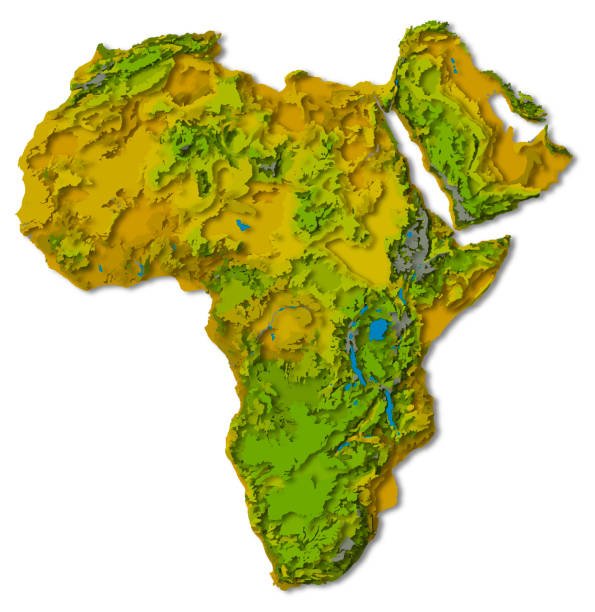
Africa, often called the cradle of humanity, boasts an incredibly rich and diverse history that predates many world civilizations. Delving into the historical facts about Africa reveals a continent shaped by powerful empires, innovative cultures, profound intellectual achievements, and resilient societies that have significantly influenced global development.
The Dawn of Civilization: Ancient African Civilizations
The history of Africa begins with the emergence of humankind, making it the oldest inhabited continent. However, beyond our earliest ancestors, Africa was home to some of the world's most sophisticated and enduring ancient African civilizations.
Ancient Egypt: A North African Powerhouse
While often associated with the Middle East, ancient Egypt was fundamentally an African civilization that flourished along the Nile River. Its history spans over 3,000 years, marked by dynastic rule, monumental architecture like the pyramids and sphinx, advanced writing systems (hieroglyphs), and a profound understanding of mathematics, astronomy, and medicine. The unification of Upper and Lower Egypt around 3100 BCE under Narmer (or Menes) established a powerful kingdom that left an indelible mark on global history. The legacy of its pharaohs, including figures like Akhenaten, Tutankhamun, and Cleopatra, continues to captivate and inspire. Ancient Egypt's influence spread widely, impacting neighboring cultures through trade, conquest, and cultural exchange.
The Kingdom of Kush (Nubia): Rivals and Successors to Egypt
South of Egypt, along the Nile, lay the formidable Kingdom of Kush, also known as Nubia. This ancient African civilization rivaled and, at times, conquered Egypt, even ruling as the 25th Dynasty of pharaohs (circa 747–656 BCE). Kush was renowned for its immense wealth, particularly from gold, and its mastery of iron production. Its capital, Meroë, became a thriving center of trade and innovation, developing its own unique hieroglyphic script and impressive pyramid fields. The Kushites' ability to adapt and thrive, despite powerful neighbors, underscores their resilience and sophisticated societal structures.
The Aksumite Empire: A Horn of Africa Power
In what is modern-day Ethiopia and Eritrea, the Aksumite Empire emerged as a dominant force in the Horn of Africa from the 1st to the 7th centuries CE. Aksum was a major naval and trading power, controlling a vast network that connected the Roman Empire, India, and other parts of Africa. Its strategic location allowed it to become a significant player in international trade, particularly in ivory, gold, and frankincense. Aksum was also one of the first states in the world to adopt Christianity as its official religion in the 4th century CE under King Ezana, a pivotal moment in African history timeline. The empire is famous for its colossal obelisks, which served as funerary monuments for its kings.
Great Empires of West Africa: Wealth and Learning
West Africa was home to a succession of powerful and prosperous African empires, built on extensive trade networks, particularly across the Sahara Desert, involving gold, salt, and enslaved people. These empires fostered intellectual growth, artistry, and complex administrative systems.
The Ghana Empire: The Land of Gold
The first of the great West African empires, the Ghana Empire (circa 300–1200 CE), rose to prominence due to its control over the trans-Saharan gold and salt trade routes. Located in what is now southeastern Mauritania and western Mali, Ghana's rulers were immensely wealthy, described by Arab scholars as possessing vast stores of gold. Their sophisticated military and administrative structures allowed them to maintain peace and security, essential for trade to flourish. Kumbi Saleh, its capital, was a bustling dual city with separate quarters for Muslim traders and the king's court, showcasing a vibrant multicultural environment.
The Mali Empire: Mansa Musa and Timbuktu
Following the decline of Ghana, the Mali Empire (circa 1230–1600 CE) emerged as an even larger and more influential power. Founded by Sundiata Keita, its most famous ruler was Mansa Musa, who reigned from 1312 to 1337. Mansa Musa's legendary pilgrimage to Mecca in 1324-1325 showcased Mali's incredible wealth, as he distributed vast amounts of gold, impacting economies across the Mediterranean. Mali's cities, particularly Timbuktu, became renowned centers of Islamic scholarship, trade, and culture, attracting scholars and artists from across the globe. The Sankore University in Timbuktu housed hundreds of thousands of manuscripts, making it a pivotal center of learning in the medieval world.
The Songhai Empire: Successor and Final Flourish
The Songhai Empire (circa 1464–1591 CE) succeeded Mali as the dominant power in West Africa. Under rulers like Sonni Ali and Askia Muhammad Toure, Songhai expanded its territory, consolidating control over crucial trade routes and further solidifying Timbuktu's status as an intellectual hub. Askia Muhammad's reign, in particular, saw a period of great administrative reform, legal development based on Islamic law, and military strength. The empire's sophisticated bureaucracy and educational institutions highlight the advanced nature of pre-colonial African societies. Its decline came from internal disputes and an invasion by Moroccan forces equipped with firearms.
Kingdoms and City-States: Diverse African Histories
Beyond these prominent empires, numerous other kingdoms and city-states flourished across Africa, each contributing uniquely to the continent's rich heritage.
Great Zimbabwe: Southern African Mystery
In Southern Africa, the remarkable ruins of Great Zimbabwe stand as a testament to a powerful and wealthy Shona kingdom that thrived from the 11th to the 15th centuries CE. This enormous stone city, built without mortar, served as a royal palace and a center for trade, connecting to the Swahili Coast and beyond. Its impressive architecture, including the Great Enclosure with its massive conical tower, demonstrates advanced building techniques and sophisticated social organization. The kingdom controlled vast gold fields and cattle herds, making it a significant economic force in the region.
The Kongo Kingdom: Central African Power
The Kongo Kingdom, established in the 14th century in what is now parts of Angola, the Democratic Republic of Congo, and the Republic of Congo, was one of the most organized and centralized states in Central Africa. It had a well-structured government, a sophisticated economy based on agriculture, trade (metals, salt, textiles), and a professional army. When Portuguese explorers arrived in the late 15th century, they found a powerful and respected kingdom. The early interactions were marked by diplomatic exchanges, with some Kongo kings even adopting Christianity. However, the burgeoning transatlantic slave trade eventually destabilized the kingdom, leading to its decline.
The Swahili Coast: Maritime Trade Hubs
Along East Africa's coast, a series of prosperous Swahili city-states emerged from the 9th century CE onwards, including Kilwa, Mombasa, Lamu, and Zanzibar. These city-states were vibrant centers of trade, forming a crucial link in the Indian Ocean trade network that connected Africa with Arabia, Persia, India, and China. They exchanged gold, ivory, timber, and enslaved people for ceramics, textiles, and spices. The unique Swahili culture, a blend of indigenous African Bantu traditions with Arab and Persian influences, flourished, evidenced by their distinct architecture, language (Swahili), and Islamic faith. This rich maritime history highlights Africa's deep connections to global trade long before European colonial expansion.
Pre-Colonial Africa: Innovation and Complexity
The period before European colonization, often simplistically portrayed as primitive, was in fact a time of immense innovation, cultural richness, and complex societal structures across the continent. Pre-colonial Africa was not a monolithic entity but a mosaic of diverse societies.
- Agriculture and Metallurgy: African societies pioneered sophisticated agricultural techniques adapted to diverse environments. Iron smelting developed independently in Africa, profoundly impacting tool-making, warfare, and agriculture across various regions. The Nok culture in modern-day Nigeria, dating back to 1000 BCE, is famous for its intricate terracotta sculptures and early iron production.
- Art and Architecture: From the Benin bronzes of West Africa to the rock-hewn churches of Lalibela in Ethiopia and the stone structures of Great Zimbabwe, African art and architecture demonstrate incredible skill, aesthetic value, and cultural depth.
- Political and Social Systems: Africa boasted a wide array of political systems, from highly centralized empires and kingdoms with complex bureaucracies to decentralized lineage-based societies and city-states. Many societies had sophisticated legal systems, councils of elders, and checks and balances on power.
- Oral Traditions and Knowledge: Knowledge transmission relied heavily on rich oral traditions, including epic poems, proverbs, and storytelling. Griots in West Africa, for example, served as historians, musicians, and storytellers, preserving centuries of communal memory.
Understanding these aspects is crucial for appreciating the full scope of rich African heritage and challenging eurocentric narratives that often overshadowed these achievements.
The Scars of History: Transatlantic Slave Trade and Colonialism
Despite its long and prosperous pre-colonial history, Africa faced two profoundly disruptive and devastating periods that reshaped its trajectory: the transatlantic slave trade and European colonialism.
The Transatlantic Slave Trade: A Catastrophic Loss
Beginning in the 16th century, the Transatlantic Slave Trade forcibly removed millions of Africans from their homes and transported them across the Atlantic to the Americas. This horrific enterprise, lasting over 400 years, had catastrophic demographic, economic, and social consequences for Africa. It depopulated vast regions, destabilized existing political structures, fueled inter-ethnic conflict as some African states participated in capturing and selling enslaved people, and diverted resources from productive activities towards warfare and the slave trade itself. The long-term impact includes a lasting legacy of underdevelopment, trauma, and racial discrimination that continues to affect societies on both sides of the Atlantic.
| Destination Region | Estimated Percentage | Estimated Number |
|---|---|---|
| British Caribbean | 16.5% | 2,260,000 |
| French Caribbean | 16.2% | 2,210,000 |
| Brazil | 38.5% | 5,260,000 |
| Spanish America | 11.2% | 1,530,000 |
| British North America/USA | 3.5% | 480,000 |
| Other (Dutch, Danish, etc.) | 14.1% | 1,930,000 |
| Total Estimated | 100% | 13,670,000 |
Note: These are estimates, and actual numbers may vary, but they highlight the immense scale of human loss.
The Scramble for Africa and Colonial Rule
In the late 19th century, European powers engaged in the "Scramble for Africa," a rapid and intense period of colonial expansion. The Berlin Conference of 1884-1885 formalized this partition, dividing the continent among European nations with little regard for existing African political or ethnic boundaries. Colonial rule, which lasted roughly from the 1880s to the 1960s, fundamentally restructured African economies to serve European industrial needs, exploited vast natural resources, imposed alien political systems, and suppressed local cultures and languages. While some infrastructure was built, it was primarily for extraction and control. African resistance was widespread, often violent, but ultimately overwhelmed by superior European military technology.
Decolonization and the Path to Modern Africa
The mid-20th century witnessed a powerful wave of nationalism across Africa, leading to the continent's rapid decolonization Africa and the emergence of independent nations.
The Rise of Independence Movements
Following World War II, weakened European colonial powers faced mounting pressure from African nationalist leaders and movements. Figures like Kwame Nkrumah of Ghana, Jomo Kenyatta of Kenya, Julius Nyerere of Tanzania, and Nelson Mandela of South Africa led the charge for self-determination. Ghana became the first sub-Saharan African nation to gain independence in 1957, sparking a domino effect across the continent. By the 1960s, most African nations had achieved independence, marking a new chapter in African history timeline.
Challenges of Nation-Building
The newly independent African states inherited arbitrary colonial borders, weak institutions, economies structured for raw material export, and societies often divided by colonial policies of "divide and rule." The challenges were immense:
- Establishing stable political systems.
- Building national unity amidst diverse ethnic groups.
- Developing sustainable economies.
- Overcoming the legacy of colonial exploitation and Cold War interventions.
Despite these hurdles, many nations embarked on ambitious development projects, fostered Pan-Africanism, and played significant roles in international affairs, exemplified by the Organization of African Unity (now the African Union).
Modern Africa: Resilience, Growth, and Future
Today, Africa is a continent of immense potential, grappling with the long shadows of its past while forging a dynamic future. Modern Africa is characterized by incredible resilience, economic growth in many regions, and a vibrant cultural resurgence.
- Economic Diversification: Many African nations are diversifying their economies beyond raw material extraction, investing in technology, manufacturing, and services. The African Continental Free Trade Area (AfCFTA) promises to boost intra-African trade and economic integration.
- Technological Innovation: Africa is a hub for mobile technology innovation, with widespread adoption of mobile banking and other digital services leapfrogging traditional infrastructure.
- Cultural Renaissance: African arts, music, literature, and fashion are gaining global recognition, celebrating the continent's diverse traditions and contemporary creativity.
- Addressing Challenges: While challenges like governance, poverty, and conflict persist in some areas, there are ongoing efforts and significant progress in promoting peace, democracy, and sustainable development.
The continent's large youth population represents a powerful demographic dividend, driving innovation and demanding greater opportunities. Understanding the powerful African kingdoms and their complex societies helps contextualize Africa's journey and its aspirations for the future.
Conclusion
The historical facts about Africa paint a picture of extraordinary depth, resilience, and global significance. From the ancient pharaohs of Egypt and the gold-rich empires of West Africa to the bustling Swahili city-states and the complex societies across its vast lands, Africa has always been a continent of innovation and influence. While the periods of the transatlantic slave trade and colonialism inflicted immense suffering and disruption, they do not define Africa's entire story. Instead, they highlight the incredible strength and perseverance of its people. Today, as Africa continues its journey of growth and self-determination, recognizing its profound and multifaceted past is essential for understanding its present and appreciating its dynamic future. The history of Africa is a testament to human ingenuity, cultural diversity, and an enduring spirit that continues to shape our world.
Enjoyed this read?
Share it with your friends and colleagues.