Hominids Found In Africa

BSC Insights Admin
October 01, 2026
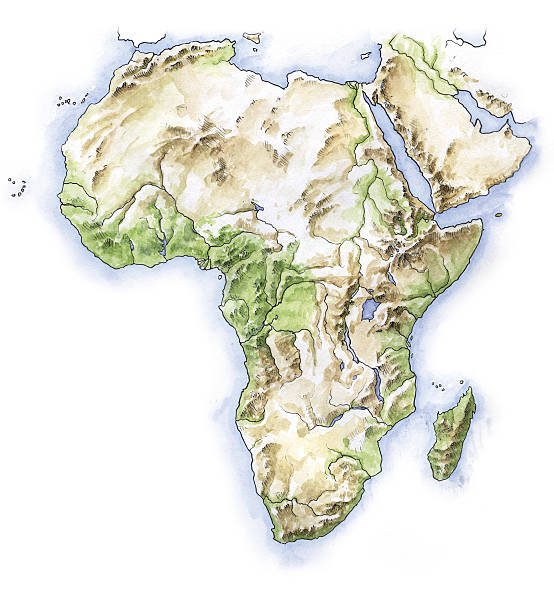
Hominids Found In Africa: Unraveling the Cradle of Humanity
Hominids found in Africa represent the earliest known ancestors of modern humans, providing irrefutable evidence that Africa is the true cradle of humanity. These incredible fossil discoveries, spanning millions of years, trace the evolutionary path from our ape-like forebears to the emergence of the Homo genus, revealing crucial insights into bipedalism, tool-making, and brain development that define what it means to be human.
Understanding Hominids: Our Ancient Ancestors
The term "hominid" broadly refers to the group consisting of all modern and extinct Great Apes (that is, modern humans, chimpanzees, gorillas, and orangutans and all their immediate ancestors). More specifically in paleoanthropology, the term "hominin" is often used to describe the group consisting of modern humans, extinct human species, and all our immediate ancestors (including members of the genera Homo, Australopithecus, Paranthropus, and Ardipithecus) but excluding chimpanzees, gorillas, and orangutans. For the purpose of discussing early human lineage and fossil discoveries in Africa, we will often use "hominid" in its more common, slightly broader, yet still relevant context to refer to our ancient human ancestors.
Early Hominin Characteristics
The defining characteristics that distinguish early hominins from other primates primarily revolve around locomotion and dental structure. Key traits include:
- Bipedalism: The ability to walk upright on two legs is a hallmark trait, freeing the hands for other activities like carrying objects and making tools. Evidence for bipedalism is seen in skeletal features such as the foramen magnum position, pelvis shape, and leg bone structure.
- Dental Changes: Reduction in canine size and changes in molar size and enamel thickness, indicative of a shifting diet.
- Increasing Brain Size: Over millions of years, there was a general trend towards larger and more complex brains, although early hominins still had relatively small brains compared to modern humans.
Why Africa? The Cradle of Human Evolution
The overwhelming majority of early hominid fossil discoveries in Africa solidify the continent's status as the birthplace of humanity. Several factors contributed to Africa being an ideal environment for early human evolution:
- Geological Activity: The creation of the Great Rift Valley in East Africa played a pivotal role. The rifting created diverse environments, including open grasslands (savannas), which favored bipedal locomotion. Volcanic activity associated with the Rift Valley also provided excellent conditions for fossilization and accurate dating of archaeological sites.
- Climate Change: Fluctuations in global and regional climates over millions of years led to shifts in vegetation and landscapes. This environmental pressure likely spurred adaptive changes in hominins, encouraging traits like bipedalism for long-distance travel and foraging in open savannas.
- Biodiversity: Africa's rich biodiversity offered a wide array of food sources and challenges, driving evolutionary innovation.
These unique conditions created a natural laboratory for the development of species that would eventually lead to modern humans.
Key Hominid Discoveries in Africa: A Timeline of Our Past
The history of human evolution in Africa is told through an extraordinary collection of fossil finds. Each discovery adds another piece to the complex puzzle of our origins.
Australopithecus: The Southern Apes
The genus Australopithecus (meaning "southern ape") represents some of the most famous and crucial early hominids. They lived between approximately 4.2 and 1.9 million years ago and are characterized by a mix of ape-like and human-like features, most notably habitual bipedalism.
- Lucy (Australopithecus afarensis): Discovered in Ethiopia in 1974, the partial skeleton of "Lucy" is perhaps the most iconic early human ancestor. Dating back 3.2 million years, Lucy provided definitive evidence of bipedalism in a species with a relatively small brain, challenging previous assumptions about which trait evolved first. Many more specimens of A. afarensis have since been found, primarily in the Afar region of Ethiopia and Laetoli, Tanzania, where fossilized footprints provide further proof of their upright gait.
- Taung Child (Australopithecus africanus): Discovered in South Africa in 1924 by Raymond Dart, the Taung Child was the first hominin fossil found in Africa, though its significance was initially debated. This juvenile skull, dating around 2.8 million years ago, showed evidence of bipedalism and a more human-like dental pattern.
- Other Australopithecines: Other species include Australopithecus anamensis (4.2-3.9 mya), considered a likely ancestor of A. afarensis, and Australopithecus sediba (around 2 million years ago) from South Africa, which exhibits a mosaic of features that hint at a close relationship with the genus Homo.
Paranthropus: Robust Cousins
Coexisting with later Australopithecines and early Homo species, the genus Paranthropus (often called "robust australopithecines") represents a separate branch of the hominin family tree. They are known for their massive chewing muscles, large molars, and sagittal crests, adaptations for a diet of tough, fibrous plant material.
- Paranthropus boisei and Paranthropus robustus: Found in East and South Africa respectively, these species illustrate the diversity of early hominins and the different evolutionary paths they took to adapt to changing environments.
Early Homo: The Dawn of Tool-Makers
The emergence of the genus Homo marks a significant turning point, characterized by increasing brain size and the systematic production of stone tools.
- Homo habilis ("Handy Man"): Dating from approximately 2.4 to 1.4 million years ago, Homo habilis is often credited with being the first consistent maker of stone tools, specifically the Oldowan toolkit. Found in East and South Africa, this species had a larger brain than Australopithecines and a more human-like hand structure.
- Homo erectus ("Upright Man"): Appearing around 1.9 million years ago, Homo erectus was a highly successful and adaptable species. With an even larger brain and more advanced Acheulean tools, Homo erectus was the first hominin to migrate out of Africa, reaching Asia and Europe. Significant finds in Africa include "Turkana Boy" from Kenya, a nearly complete skeleton providing vast information about their growth and stature.
- Homo naledi: A remarkable and relatively recent discovery from the Rising Star Cave system in South Africa (first announced in 2015), Homo naledi presents a fascinating puzzle. Dating to a surprisingly recent 335,000 to 236,000 years ago, this species had a small brain but possessed many human-like features, and its burial context suggests complex behaviors previously attributed only to larger-brained hominins.
Here's a summary of some key hominid species and their contributions:
| Hominin Species | Approximate Timeframe | Key Characteristics/Discoveries | Location |
|---|---|---|---|
| Australopithecus afarensis | 3.9 to 2.9 million years ago | Lucy; definitively bipedal; small brain | East Africa (Ethiopia, Tanzania) |
| Australopithecus africanus | 3.3 to 2.1 million years ago | Taung Child; rounded braincase | South Africa |
| Homo habilis | 2.4 to 1.4 million years ago | "Handy Man"; first stone tool maker (Oldowan) | East and South Africa |
| Homo erectus | 1.9 million to 110,000 years ago | "Upright Man"; controlled fire; first to migrate out of Africa | Africa, Asia, Europe |
| Homo naledi | Approx. 335,000 to 236,000 years ago | Rising Star Cave; small brain, human-like hands/feet | South Africa |
Methods of Discovery and Analysis: Piecing Together the Past
The remarkable discoveries of hominids found in Africa are the result of meticulous work by paleoanthropologists, archaeologists, and geologists. Their methods are crucial for understanding the context and significance of each find.
Paleoanthropology and Archaeology
These fields combine to locate, excavate, and interpret fossil and artifact evidence. Sites like Olduvai Gorge in Tanzania and the Sterkfontein Caves in South Africa are renowned for their rich fossil records. Careful excavation ensures that fragile remains are preserved and their exact geological context is recorded, which is vital for dating.
Dating Techniques
Accurate dating of fossils and the surrounding sedimentary layers is fundamental. Techniques include:
- Radiometric Dating: Methods like Argon-Argon (40Ar/39Ar) dating are used on volcanic ash layers associated with the fossils, providing absolute dates.
- Paleomagnetism: Analyzing the Earth's magnetic field reversals recorded in rocks helps to correlate sites and provide relative dating.
- Biostratigraphy: Using known evolutionary sequences of other animals found with hominin fossils to establish relative ages.
The Significance of African Hominid Finds for Human Evolution
The abundance of ancient hominin sites in Africa has profoundly shaped our understanding of human origins:
- Confirmation of African Origin: The sheer volume and antiquity of African hominin fossils unequivocally demonstrate that our species originated on this continent, a concept often referred to as the "Out of Africa" theory or the "African replacement model" for the dispersal of modern humans.
- Understanding Bipedalism: Discoveries like Lucy and the Laetoli footprints show that bipedalism predates significant brain expansion, fundamentally altering our understanding of the sequence of human evolutionary traits.
- The Bushy Tree of Humanity: African fossils reveal that human evolution was not a linear progression but a complex, branching "bushy tree" with multiple hominin species coexisting and competing at various times.
- Technological Innovation: The presence of early stone tools alongside hominin remains provides insights into the cognitive and behavioral development of our ancestors, linking tool-making to changes in diet and social structure.
Challenges and Future Research
Despite centuries of dedicated research, many questions about human evolution in Africa remain. The fossil record is inherently incomplete, and new discoveries constantly challenge existing paradigms. Debates continue regarding the exact relationships between different hominin species, the precise environmental pressures that drove certain adaptations, and the timing and routes of early migrations.
Future research will continue to focus on exploring less-studied regions of Africa, applying advanced imaging and genetic analysis techniques to existing and new finds, and fostering international collaboration to piece together an even more detailed picture of our ancient past. The study of hominids in Africa is a dynamic field, promising many more groundbreaking discoveries.
Conclusion
The compelling evidence of hominids found in Africa underscores the continent's unparalleled importance in the story of human origins. From the earliest bipedal apes like Australopithecus to the inventive toolmakers of the Homo genus, Africa has provided a continuous and increasingly detailed narrative of our evolutionary journey. These extraordinary fossil discoveries not only confirm Africa as the cradle of humanity but also offer profound insights into the fundamental adaptations that distinguish us, continuing to inspire awe and curiosity about where we come from and how we became uniquely human. The ongoing quest to uncover and understand these ancient ancestors remains a vibrant testament to humanity's shared heritage.
Enjoyed this read?
Share it with your friends and colleagues.