How Africa Came To Be

BSC Insights Admin
September 30, 2026
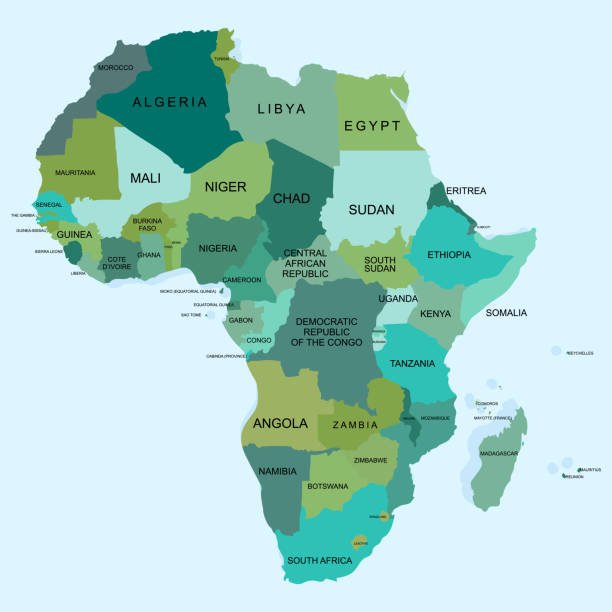
Africa's origins are a tale of immense geological forces and profound biological evolution, making it not just a continent, but the very cradle of humanity. The vast landmass we know today as Africa came to be through billions of years of continental drift, the breakup of ancient supercontinents, and continuous tectonic activity that shaped its unique geography, paving the way for the emergence and diversification of life, including our own species. Understanding how Africa was formed involves delving into deep time, exploring the movement of Earth's plates, and tracing the footsteps of our earliest ancestors across its diverse landscapes.
The Geological Tapestry: A Billion-Year Journey
The story of Africa's formation begins long before the dawn of human history, rooted in the colossal movements of Earth’s lithospheric plates. The continent's geology is incredibly ancient and stable in many parts, leading to its distinctive cratons – old, stable blocks of the Earth's crust – which form the core of the landmass. This stability, however, was forged through dynamic processes over eons.
From Supercontinents to Separation
Africa's geological history is inextricably linked to the grand cycle of supercontinent assembly and breakup. Billions of years ago, vast landmasses collided and separated, constantly reshaping the Earth's surface.
- Gondwana's Embrace: Approximately 600 to 540 million years ago, a supercontinent known as Gondwana began to form. This immense landmass included what would become Africa, South America, Antarctica, Australia, and India. The African cratons, such as the Congo, Kalahari, and West African cratons, were key components that welded together during the Pan-African Orogeny, a period of intense mountain building and continental collision.
- The Great Split: Tectonic Forces at Play: The unified landmass of Gondwana, itself part of the even larger supercontinent Pangea, eventually succumbed to the relentless forces of plate tectonics. Around 180 million years ago, during the Jurassic period, Pangea began to rift apart. The separation of Africa from South America, Antarctica, and India marked the birth of the Atlantic and Indian Oceans, gradually giving Africa its distinct continental shape. This process involved massive volcanic activity and the stretching of the Earth's crust, leading to the formation of sedimentary basins and new oceanic lithosphere.
Shaping the Land: Plate Tectonics and Volcanism
Even after its initial separation, the African Plate continued its unique journey, characterized by distinct geological activity that defined its internal features. The continent largely sits on a single tectonic plate, making it one of the largest and most stable.
- The African Plate's Unique Journey: Unlike many other continents, Africa experiences relatively few major earthquakes and lacks extensive active mountain ranges at its edges. Its internal dynamics, however, are profound. The continent is essentially being uplifted, giving rise to its characteristic high plateaus and escarpments, particularly in East Africa.
- Formation of Key Geographical Features: One of the most dramatic and ongoing geological processes in Africa is the East African Rift Valley. This massive geological fault system, stretching thousands of kilometers, is a direct result of the African Plate slowly splitting apart. Over millions of years, this rifting has led to:
- Volcanic Activity: Formation of iconic volcanoes like Mount Kilimanjaro, Mount Kenya, and numerous other peaks along the rift.
- Lakes: Creation of deep, elongated lakes such as Lake Tanganyika and Lake Malawi, which are biodiversity hotspots.
- Plateaus and Mountains: Uplifted highlands and mountains formed through faulting and volcanic eruptions. This region is a prime example of tectonic activity shaping Africa.
These features are not static; the rift continues to widen, providing scientists with a unique opportunity to study the processes of continental breakup in real-time. In millions of years, this rift could potentially lead to the formation of a new ocean, splitting East Africa from the rest of the continent.
The Cradle of Humanity: Biological Evolution
Beyond its geological grandeur, Africa holds an unparalleled place in the narrative of life on Earth, specifically as the birthplace of humanity. The very same geological processes that shaped the continent also created the diverse environments essential for our evolution.
Early Hominids and Their Environment
The unique conditions in East Africa, particularly along the Great Rift Valley, proved to be a crucible for evolution. The tectonic activity here caused significant environmental changes, transforming dense forests into more open woodlands and grasslands. This shift is believed to have played a crucial role in the development of bipedalism – walking on two legs – among our primate ancestors.
- East African Rift Valley's Role: The varying altitudes, volcanic soils, and diverse ecosystems within the rift created a mosaic of habitats. This environmental variability encouraged adaptation and speciation. The numerous lakes and rivers provided water sources, while the open plains facilitated hunting and scavenging opportunities for early hominids.
- Fossil Discoveries and Evidence: The rift valley's sediments and volcanic ash layers have preserved an extraordinary record of early human evolution. Key discoveries include:
- Lucy (Australopithecus afarensis): Found in Ethiopia, providing crucial evidence for bipedalism dating back over 3 million years.
- Homo habilis ('Handy Man'): Found in Tanzania's Olduvai Gorge, showcasing early tool-making abilities around 2.4 million years ago.
- Laetoli Footprints: Preserved volcanic ash in Tanzania showing early hominids walking upright 3.6 million years ago.
These archaeological sites are vital for understanding the origins of human life in Africa and charting the path from ape-like ancestors to modern humans.
The Dawn of Modern Humans
The evolutionary journey culminated in the emergence of our species, Homo sapiens, within Africa.
- Out of Africa Theory: The prevailing scientific consensus, supported by extensive genetic and fossil evidence, is that modern humans originated in Africa approximately 300,000 years ago. From here, various waves of migration eventually populated the entire globe. This makes Africa the ancestral homeland for all humankind.
- Adaptation and Migration: Early Homo sapiens developed complex tools, language, and social structures. Their ability to adapt to diverse environments across Africa, from savannas to coastal regions, prepared them for subsequent migrations out of the continent and into Eurasia, ultimately leading to global human dispersal. The continent’s vast and varied ecosystems fostered genetic diversity and adaptive strategies that were crucial for these early movements.
Climate, Ecosystems, and Biodiversity
Africa's unique geographical position, straddling the equator and stretching into temperate zones, has given rise to an unparalleled diversity of climates and ecosystems, contributing significantly to its rich biodiversity.
Diverse Biomes: From Deserts to Rainforests
The continent's immense size and varied topography result in a wide array of climatic zones:
- Influence of Geography and Ocean Currents: The presence of large deserts like the Sahara and the Kalahari, vast savannas, tropical rainforests in the Congo Basin, and Mediterranean climates along its northern and southern coasts is influenced by global air circulation patterns, ocean currents, and elevation. The rain shadow effects of mountain ranges also play a role in creating arid zones.
- Impact on Human Development: These diverse biomes have profoundly impacted human settlement patterns, agricultural practices, and cultural development throughout history. Access to water, fertile land, and natural resources determined where early communities thrived.
Rich Wildlife and Unique Species
Africa is renowned for its incredible wildlife, much of which is found nowhere else on Earth. This African biodiversity is a direct result of its long, stable geological history and diverse ecosystems. The prolonged isolation of the African plate has allowed for unique evolutionary trajectories.
- Iconic Megafauna: From the 'Big Five' (lion, leopard, elephant, rhino, buffalo) to giraffes, zebras, and vast wildebeest herds, Africa hosts some of the world's most spectacular animal migrations and concentrations of large mammals.
- Endemic Species: Many species of plants and animals are endemic to specific regions of Africa, highlighting the evolutionary distinctiveness fostered by its geological and climatic history. For instance, the lemurs of Madagascar, which separated from mainland Africa millions of years ago, are a testament to isolated evolution.
The Emergence of Early Societies
With its bountiful resources and varied environments, Africa was not only the birthplace of humanity but also the incubator for some of the world's earliest and most influential civilizations. These early societies were built upon a foundation of adaptable human populations living in diverse ecological niches.
Ancient Civilizations and Kingdoms
The fertile lands and strategic locations across Africa fostered the growth of complex societies:
- Nile Valley Civilizations: Perhaps the most famous, Ancient Egypt, flourished along the Nile River from around 3100 BCE. Its stable agricultural base, monumental architecture, and sophisticated social and political structures are marvels of the ancient world. Further south, the Kingdom of Kush (Nubia) also developed along the Nile, a powerful civilization that interacted and often rivaled Egypt.
- Sub-Saharan Developments: Beyond the Nile, numerous other complex societies emerged. The Nok culture in West Africa, known for its terracotta sculptures, dates back to 1500 BCE. Later, kingdoms like Ghana, Mali, and Songhai grew rich through trans-Saharan trade routes, controlling vast resources like gold and salt. In Southern Africa, Great Zimbabwe stands as an impressive testament to a highly organized and skilled ancient society. These examples underscore the long history of civilization development in Africa.
Cultural and Linguistic Diversity
The long history of human settlement, migration, and adaptation across Africa has resulted in an extraordinary mosaic of cultures and languages. The continent is home to over 2,000 different languages, representing a significant portion of the world's linguistic diversity. This richness is a direct reflection of the continent's deep history and the numerous independent communities that developed across its varied landscapes.
Africa Today: A Continent of Contrast and Promise
From its geological foundations to its human history, Africa has been a dynamic land. Today, it stands as a continent of immense potential, grappling with the legacies of its past while forging its future. Its natural resources continue to play a crucial role in the global economy, and its rapidly growing population and vibrant cultures are driving significant social and economic changes. Understanding how Africa evolved from its primordial state helps us appreciate its current complexities and its pivotal role in the global narrative.
In conclusion, how Africa came to be is a profound story spanning billions of years, deeply intertwined with Earth's geological processes and the very essence of human existence. From the shifting supercontinents that shaped its landmass to the dynamic rift valleys that forged the environments for early hominids, Africa's journey is one of continuous transformation. It is the foundational continent, the undeniable cradle of humanity, and a place of unparalleled natural beauty and cultural richness, whose deep past continues to inform its vibrant present and promising future. Its enduring geological stability, combined with ongoing tectonic activity, has created a unique stage for both natural and human evolution, cementing its critical importance in the story of our planet.
Enjoyed this read?
Share it with your friends and colleagues.