How Africa Got Its Name

BSC Insights Admin
October 09, 2026
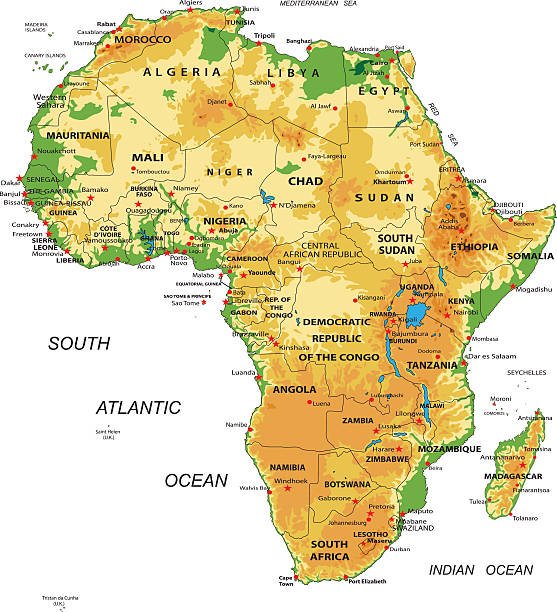
The name Africa, identifying the world's second-largest continent, has a rich and debated history, with the most widely accepted theory attributing its origin to the ancient Romans. While no single, definitive answer exists, scholarly consensus often points to the Romans' naming of a specific province in North Africa, which eventually expanded to encompass the entire landmass. Understanding how Africa got its name involves delving into ancient civilizations, linguistic evolution, and the impact of Roman expansion.
Exploring the etymology of Africa reveals several compelling theories, primarily centered around the term 'Afri' and its Latin derivations. These theories offer insights into the historical perceptions and interactions of various peoples across the Mediterranean region, shaping the identity of a continent renowned for its vast diversity and profound history. This article will meticulously explore these origins, examining the prevalent Roman theory alongside other significant linguistic and historical hypotheses.
The Roman Theory: From Province to Continent
The most compelling and widely accepted explanation for how Africa got its name traces back to the ancient Romans. Following their defeat of Carthage in the Third Punic War in 146 BCE, the Romans established a new province in present-day Tunisia, which they named Africa Proconsularis. This region became a vital grain-producing area and a significant part of the Roman Empire.
The Role of the Afri People
The name Africa itself is believed to derive from the Afri people, a Berber tribe who inhabited the region around Carthage. Historians suggest that the Romans referred to these local inhabitants as 'Afri,' and consequently, the land they occupied became known as 'Africa.' This naming convention was typical for the Romans, who often named conquered territories after their dominant indigenous populations.
- Afri Tribe: These were indigenous peoples residing in North Africa, near what is now Tunisia.
- Roman Expansion: As the Roman Empire expanded its influence across North Africa, the name 'Africa' for their province gained prominence.
- Geographical Shift: Over time, especially with the works of geographers like Leo Africanus in the 16th century, the term 'Africa' started to be applied to the entire continent, beyond just the Roman province.
The Roman administrative structure and the subsequent adoption of their nomenclature by later European cartographers played a crucial role in solidifying 'Africa' as the name for the vast continent. This gradual expansion of a regional name to a continental one is a common pattern in geographical naming, where a prominent early settlement or region lends its name to a larger area.
Alternative Etymological Theories for Africa's Name
While the Roman-Afri connection is the dominant theory, other interesting hypotheses have been proposed regarding the origin of Africa's name, drawing from various ancient languages and cultures.
Latin Derivations: Afer
Some scholars suggest that the name might stem from the Latin word 'Afer,' meaning 'African,' which was used to describe the inhabitants of the continent. This word itself could have older roots:
- Punic Influence: It's theorized that 'Afer' might come from a Punic (Phoenician) word, such as 'afar,' meaning 'dust' or 'earth.' This would be fitting for a land often characterized by its dry, dusty landscapes in the northern regions.
- Cave Dwellers: Another Punic connection suggests a word like 'Ifri' or 'Afri,' which could relate to cave dwellers, referring to indigenous groups who lived in caves or rock shelters.
Greek Theories: Aphrike and Aphros
Ancient Greek scholars also offered their interpretations, though these are generally considered less likely to be the primary origin of Africa's name:
- Aphrike (Without Cold): One popular but debated Greek theory posits that the name comes from 'a-phrike,' meaning 'without cold' or 'not cold.' This would highlight the continent's generally warm climate compared to Europe.
- Aphros (Foam): Another Greek suggestion links the name to 'aphros,' meaning 'foam.' This theory speculates that the name could refer to the sea foam or spray encountered by sailors navigating the coast.
While these Greek theories are historically interesting, they lack the direct geographical and tribal links found in the Roman-Afri hypothesis, making them less probable as the true source.
Egyptian and Other Ancient Connections
Some theories even trace the name back to ancient Egyptian origins, though these are largely speculative:
- Af-rui-ka: An intriguing, albeit less substantiated, Egyptian theory suggests the name could be derived from 'Af-rui-ka,' meaning 'to turn toward the opening of the Ka,' or 'birthplace of the Ka' (the spiritual double or life-force in ancient Egyptian belief). This mystical interpretation reflects a cultural understanding but has limited linguistic evidence.
It is important to acknowledge that many ancient civilizations had their own names for parts of the continent, such as 'Libya' for North Africa and 'Aethiopia' for regions further south, particularly those inhabited by dark-skinned people. These regional names highlight the fragmented geographical knowledge of the time before the consolidation of a single continental name.
The Expansion and Popularization of 'Africa'
The journey from a regional Roman province name to the designation for an entire continent was a gradual process, heavily influenced by exploration, cartography, and European interactions with the land.
Mapping the Continent
During the European Age of Exploration, starting in the 15th century, Portuguese, Spanish, and later other European explorers circumnavigated the continent. As more of the landmass was charted, the Roman term Africa, already familiar in classical texts, began to be applied to the entire entity by European cartographers. This standardization helped popularize the name globally.
Early maps often depicted 'Africa' referring primarily to the northern regions, gradually expanding southwards as knowledge of the continent grew. The influence of Roman texts and the authority they carried among Renaissance scholars and explorers played a significant role in this widespread adoption. The term resonated with historical prestige and was conveniently available to name the vast landmass that was being progressively 'discovered' (from a European perspective).
Understanding the Historical Naming of Africa
It's crucial to understand that indigenous peoples across the continent had (and still have) myriad names for their own lands, regions, and communities. The name Africa is an exonym, a name given to a place or people by an outside group. While it has become universally accepted, it does not reflect the diverse nomenclature that existed internally.
The naming process was not a sudden decree but an evolutionary one, driven by political power, trade routes, and the spread of classical knowledge. The lasting impact of Roman administration in North Africa laid the groundwork, and the subsequent efforts of European geographers cemented Africa as the continental identifier.
The Enduring Legacy of the Name
Today, the name Africa evokes images of vibrant cultures, diverse landscapes, and a rich tapestry of history. While its precise origin of Africa's name remains a topic of academic discussion, the journey through its etymology offers a fascinating glimpse into ancient civilizations and their interactions. The name stands as a testament to the complex historical processes that shaped our understanding and labeling of the world's continents.
The continuous study of linguistic roots and historical records allows us to piece together the probable story of how Africa got its name, highlighting the enduring influence of classical antiquity on modern geography. The name is not merely a label but a reflection of centuries of human endeavor, conquest, exploration, and cultural exchange that define the continent's place in global history.
Summary: Piecing Together Africa's Naming Story
In summary, the most convincing theory for how Africa got its name points to the ancient Romans. They named their North African province Africa Proconsularis, likely after the indigenous Afri people inhabiting the region near Carthage. Over centuries, this regional designation expanded, primarily through European cartography and exploration, to encompass the entire continent we know today. While other theories propose Greek, Punic, or even Egyptian roots, linking to concepts like 'without cold' or 'dust,' the Roman-Afri connection remains the most substantiated explanation for the origin of Africa's name. This historical journey underscores the multifaceted influences that have shaped the geographical nomenclature of our world.
Enjoyed this read?
Share it with your friends and colleagues.