How Big Is Africa Exactly

BSC Insights Admin
September 30, 2026
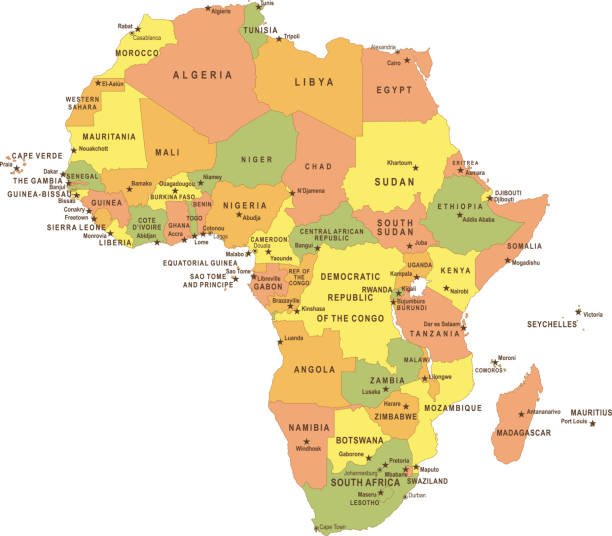
Africa is far larger than many commonly perceive, encompassing an immense land area of approximately 30.3 million square kilometers (11.7 million square miles), making it the second-largest continent on Earth by total landmass. This vast expanse is so substantial that it could comfortably contain the United States, China, India, and much of Europe combined within its borders, profoundly shaping its diverse geography, climate, and cultures. Understanding the true size of Africa is crucial to appreciating its global significance, its rich natural resources, and the incredible diversity of its 54 recognized countries.
The Staggering Numbers: Africa's True Land Area
To truly grasp how big Africa is exactly, it's essential to look at the numbers. Africa covers about 20% of the Earth's total land area and approximately 6% of the Earth's total surface area. Its substantial size places it only behind Asia in terms of landmass. This makes Africa not just large, but truly colossal.
Consider these comparisons to fully comprehend Africa's scale:
- United States: Africa is more than three times the size of the contiguous United States (about 9.8 million km²).
- China: Africa is roughly three times the size of China (about 9.6 million km²).
- India: Africa is nearly ten times the size of India (about 3.2 million km²).
- Europe: The entire continent of Europe (about 10.18 million km²) could fit inside Africa nearly three times over.
Indeed, if you were to combine the land areas of the United States, China, India, Japan, Mexico, and many European countries, their combined surface area would still be less than that of Africa. This incredible geographic footprint underscores the continent's immense scale and its pivotal role in global geography and ecosystems.
Continental Land Area Comparison
Here is a clearer perspective on Africa's land area compared to other major continents:
| Continent | Approximate Land Area (km²) | Approximate Land Area (mi²) |
|---|---|---|
| Asia | 44,614,000 | 17,226,200 |
| Africa | 30,370,000 | 11,724,000 |
| North America | 24,709,000 | 9,540,000 |
| South America | 17,840,000 | 6,890,000 |
| Antarctica | 14,200,000 | 5,500,000 |
| Europe | 10,180,000 | 3,930,000 |
| Australia (Oceania) | 8,525,989 | 3,291,903 |
Visualizing Africa's Immense Scale and Map Misconceptions
One of the primary reasons many people underestimate the true size of Africa lies in the pervasive use of distorted world maps. The most common world map, the Mercator projection, was developed in the 16th century for navigation and significantly distorts the size of landmasses as they get further from the equator. This projection inflates the size of Europe and North America while shrinking continents closer to the equator, such as Africa and South America.
For example, Greenland appears roughly the same size as Africa on a Mercator map, yet Africa is actually more than 14 times larger than Greenland. Similarly, Canada and Russia also appear much larger in proportion to Africa than they are in reality. This visual bias has contributed to a widespread misunderstanding of Africa's geographic scale.
Rectifying the Distortion: Gall-Peters and Other Projections
To provide a more accurate representation of continental sizes, cartographers often use equal-area projections like the Gall-Peters projection. While these maps may look less familiar and stretch or compress shapes, they accurately depict the relative areas of landmasses. On such maps, the immense size of Africa becomes immediately apparent, dwarfing many regions commonly perceived as large.
Beyond land area, Africa's physical dimensions are impressive:
- North to South: From Ras ben Sakka in Tunisia to Cape Agulhas in South Africa, Africa stretches approximately 8,000 kilometers (5,000 miles).
- East to West: From Ras Hafun in Somalia to Cape Verde, the continent spans roughly 7,400 kilometers (4,600 miles).
These vast distances highlight the journey one would undertake to traverse this enormous continent, showcasing the sheer scale and the diverse experiences available within its boundaries.
Geographic Dimensions and Unparalleled Diversity
The size of Africa is not just about its total land area; it also translates into an extraordinary array of geographic features and ecological zones. The continent boasts an unmatched natural diversity, home to everything from the world's largest hot desert to vast rainforests and towering mountain ranges.
Key Geographic Features Include:
- The Sahara Desert: The largest hot desert in the world, covering a significant portion of North Africa, roughly the size of the United States.
- The Nile River: The longest river in the world, flowing over 6,650 kilometers (4,132 miles) through multiple countries.
- The Congo Basin: The second-largest rainforest in the world, vital for global biodiversity and climate regulation.
- The Great Rift Valley: A geological marvel stretching thousands of kilometers, home to some of the earliest human fossils and numerous lakes.
- Mount Kilimanjaro: Africa's highest peak, an iconic dormant volcano in Tanzania.
- Vast Savannas: Home to iconic wildlife and crucial for many African economies.
This immense geographic diversity of Africa supports a wide range of ecosystems, from arid desert landscapes to lush tropical forests, temperate coastal regions, and high-altitude plateaus. Such variety influences everything from agricultural practices and resource distribution to cultural development and economic opportunities across the continent's 54 sovereign states.
Demographic Scale: Population and Cultural Richness
In addition to its landmass, Africa's population size is equally staggering. With a population exceeding 1.4 billion people, Africa is the second most populous continent, rapidly growing and incredibly diverse. This vast population is spread across its enormous land, leading to varying population densities. While some areas, like the Nile Valley, are densely populated, much of the Sahara and central rainforest regions remain sparsely inhabited.
A Continent of Languages and Cultures
The sheer number of countries in Africa (54) contributes to its unparalleled cultural and linguistic diversity. It is estimated that there are over 3,000 distinct ethnic groups and over 2,000 different languages spoken across the continent. This makes Africa the most linguistically diverse continent on Earth. Each country, and often regions within countries, boasts its unique traditions, histories, and societal structures. This cultural richness is a direct reflection of the continent's immense size and long history of human migration and settlement.
Economic and Strategic Importance of its Size
The scale of Africa profoundly impacts its economic potential and global strategic importance. Its vast landmass is rich in natural resources, including:
- Minerals: Abundant reserves of gold, diamonds, platinum, copper, iron ore, and coltan are found across various regions.
- Energy Resources: Significant oil and natural gas reserves, particularly in North and West Africa.
- Agricultural Land: Large tracts of arable land, offering immense potential for food production, though much remains undeveloped.
- Water Resources: Major river systems like the Nile, Congo, Niger, and Zambezi provide water for agriculture, hydropower, and transportation.
These resources, spread across such a large area, present both opportunities and challenges. The logistical difficulties of developing infrastructure to connect vast regions, transport goods, and provide services across such immense distances are substantial. However, the continent's rich resource base and growing young population signify immense future economic potential. Understanding the sheer size of Africa helps in comprehending the scale of investment and development required to unlock this potential fully.
Why Understanding Africa's Size Matters
Correcting misconceptions about how big Africa is exactly is more than just a geographic trivia exercise; it has significant implications:
- Informed Global Perspective: A true understanding fosters a more accurate and respectful view of Africa's role in global affairs, its challenges, and its contributions.
- Development Strategies: Recognizing the vastness helps policymakers and development agencies plan more effectively for infrastructure, healthcare, education, and economic growth, acknowledging the diverse needs of its many regions.
- Resource Management: The sheer scale implies massive ecological zones that require tailored conservation and resource management strategies to protect biodiversity and sustain livelihoods.
- Cultural Appreciation: Understanding the vastness allows for a deeper appreciation of the incredible diversity of cultures, languages, and histories that have emerged across this monumental landmass, moving beyond a monolithic view of "Africa."
- Combating Stereotypes: Knowing the immense size and diversity helps dismantle harmful stereotypes and promotes a more nuanced understanding of the continent's complexities and dynamism.
The scale of Africa is a defining characteristic that shapes its climate, ecology, human geography, and socioeconomic development. From its extensive coastlines along the Atlantic and Indian Oceans to its towering peaks and sweeping deserts, every aspect of Africa's environment and human activity is influenced by its monumental dimensions.
Conclusion
In conclusion, Africa is undeniably enormous, asserting its position as the second-largest continent on Earth with a land area of over 30 million square kilometers. This colossal size allows it to encompass numerous major global countries and entire continents within its borders. Far from being a small or homogenous entity, Africa's vastness gives rise to unparalleled geographic, ecological, and cultural diversity, supporting a population of over 1.4 billion people across 54 unique nations. Recognizing the true size of Africa is fundamental to grasping its immense natural wealth, its vibrant societies, and its growing importance on the world stage, challenging common misperceptions and fostering a more accurate and profound appreciation for this extraordinary continent.
Enjoyed this read?
Share it with your friends and colleagues.