How Did Christianity Start In Africa

BSC Insights Admin
October 26, 2026
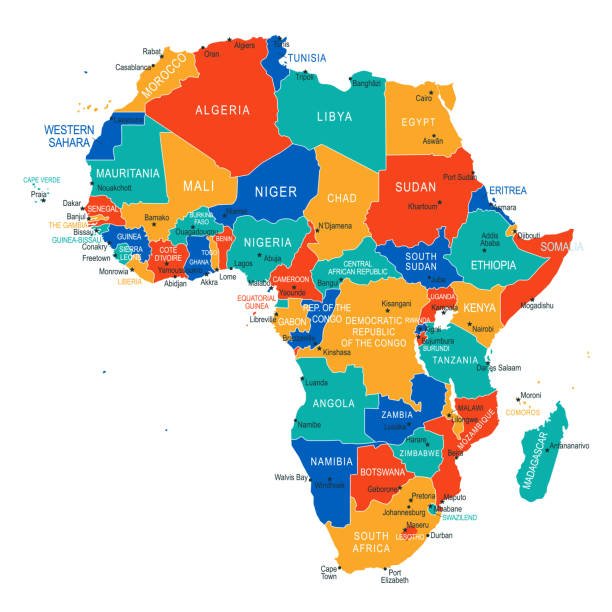
How Did Christianity Start In Africa? Uncovering its Ancient Roots
Christianity's journey into Africa is not a tale of modern missionary endeavors, but one deeply woven into the fabric of the continent's ancient history, with its origins tracing back to the Apostolic Age itself. Rather than being solely an import of later European colonialism, Christianity developed organically and indigenously in several parts of Africa, establishing vibrant traditions that have endured for nearly two millennia. The earliest seeds of the faith were sown primarily in North Africa and Northeast Africa, notably in Egypt and Ethiopia, laying the groundwork for some of the world's oldest Christian communities.
Understanding how Christianity started in Africa requires looking beyond recent centuries and delving into the rich spiritual landscape of the early Roman Empire. This article will explore the definitive historical accounts and traditions that mark the beginning of African Christian history, highlighting key figures, regions, and the enduring legacy of these ancient churches.
The Apostolic Roots: Early Beginnings
The genesis of Christianity in Africa is attributed to direct apostolic connections, particularly through figures mentioned in the New Testament and early church traditions. These early encounters underscore the faith's rapid spread even in its nascent stages.
Saint Mark and Alexandria
One of the most widely accepted traditions for the establishment of Christianity in Africa points to Saint Mark the Evangelist. According to historical accounts, Mark, the author of the Gospel of Mark, traveled to Alexandria, Egypt, around 42 AD. Alexandria was at the time one of the most prominent cities in the Roman Empire, a bustling intellectual and cultural hub with a significant Jewish population, making it fertile ground for the nascent Christian message.
- Foundation of the Church: Saint Mark is credited with founding the Church of Alexandria, which quickly became one of the most important patriarchates in early Christianity, alongside Rome, Antioch, and Jerusalem.
- Early Converts: His ministry led to the conversion of many, establishing a community that would grow into the venerable Coptic Orthodox Church.
- Martyrdom: Tradition holds that Saint Mark was martyred in Alexandria, cementing the city's status as a sacred site for African Christianity.
The Alexandrian Church not only served as a center for evangelism but also became a powerhouse of theological thought, producing influential scholars and shaping early Christian doctrine, as we will explore further.
Ethiopia and the Eunuch
Another pivotal moment for Christianity's origins in Africa is documented in the New Testament itself. The Book of Acts (Acts 8:26-40) recounts the story of Philip the Apostle encountering an Ethiopian eunuch, a high official of Candace, queen of the Ethiopians. This encounter is profoundly significant:
- Biblical Account: Philip explains a passage from the prophet Isaiah to the eunuch, who then requests baptism.
- First African Convert: The eunuch is often considered one of the earliest documented African converts to Christianity, carrying the faith back to his homeland.
- Precursor to State Religion: While the full establishment of the Ethiopian Orthodox Tewahedo Church as a state religion occurred later in the 4th century under King Ezana, this biblical event is seen as the initial spark for Christianity's deep roots in Ethiopia.
These two traditions — Saint Mark in Egypt and the Ethiopian eunuch — highlight the very early and indigenous nature of early Christianity in Africa, demonstrating that the continent was not merely a passive recipient but an active participant in the spread and development of the faith from its inception.
North Africa: A Cradle of Early Christian Thought
Beyond Egypt, the Roman provinces of North Africa — encompassing modern-day Tunisia, Algeria, and parts of Libya and Morocco — became another vital region for early Christian growth. This area, particularly around Carthage, nurtured some of Christianity's most influential thinkers and martyrs.
Carthage and Roman Africa
Christianity spread rapidly through the Roman provinces of Proconsular Africa, Numidia, and Mauretania in the 2nd and 3rd centuries. Carthage, a powerful rival to Rome in ancient times, became a major center of Latin-speaking Christianity. The faith took root among various populations, including the indigenous Punic and Berber peoples, alongside Roman settlers.
- Rapid Growth: The Christian community in North Africa grew swiftly, boasting numerous bishops and a strong ecclesiastical structure by the 3rd century.
- Latin Christianity: Unlike the Greek-speaking tradition of Alexandria, North African Christianity developed primarily in Latin, contributing significantly to the theological vocabulary of Western Christianity.
This region’s intellectual vitality and the zealous faith of its converts made it a formidable force in the shaping of global Christianity.
Key Figures and Theologians
North Africa produced an extraordinary array of theologians and church leaders whose contributions resonate to this day. Their writings and actions profoundly influenced Christian doctrine and practice:
- Tertullian (c. 155 – c. 220 AD): Often hailed as the "Father of Latin Christianity," Tertullian was a brilliant apologist and polemicist from Carthage. He coined many Latin theological terms still in use today and passionately defended the Christian faith against paganism and heresy. His famous dictum, "The blood of the martyrs is the seed of the Church," captures the spirit of the era.
- Cyprian of Carthage (d. 258 AD): A bishop of Carthage and a prominent martyr, Cyprian was a significant theologian who wrote extensively on church unity, the role of bishops, and the sacraments. His leadership during persecutions and theological disputes solidified the structure and doctrine of the Western Church.
- Augustine of Hippo (354 – 430 AD): Perhaps the most influential figure from North Africa, and indeed one of the most important thinkers in Western history, Augustine of Hippo was a Berber from what is now Algeria. His voluminous writings, including the "Confessions" and "City of God," laid much of the intellectual foundation for medieval Catholic and Protestant theology. His ideas on sin, grace, predestination, and the nature of God profoundly shaped Christian thought for centuries.
These figures demonstrate the profound intellectual depth and theological rigor that characterized North African Christianity in its formative centuries.
Persecution and Martyrdom
The fervor of North African Christians was often tested by intense persecution under the Roman Empire. The region produced a vast number of martyrs who chose death over renouncing their faith, further solidifying the church's resolve.
- Roman Persecutions: Christians in North Africa faced severe trials during imperial persecutions, particularly under Emperors Decius (250-251 AD) and Diocletian (303-311 AD).
- Famous Martyrs: Stories of martyrs like Perpetua and Felicity, two young women executed in Carthage in 203 AD, illustrate the unwavering faith and courage of these early Christians. Their prison diary is one of the earliest surviving texts by Christian women.
- The Donatist Controversy: Following the Diocletianic persecution, North Africa was embroiled in the Donatist controversy, a schism concerning the validity of sacraments performed by clergy who had lapsed during the persecution. This schism, which Augustine vigorously opposed, persisted for over a century and highlights the deep internal struggles and theological debates within the early African Church.
The resilience in the face of persecution and the intellectual vigor of its theologians underscore the significant role early Christianity in Africa played in shaping the broader Christian world.
The Nubian Kingdoms: Christian Strongholds
Further south, along the Nile River, lay the ancient kingdoms of Nubia (modern-day Sudan), which also embraced Christianity, forming another significant chapter in African Christian history. This region developed a distinctive Christian culture that flourished for centuries.
Introduction of Christianity to Nubia
Christianity arrived in Nubia through missionary efforts from Egypt and the Byzantine Empire in the 6th century AD. By this time, Nubia was divided into three main kingdoms: Nobatia, Makuria, and Alodia. Byzantine Emperor Justinian I played a role in sending missionaries, with the empress Theodora reportedly supporting monophysite missions.
- Royal Conversions: The conversion of the Nubian royalty led to the rapid adoption of Christianity as the state religion across these kingdoms.
- Established Church: By the late 6th century, the Nubian kingdoms were largely Christian, establishing bishops and church structures aligned with the Coptic Orthodox Patriarchate of Alexandria.
This spread demonstrated Christianity's ability to transcend cultural and linguistic barriers, taking root far from the initial Greco-Roman spheres of influence.
Flourishing Christian Culture
For nearly 700 years, the Nubian kingdoms thrived as Christian states, developing a rich and unique Christian culture:
- Architecture: Impressive churches and cathedrals were built, often adorned with intricate murals depicting biblical scenes, saints, and Nubian rulers.
- Literacy and Art: The spread of Christianity brought with it literacy (using Coptic and Greek scripts, and later Old Nubian), leading to the production of religious texts and vibrant ecclesiastical art, such as the famous frescoes discovered in Faras.
- Political Stability: Christianity provided a unifying cultural and political framework for the Nubian kingdoms, enabling them to resist early Islamic expansion for several centuries.
The Nubian Christian kingdoms represent a testament to the enduring power and adaptability of Christianity in Northeast Africa.
Factors Contributing to the Spread
Several factors facilitated the initial and sustained growth of Christianity across various regions of Africa, highlighting its adaptability and resonance with local populations.
Urban Centers and Trade Routes
The early spread of Christianity was often tied to existing networks of trade and communication:
- Key Cities: Major urban centers like Alexandria, Carthage, Leptis Magna, and later the Nubian capitals, served as hubs where the new faith could easily gain adherents and spread outwards.
- Trade Routes: The extensive Roman road network, maritime routes across the Mediterranean, and the Nile River served as arteries for missionaries, traders, and travelers, who carried the Christian message along with their goods and ideas.
This connectivity allowed Christianity to bypass geographical barriers and reach diverse communities relatively quickly.
Indigenous Adoption and Cultural Synthesis
Crucially, Christianity was not merely imposed but was often adopted and integrated into existing African societies:
- Local Resonance: Elements of Christian teaching, such as hope, community, and the promise of salvation, resonated with local spiritual traditions and philosophical outlooks.
- Adaptation: Over time, Christian practices and beliefs were synthesized with local customs, leading to unique forms of worship and expression, particularly evident in the Coptic Church and the Ethiopian Orthodox Church.
This organic integration allowed Christianity to become deeply rooted and authentically African, rather than remaining an alien religion.
Intellectual Appeal
In places like Alexandria, the intellectual rigor and philosophical depth of Christian theology appealed to the educated elite:
- Alexandrian Catechetical School: This famous school produced brilliant Christian thinkers like Clement of Alexandria and Origen, who engaged with Greek philosophy to articulate Christian doctrine, attracting converts from diverse intellectual backgrounds.
The ability of Christian thought to engage with and offer compelling answers to profound philosophical questions played a significant role in its adoption by influential segments of society.
Decline and Resilience: Challenges Over Time
While Christianity flourished in ancient Africa, its trajectory was not without significant challenges, particularly with the advent of Islam. However, its ancient churches in some regions demonstrated remarkable resilience.
Rise of Islam
From the 7th century onwards, the rapid expansion of Islam across North Africa dramatically reshaped the religious landscape. The Arab conquests brought an end to Roman and Byzantine rule and gradually led to the decline of the once-vibrant Latin Christian communities.
- Gradual Conversion: Over centuries, many populations converted to Islam, attracted by its message and the socio-political advantages of being part of the dominant faith.
- Persecution and Reduction: Christian communities faced varying degrees of pressure, persecution, and restrictions under Islamic rule, leading to a significant reduction in their numbers and influence.
By the 12th century, Latin Christianity in North Africa had largely disappeared, leaving behind only archaeological remnants of its once-grand churches and basilicas.
Survival in Egypt and Ethiopia
Despite the overwhelming Islamic presence, the Coptic Church in Egypt and the Ethiopian Orthodox Church demonstrated extraordinary resilience, surviving as distinct and continuous Christian communities:
- Coptic Church: The Coptic Orthodox Church endured as a significant minority in Egypt, maintaining its distinct language (Coptic, a descendant of ancient Egyptian) for liturgical use and preserving its ancient traditions and identity amidst centuries of Islamic rule.
- Ethiopian Church: Ethiopia remained an independent Christian kingdom, largely isolated but fiercely protective of its faith. The Ethiopian Orthodox Church, with its unique liturgical practices, biblical canon, and monastic traditions, continued to thrive, becoming a powerful symbol of African Christian independence.
These churches are living testaments to the deep indigenous roots and enduring strength of Christianity in Northeast Africa.
The Loss of Nubian Christianity
While the Nubian Christian kingdoms initially resisted Islamic expansion effectively, their eventual decline was gradual but decisive. By the 15th and 16th centuries, continuous pressure and infiltration led to the Islamization of Nubia, and its distinctive Christian culture faded, leaving behind only the ruins of its once-grand churches and fortresses as a reminder of its rich Christian past.
Legacy and Modern Resurgence
The ancient beginnings of Christianity in Africa have left an indelible legacy that continues to shape the continent's religious and cultural identity.
Enduring Ancient Churches
The Coptic Orthodox Church and the Ethiopian Orthodox Tewahedo Church stand as powerful, living links to early Christianity in Africa. They represent:
- Apostolic Succession: Direct continuation of the faith from the apostles.
- Unique Traditions: Rich liturgical traditions, art, music, and monasticism that reflect centuries of indigenous development.
- Cultural Guardianship: Preservation of ancient languages, scriptures, and theological understandings unique to their heritage.
These churches are not mere relics of the past but vibrant, active communities contributing to the global Christian landscape.
Foundation for Later Missions
The historical fact that Christianity had deep, indigenous roots in Africa long before European colonialism provides a crucial context for understanding the faith's later spread in Sub-Saharan Africa. While 19th and 20th-century missions brought new denominations, the continent already had a rich, ancient Christian heritage.
Cultural and Historical Impact
The early presence of Christianity significantly influenced:
- Art and Architecture: From the catacombs of Alexandria to the rock-hewn churches of Lalibela and the murals of Nubia.
- Literature and Scholarship: The theological writings of Augustine, the Coptic scriptures, and the Ge'ez literature of Ethiopia.
- Social Structures: The formation of Christian kingdoms and communities with distinct legal and social customs.
The question of how Christianity started in Africa reveals a narrative of profound historical depth, resilience, and indigenous innovation.
Conclusion
In summary, the question of how did Christianity start in Africa reveals a history far richer and more complex than often perceived. It began not as a colonial import, but through indigenous evangelization and intellectual exchange, with traditions tracing back to the direct ministry of apostles like Saint Mark and the biblical encounter of Philip with the Ethiopian eunuch. From the theological powerhouse of Alexandria to the intellectual giants of Roman North Africa like Augustine, and the enduring Christian kingdoms of Nubia and Ethiopia, Africa was an indispensable crucible for the development and spread of early Christianity.
These ancient origins of Christianity in Africa gave rise to unique, resilient, and deeply rooted churches – the Coptic and Ethiopian Orthodox Churches – which have preserved their faith and traditions for nearly two millennia. While facing periods of decline, particularly with the rise of Islam, the continuity and vibrancy of these communities underscore the profound and ancient connection between Christianity and the African continent, a legacy that continues to inspire and inform global Christian identity today.
Enjoyed this read?
Share it with your friends and colleagues.