How Did Islam Spread In Africa

BSC Insights Admin
September 30, 2026
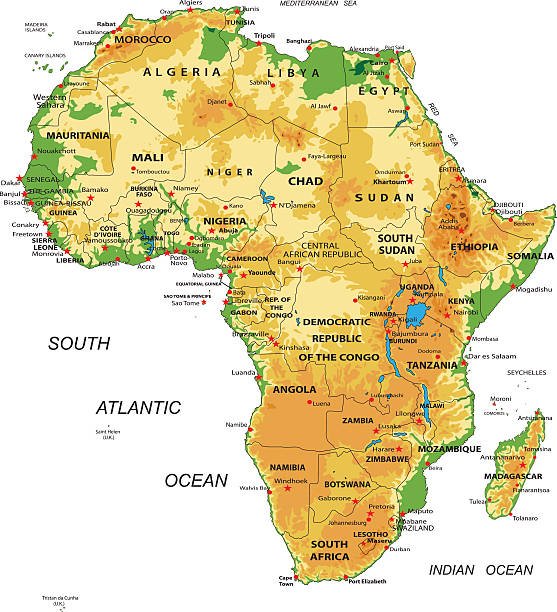
Introduction: The Multifaceted Spread of Islam in Africa
Islam’s presence in Africa is a rich tapestry woven over centuries, beginning shortly after its inception in the 7th century. The question of how Islam spread in Africa is not answered by a single event, but rather through a complex interplay of trade, migration, military conquest, missionary efforts, and cultural exchange. This diffusion was largely peaceful in many regions, driven by merchants and scholars, resulting in a profound and enduring impact on the continent’s political, social, economic, and cultural landscapes.
From the shores of North Africa to the bustling markets of West Africa and the vibrant port cities of the East African coast, Islam's integration was a gradual process, often adapting to local customs while introducing new systems of governance, education, and law. Understanding the various channels through which Islam expanded across Africa is crucial to appreciating the continent’s diverse heritage and the deep roots of its Islamic communities.
Early Expansion: The First Wave in North Africa
The earliest significant spread of Islam in Africa began with the Arab-Muslim conquests of the 7th and 8th centuries. Following the death of Prophet Muhammad in 632 CE, the nascent Islamic empire rapidly expanded beyond the Arabian Peninsula. North Africa, being geographically proximate, was one of the first regions to experience this expansion.
- Egypt and the Maghreb: By 641 CE, Egypt had fallen to Muslim forces led by Amr ibn al-As. The conquest continued westward across the Maghreb region (modern-day Libya, Tunisia, Algeria, and Morocco). Key figures like Uqba ibn Nafi played pivotal roles in establishing Muslim rule.
- Establishment of Islamic Centers: Cities like Kairouan (in present-day Tunisia) were founded as military garrisons and quickly evolved into centers of Islamic learning and administration. Fes (Morocco) and Cairo (Egypt) also emerged as crucial hubs of Islamic civilization, attracting scholars and fostering religious devotion.
- Gradual Conversion: While military conquest established political control, the conversion of the indigenous Berber populations was a more gradual process. It involved a combination of coercion, economic incentives (such as exemption from jizya, a tax on non-Muslims), and the appeal of Islam's message. Over time, many Berbers not only converted but also played significant roles in the expansion of Islam, notably during the conquest of the Iberian Peninsula.
This initial wave laid the foundation for Islam's enduring presence in North Africa, making it a springboard for further diffusion into the sub-Saharan regions.
The Trans-Saharan Trade: Islam's Journey to West Africa
Perhaps the most significant vector for the spread of Islam into West Africa was the vast network of Trans-Saharan trade routes. Beginning around the 9th century, Arab and Berber merchants traversed the Sahara Desert, exchanging gold, salt, slaves, and other commodities.
Merchants as Missionaries
These traders were not merely economic agents; they were also carriers of faith and culture. They brought with them not just goods but also Islamic practices, beliefs, and a sophisticated legal and educational system.
- Economic Incentives: Adopting Islam offered distinct advantages for local rulers and merchants. It provided a common language (Arabic) and legal framework (Sharia) that facilitated trade, built trust, and integrated them into a broader international Islamic economic network.
- Political Integration: Conversion to Islam often strengthened the political power of local rulers, granting them prestige and access to a wider pool of educated administrators and legal experts from the Islamic world.
The Rise of Islamic Empires in West Africa
The influence of Islam led to the rise of powerful and wealthy empires in West Africa, which became beacons of Islamic scholarship and culture.
- Ghana Empire (c. 300-1100 CE): While not fully Islamic, the Ghana Empire had significant Muslim populations, especially in its commercial centers. Muslim scribes and advisors played important roles in its administration.
- Mali Empire (c. 1230-1600 CE): Under rulers like Mansa Musa (1312-1337), the Mali Empire became a renowned center of Islamic learning and devotion. Mansa Musa's pilgrimage to Mecca in 1324-1325, with its legendary display of wealth, brought West Africa to the attention of the wider Islamic and European worlds. Timbuktu, a major city within the Mali Empire, flourished as a hub of Islamic scholarship, boasting universities, libraries, and thousands of manuscripts.
- Songhai Empire (c. 1464-1591 CE): Succeeding Mali, the Songhai Empire continued the tradition of Islamic scholarship and governance. Rulers like Askia Muhammad I (1493-1528) embraced Islam wholeheartedly, reforming administration and education based on Islamic principles. Gao and Timbuktu remained vital centers.
The spread of Islam in West Africa was largely a peaceful and voluntary process, driven by the appeal of its legal, educational, and commercial benefits, solidifying its deep roots in the region.
The East African Coast: Swahili Culture and Maritime Trade
On the other side of the continent, the East African coast witnessed a different, yet equally impactful, pattern of Islamic diffusion. From as early as the 8th century, Arab and Persian traders established settlements along the coast, drawn by the lucrative Indian Ocean trade in gold, ivory, timber, and slaves.
Maritime Networks and Cultural Fusion
Unlike the trans-Saharan routes, the Indian Ocean trade fostered permanent coastal settlements and a unique cultural blending.
- Permanent Settlements: Merchants from the Arabian Peninsula and Persia settled in port cities such as Mombasa, Kilwa, Zanzibar, Mogadishu, and Sofala. They intermarried with local Bantu populations, leading to the creation of the distinct Swahili culture.
- The Swahili Language: This fusion is best exemplified by the Swahili language, a Bantu language with significant Arabic vocabulary and an Arabic script tradition, showcasing the profound cultural synthesis.
- Sultanates and City-States: These coastal settlements evolved into wealthy and independent Islamic city-states or sultanates, with Kilwa Sultanate being one of the most prominent, thriving from the 13th to the 16th century due to its control over the gold trade.
Impact of East African Islam
The Islam that developed on the East African coast was deeply integrated into the local context, characterized by a cosmopolitan outlook and a strong emphasis on trade and urban living.
| Region | Primary Mode of Spread | Key Empires/Cultures | Major Centers |
|---|---|---|---|
| North Africa | Military Conquest, Migration | Umayyads, Abbasids, Fatimids | Kairouan, Fes, Cairo |
| West Africa | Trans-Saharan Trade, Missionary | Ghana, Mali, Songhai | Timbuktu, Gao, Djenné |
| East Africa | Maritime Trade, Settlement | Swahili City-States, Kilwa Sultanate | Mombasa, Kilwa, Zanzibar |
| Horn of Africa | Trade, Migration, Sufi Orders | Adal Sultanate | Harar, Zeila |
Peaceful Penetration: Sufi Orders and Scholarly Influence
Beyond the major trade routes and initial conquests, the deeper and wider spread of Islam into the interior and rural areas of Africa was largely facilitated by peaceful means, primarily through the efforts of Islamic scholars (Ulama) and Sufi brotherhoods.
The Role of Sufism
Sufism, the mystical dimension of Islam, proved particularly effective in attracting converts due to its emphasis on personal spirituality, community cohesion, and often its ability to integrate with existing African spiritual traditions.
- Brotherhoods (Tariqas): Sufi orders like the Qadiriyya, Tijaniyya, and Muridiyya established widespread networks across West, East, and North Africa. Their leaders (marabouts or sheikhs) acted as spiritual guides, educators, and community leaders.
- Adaptability: Sufi teachings, with their emphasis on veneration of saints and spiritual practices, often resonated with indigenous African beliefs, making conversion less jarring and more appealing.
- Education and Social Welfare: Sufi centers often provided education, social welfare, and arbitration services, becoming vital pillars of rural communities.
Scholars, Preachers, and Intermarriage
Individual scholars and preachers also played an immense role, traveling far and wide to teach Islam.
- Oral Tradition: In many areas, the spread was through word of mouth, storytelling, and the establishment of local schools (madrassas) where the Quran and Islamic sciences were taught.
- Intermarriage: Intermarriage between Muslim traders, scholars, or settlers and local women was another significant factor, creating new generations of Muslims who bridged different cultures.
These peaceful and gradual methods ensured that Islam was not merely adopted but deeply assimilated into the social fabric of various African societies.
Factors Facilitating the Spread of Islam in Africa
Several underlying factors contributed to the successful and sustained expansion of Islam across the African continent.
- Economic Advantages: Islam provided a common legal and ethical framework for trade, standardized weights and measures, and enhanced trust among merchants. Access to the vast Islamic economic network was a powerful incentive for conversion.
- Political and Administrative Benefits: For rulers, adopting Islam could bring prestige, access to a literate bureaucracy (using Arabic script), and a universal system of law (Sharia) that could unify diverse populations.
- Social Cohesion and Egalitarianism: While not always perfectly applied, Islam’s message of the equality of all believers before God could appeal to societies with rigid social hierarchies. The concept of the Ummah (global Muslim community) offered a sense of belonging to a broader civilization.
- Literacy and Education: The emphasis on reading the Quran fostered literacy in Arabic, which became the language of scholarship and administration. This led to the establishment of advanced educational institutions like those in Timbuktu.
- Lack of Centralized Resistance: In many sub-Saharan regions, there were no powerful, unified indigenous states capable of resisting the gradual cultural and religious penetration, unlike the Byzantine Empire in North Africa, which was eventually overcome.
- Missionary Zeal: The inherent dawah (invitation to Islam) aspect encouraged Muslims to share their faith, whether through direct preaching or by living exemplary lives.
The Profound Impact of Islam on African Societies
The spread of Islam left an indelible mark on virtually every aspect of African societies, fundamentally reshaping their development.
- Political Systems: Islam introduced new forms of governance, including sultanates and emirates, and administrative structures based on Islamic legal principles. The concept of a universal law (Sharia) provided a framework for justice and order.
- Economic Development: It stimulated transcontinental and international trade, leading to the growth of cities and market networks. New agricultural techniques and crafts were also introduced.
- Education and Scholarship: Arabic became the language of learning, fostering literacy and the development of libraries and universities. This led to a rich tradition of Islamic scholarship, producing renowned African scholars, historians, and jurists.
- Art and Architecture: Islamic architectural styles, characterized by mosques, madrasas, and intricate geometric designs, became prominent, particularly in North, West, and East Africa. Manuscript illumination and calligraphy also flourished.
- Social and Cultural Life: Islam influenced family law, dress codes, dietary habits, and festivals. It also contributed to the development of new languages and literary traditions, such as Swahili and Hausa literature written in Ajami script (Arabic script adapted for African languages).
- Religious Landscape: While Islam became dominant in many areas, it often coexisted and sometimes syncretized with indigenous African religious beliefs, creating unique local expressions of the faith.
The depth of this transformation highlights the comprehensive nature of Islam’s integration into African life.
Conclusion: A Legacy of Diverse Integration
The journey of how Islam spread in Africa is a compelling narrative of diverse pathways and enduring legacies. It was not a monolithic process but a mosaic of interactions, ranging from early military conquests in North Africa to the sustained, peaceful diffusion through trade and scholarship in sub-Saharan regions. The influence of pioneering merchants along the trans-Saharan and Indian Ocean routes, coupled with the dedicated efforts of Islamic scholars and Sufi orders, gradually transformed the continent.
Africa’s Islamic heritage is therefore incredibly rich and varied, characterized by powerful empires, vibrant intellectual centers, unique cultural fusions like the Swahili civilization, and a deep spiritual tradition. The lasting impact of Islam on African politics, economics, education, and culture underscores its profound role in shaping the continent’s history and continues to define the identities of millions of Africans today.
Enjoyed this read?
Share it with your friends and colleagues.