How Long Did Africans Enslave Other Africans

BSC Insights Admin
October 01, 2026
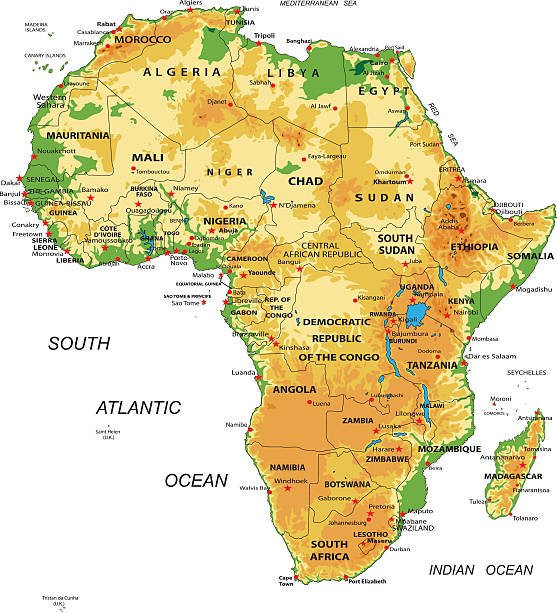
The question of how long did Africans enslave other Africans reveals a complex and deeply entrenched historical reality that spans millennia, long predating the transatlantic slave trade and continuing in various forms into the 20th century. Slavery in Africa was not a monolithic institution; its practices, duration, and nature varied significantly across different regions, cultures, and time periods, ranging from domestic servitude and debt bondage to more chattel-like forms.
To truly understand the longevity of this practice, one must look beyond singular events and acknowledge a continuous spectrum of servitude that evolved over time, influenced by internal socio-economic factors, regional conflicts, and later, external demands from Arab and European traders. This deep historical context is crucial for grasping the full scope of internal African slavery.
The Deep Roots of Slavery in Pre-Colonial Africa
Long before European contact, forms of slavery and servitude were integral to many African societies. This wasn't a phenomenon imported from outside but an indigenous system adapted to local conditions and power structures. The history of slavery in Africa is profoundly ancient, with evidence suggesting its presence dating back thousands of years.
Diverse Forms of Servitude
Unlike the rigid, racialized chattel slavery that defined the transatlantic system, pre-colonial African slavery was often characterized by a more fluid and diverse set of practices. These included:
- Debt Bondage: Individuals or families could enter servitude to pay off debts, often for a set period or until the debt was cleared.
- War Captives: People captured during inter-ethnic or inter-state warfare were frequently enslaved. They might be integrated into the captor's society, used for labor, or traded.
- Judicial Punishment: Enslavement could be a punishment for crimes, particularly severe ones, serving as an alternative to execution or banishment.
- Domestic Servitude: Enslaved people often served in households, performing domestic tasks, agricultural labor, or assisting in crafts. Their status could vary greatly within the household structure.
- Pawnship: A system where individuals, typically children, were offered as collateral for a loan, with their labor serving as interest. Upon repayment of the loan, they were expected to be released.
These forms of servitude often allowed for some degree of social mobility. Enslaved individuals could sometimes marry into the owner's family, gain freedom, or even achieve positions of power, particularly in military or administrative roles. Their descendants, though still potentially tied to the master's lineage, were often more integrated into society than first-generation captives.
Economic and Social Functions
The existence of various African forms of slavery served multiple functions within pre-colonial societies:
- Labor: Enslaved people provided essential labor for agriculture, mining, construction, and craft production, especially in societies with expanding economies or labor-intensive industries.
- Military Service: Many kingdoms, such as the Dahomey and Ashanti, utilized enslaved soldiers in their armies, forming powerful military units.
- Administrative Roles: In some instances, enslaved individuals, particularly those trusted, could rise to positions of considerable influence within royal courts or administrative structures.
- Wealth and Status: The ownership of enslaved people was often a key indicator of wealth and social status, reflecting a family or ruler's power and influence.
It's important to note that these systems of dependency were not uniformly distributed across the continent. They were more pronounced in centralized states and complex societies where the demand for labor and specialized skills was higher. The duration of this internal, pre-colonial slavery is best understood as an ongoing, evolving practice spanning millennia until challenged by external forces.
The Impact of External Slave Trades on Internal Systems
While internal African slavery had its own long trajectory, its nature and scale were significantly impacted by the growth of external slave trades: the Trans-Saharan, Indian Ocean, and later, the Transatlantic slave trades.
The Trans-Saharan and Indian Ocean Slave Trades
From the 7th century CE onwards, the Trans-Saharan slave trade and the Indian Ocean slave trade saw millions of Africans forcibly taken from sub-Saharan Africa across the Sahara Desert to North Africa, the Middle East, and parts of Asia, or across the Indian Ocean to the Arabian Peninsula, Persia, and India. This trade, primarily conducted by Arab and Swahili traders, operated for over a millennium, some aspects continuing into the early 20th century. For instance, the Sultanate of Zanzibar was a major hub for the Indian Ocean trade well into the late 19th century.
African rulers and traders often played a role in these systems, capturing and selling individuals from rival groups or those considered 'outsiders.' This external demand intensified internal warfare and transformed some forms of internal slavery, encouraging the capture of individuals specifically for sale.
The Transatlantic Slave Trade and its Internal Repercussions
The arrival of European powers in the 15th century and the subsequent explosion of the Transatlantic slave trade had a devastating and transformative effect on internal African systems of servitude. Lasting from the 16th to the 19th centuries, this trade is estimated to have forcibly removed over 12 million Africans from their homelands.
The insatiable European demand for labor in the Americas profoundly altered the existing practices of slavery within Africa:
- Increased Warfare: The demand for captives fueled intense raiding and warfare between African communities, as powerful states sought to supply European traders.
- Shift Towards Chattel Slavery: While traditional African slavery often allowed for integration, the transatlantic trade incentivized the capture and sale of individuals as mere commodities, reducing them to chattel.
- Economic Restructuring: Entire economies in regions like West and Central Africa became deeply reliant on the slave trade, distorting economic development and creating a cycle of violence.
During this period, the internal enslavement of Africans by other Africans intensified and took on more brutal, dehumanizing forms, mirroring the practices of the external trade. This particular phase, driven by external demand, significantly altered the causes of slavery in Africa, moving from primarily internal social and economic needs to a powerful external market force.
The Gradual Abolition and Enduring Legacy
The formal abolition of slavery within Africa was a protracted and uneven process. While the transatlantic slave trade was officially outlawed by European nations in the early 19th century, the actual cessation of internal slavery and associated practices took much longer.
Phased Abolition
European colonial powers, after abolishing their own participation in the external slave trade, often exerted pressure on African rulers to end internal slavery, but their efforts were frequently slow and driven by economic or political expediency rather than pure humanitarianism. For instance:
- In British West Africa, formal abolition laws were passed throughout the late 19th and early 20th centuries, but their enforcement was often gradual and met with resistance.
- In French West Africa, decrees against slavery were issued, but the practical dismantling of slave systems could take decades, especially in remote areas.
- In regions like Mauritania, certain forms of hereditary slavery persisted well into the late 20th century, and even today, its legacy can be seen in social hierarchies and practices.
The end of official, legally sanctioned slavery was often tied to the consolidation of colonial rule and the establishment of new economic systems that favored wage labor over coerced labor. However, even after formal abolition, the social and economic consequences, including various forms of forced labor and social marginalization, continued.
Modern Forms and Legacy
The legacy of African slavery, both internal and external, is profound and continues to affect social structures, ethnic relations, and economic development in many parts of the continent. While chattel slavery is illegal everywhere today, contemporary forms of servitude, such as human trafficking, debt bondage, forced labor, and child slavery, tragically persist in various regions.
These modern practices often prey on vulnerable populations, including migrant workers, refugees, and those in extreme poverty. The historical context of internal African slavery, where certain groups or lineages might have been historically marginalized or enslaved, can sometimes inadvertently provide a fertile ground for these newer forms of exploitation, though legally distinct.
Key Distinctions of Internal African Slavery
Understanding the nuances of chattel vs. generational slavery Africa is essential. While the transatlantic system primarily involved chattel slavery – where enslaved people were treated as property, with no rights, and their offspring automatically inherited their enslaved status – internal African systems often presented a different paradigm:
| Feature | Pre-Colonial African Slavery (General) | Transatlantic Chattel Slavery (General) |
|---|---|---|
| Status | Often integrated into the lineage/community, though subordinate; potential for social mobility/manumission. | Perpetual outsider, property; virtually no rights or mobility. |
| Heredity | Could be generational, but often with diminishing stigma over time; descendants might gain rights. | Strictly hereditary; children automatically enslaved, perpetual condition. |
| Basis | Often war captivity, debt, judicial punishment, social stratification. | Primarily racialized, based on perceived inferiority of African peoples. |
| Purpose | Labor, military, administrative, social status, lineage incorporation. | Economic exploitation, commodity production (plantations). |
These distinctions highlight that while both were systems of involuntary servitude, their underlying philosophies, societal roles, and lived experiences of the enslaved could differ significantly. The impact of internal African slavery on individuals and communities, however, was still profound, involving loss of freedom, forced labor, and often violence.
Conclusion
The answer to how long did Africans enslave other Africans is not a simple timeframe but a complex narrative spanning millennia, from ancient indigenous practices to their intensification and transformation by external slave trades, and their gradual, often incomplete, abolition into the 20th century. The diverse nature of these institutions, encompassing everything from debt bondage and domestic servitude to more chattel-like forms influenced by external demands, underscores the need for a nuanced historical understanding. While legal forms of slavery have largely been eradicated, the social, economic, and cultural legacies continue to shape many African societies, reminding us of the enduring impact of a practice that evolved over thousands of years on the continent.
Enjoyed this read?
Share it with your friends and colleagues.