How Long Did Africans Rule Europe

BSC Insights Admin
October 01, 2026
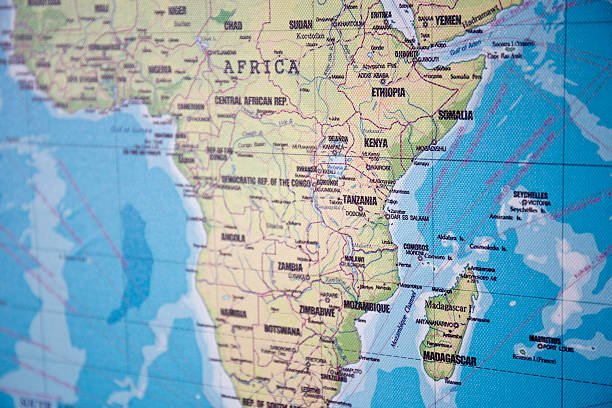
When discussing how long Africans ruled Europe, it's crucial to specify that this historical period primarily refers to the Moorish rule in the Iberian Peninsula (modern-day Spain and Portugal), not the entire European continent. This significant era of African presence in Europe lasted for nearly 800 years, from their initial conquest in 711 CE until the fall of Granada in 1492 CE.
The term "Africans" in this context refers to the Moors, a diverse group predominantly comprising North African Berbers and Arabs who had embraced Islam. Their arrival brought profound cultural, scientific, and architectural changes to the region, leaving an indelible mark on European history.
Understanding the "Africans": Who Were the Moors?
The term "Moor" (from the Latin Mauri) was historically used by Europeans to describe the Muslim inhabitants of the Iberian Peninsula, North Africa, and Sicily. This group was not a single ethnic entity but a complex blend of peoples from various backgrounds. The primary components were:
- Berbers: Indigenous ethnic groups of North Africa (present-day Morocco, Algeria, Tunisia, Libya). They constituted the majority of the invading forces.
- Arabs: Descendants of Arab conquerors from the Arabian Peninsula who had expanded across North Africa in the 7th century, bringing Islam and the Arabic language.
- Syrians and Yemenis: Smaller contingents who also participated in the early conquests.
These groups were unified by their Islamic faith and Arabic culture, which they brought with them across the Strait of Gibraltar. Their entry into Europe marked the beginning of a long and transformative period of African rule in Europe, specifically in what they called Al-Andalus.
The Initial Conquest and Establishment of Al-Andalus (711 CE)
The Moorish conquest of the Iberian Peninsula began in 711 CE. Led by the Berber general Tariq ibn Ziyad, a relatively small army crossed the Strait of Gibraltar from North Africa. They swiftly defeated the Visigothic kingdom, which had been weakened by internal strife, at the decisive Battle of Guadalete.
Within a few years, the Moorish forces, soon joined by the Arab governor of North Africa, Musa ibn Nusayr, had conquered most of the peninsula. Their expansion was remarkably rapid, reaching as far north as Narbonne in modern-day France, though their attempts to push further into Frankish territory were halted at the Battle of Tours in 732 CE.
The territories under their control became known as Al-Andalus, a name that would come to signify a vibrant and sophisticated civilization. This established the foundation for Islamic Spain's timeline, which would profoundly influence European development for centuries.
The Golden Age of Al-Andalus: A Beacon of Learning and Culture
For several centuries, Al-Andalus became one of the most advanced and prosperous regions in Europe. Cities like Córdoba, Seville, and Granada flourished as centers of learning, culture, and trade. This period is often referred to as the Golden Age of Islamic Spain.
Intellectual and Scientific Advancements
Under Moorish rule, remarkable progress was made in numerous fields:
- Science and Mathematics: Scholars preserved and expanded upon ancient Greek and Roman texts, translated into Arabic. They made significant contributions to algebra, trigonometry, astronomy, and medicine. The concepts of zero and Arabic numerals (originally Indian) were transmitted to Europe through Al-Andalus.
- Philosophy: Thinkers like Averroes (Ibn Rushd) and Maimonides (a Jewish philosopher) integrated Greek philosophy with Islamic and Jewish thought, influencing European scholasticism.
- Medicine: Hospitals were established, and advanced surgical techniques and pharmacology were developed. Works by physicians like Abulcasis (Abu al-Qasim al-Zahrawi) were standard medical texts in Europe for centuries.
- Agriculture: New crops such as oranges, lemons, sugar cane, rice, and cotton were introduced to Europe, along with advanced irrigation techniques, significantly boosting agricultural productivity.
Architectural Splendor and Urban Development
The legacy of Islamic Spain is perhaps most visible in its stunning architecture. Mosques, palaces, and public baths showcased intricate geometric patterns, calligraphy, and horseshoe arches. Iconic examples include:
- The Great Mosque of Córdoba (Mezquita-Cathedral)
- The Alhambra Palace in Granada
- The Giralda in Seville
These structures stand as enduring testaments to the artistic and engineering prowess of the era, attracting millions of visitors today and inspiring subsequent European architectural styles. Urban centers were clean, well-lit, and featured public amenities far superior to most contemporary European cities.
Religious and Cultural Coexistence (and its Challenges)
One defining characteristic of Moorish rule in Spain history was the relative coexistence of Muslims, Christians (Mozarabs), and Jews. While not without periods of tension and persecution, particularly during later dynasties, Al-Andalus generally offered more tolerance and opportunities for minority groups than many other parts of medieval Europe.
This interaction led to a rich cultural exchange, with contributions from all three communities enriching the intellectual and artistic landscape. Christians and Jews often adopted Arabic language and customs, becoming known as 'Mozarabs' and 'Jews of Al-Andalus' respectively.
The Shifting Dynasties and Fragmentation of Power
The political structure of Al-Andalus evolved significantly over its long history:
The Umayyad Emirate and Caliphate of Córdoba (756-1031 CE)
After the initial conquest, Al-Andalus was governed as a province of the Umayyad Caliphate in Damascus. However, in 756 CE, Abd al-Rahman I, a surviving member of the Umayyad dynasty, established an independent emirate in Córdoba. This emirate later declared itself a caliphate in 929 CE under Abd al-Rahman III, marking the zenith of its power and influence.
The Taifa Kingdoms (11th Century)
The collapse of the Caliphate of Córdoba in 1031 CE led to the fragmentation of Al-Andalus into numerous smaller, independent city-states known as Taifa kingdoms. These kingdoms were often at war with each other and increasingly vulnerable to the growing Christian kingdoms in the north.
The Almoravid and Almohad Dynasties (11th-13th Centuries)
Facing pressure from the Christian Reconquista, the Taifa kings sought aid from powerful North African Berber empires: the Almoravids and later the Almohads. These conservative dynasties re-unified Al-Andalus for periods and brought renewed military strength, but their stricter interpretations of Islam sometimes led to reduced religious tolerance.
The Reconquista: Christian Re-conquest of the Iberian Peninsula
The process of Christian kingdoms gradually reclaiming territory from Moorish rule is known as the Reconquista. This was not a continuous war but a series of intermittent campaigns, treaties, and political maneuvers that spanned nearly eight centuries, almost matching the Al-Andalus duration itself.
Key Milestones of the Reconquista Period
| Date Range | Event/Phase | Significance |
|---|---|---|
| ~722 CE | Battle of Covadonga | Often considered the symbolic start of the Reconquista, establishing the Kingdom of Asturias. |
| 1085 CE | Fall of Toledo | A major victory for Alfonso VI of Castile, capturing a strategically and symbolically important city. |
| 1212 CE | Battle of Las Navas de Tolosa | A decisive defeat for the Almohad Caliphate by a coalition of Christian kings, marking a turning point. |
| 1236 CE | Fall of Córdoba | Ferdinand III of Castile captures the former capital of the Caliphate. |
| 1248 CE | Fall of Seville | Another major city taken by Ferdinand III, reducing Muslim presence to the Kingdom of Granada. |
| 1492 CE | Fall of Granada | The final conquest of the last Moorish stronghold by the Catholic Monarchs, Ferdinand and Isabella, ending African rule in Europe. |
The fall of Granada in 1492 CE was a monumental event, marking the end of the long era of Moorish influence in Spain. This year also saw the expulsion of Jews from Spain and Columbus's first voyage to the Americas, forever changing the course of global history.
The Enduring Legacy of African Rule in Europe
Even after the Reconquista, the North African presence in Europe left an indelible mark on the culture, language, and landscape of the Iberian Peninsula. The influence is profound and multifaceted:
- Language: Hundreds of Spanish and Portuguese words are derived from Arabic, particularly in areas of agriculture, administration, and science (e.g., azúcar/sugar, aceite/oil, algebra, naranja/orange).
- Architecture: Mudejar style, a blend of Islamic and Christian architectural elements, continued to flourish even after the Reconquista, reflecting the lasting aesthetic impact.
- Agriculture and Cuisine: The introduction of new crops and sophisticated irrigation systems permanently transformed the agricultural practices and diet of the region.
- Music and Arts: Elements of Moorish music and poetic forms can be found in Spanish folk traditions like flamenco.
- Knowledge Transmission: Al-Andalus acted as a crucial bridge for the transmission of classical knowledge and Eastern innovations to the rest of Europe during its own medieval period, fostering the intellectual growth that would eventually lead to the Renaissance.
The story of how long Africans ruled Europe in parts of the Iberian Peninsula is a testament to the complex, dynamic, and often symbiotic relationship between different cultures and civilizations. It highlights periods of advanced learning, significant innovation, and profound cultural exchange.
Dispelling Common Misconceptions
It's important to clarify a few points when discussing African rule in Europe:
- Not all of Europe: The rule was largely confined to the Iberian Peninsula and some parts of Sicily, not the entire European continent.
- Diversity of "Africans": The term "Africans" here primarily refers to North Africans (Berbers and Arabs), not sub-Saharan Africans, although some sub-Saharan individuals were part of the diverse population through various roles.
- Complexity of "Rule": The nature of rule varied significantly, from powerful unified caliphates to fragmented Taifa kingdoms, and involved complex interactions with Christian and Jewish populations, including periods of both tolerance and conflict.
Conclusion
In summary, the period during which Africans, specifically the North African Moors, ruled parts of Europe, notably the Iberian Peninsula (Al-Andalus), spanned nearly 800 years, from 711 CE to 1492 CE. This era was characterized by an extraordinary flourishing of culture, science, and art, making Al-Andalus a vital intellectual and economic hub in the medieval world. The duration of Moorish rule in Spain left an enduring and profound legacy, shaping the identity, language, architecture, and agricultural practices of modern-day Spain and Portugal. Understanding this long and complex history is essential to appreciating the rich tapestry of European and Mediterranean civilizations.
Enjoyed this read?
Share it with your friends and colleagues.