Did All Humans Descend From Africa

BSC Insights Admin
September 30, 2026
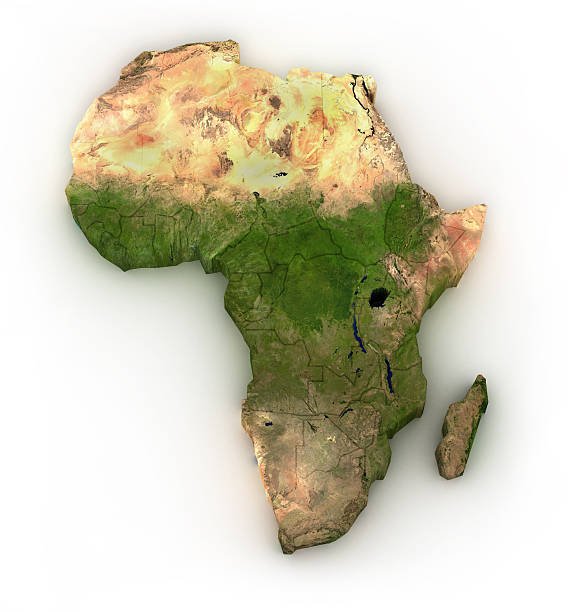
Yes, the overwhelming scientific consensus, supported by extensive genetic, fossil, and archaeological evidence, indicates that all modern humans (Homo sapiens) ultimately descend from a common ancestral population that originated in Africa. This foundational understanding, known as the Out of Africa theory or the recent African origin model, posits that our species evolved in Africa before migrating out to populate the rest of the world. This journey of human migration laid the groundwork for the genetic diversity we see across global populations today.
Understanding where we come from is one of humanity's most profound questions. The quest to trace our collective roots has led scientists down paths of ancient DNA, fossil discoveries, and archaeological sites across continents. The evidence consistently points to Africa as the cradle of humanity, suggesting a relatively recent expansion event that replaced earlier hominin populations worldwide. This article will delve into the compelling evidence that supports the Out of Africa theory, exploring genetic markers, fossil records, and the broader context of human evolution.
The Scientific Consensus: The Out of Africa Theory
The Out of Africa theory is not just a hypothesis; it is the most widely accepted scientific model describing the geographic origin and spread of modern humans. It directly answers the question, 'Did all humans descend from Africa?' by stating that Homo sapiens originated in a single region in Africa approximately 300,000 to 200,000 years ago. From there, a relatively small group of individuals embarked on a series of migrations out of Africa, beginning roughly 60,000 to 70,000 years ago, eventually colonizing all other continents.
This theory contrasts with the older, largely disproven Multiregional Hypothesis, which proposed that modern humans evolved simultaneously in different parts of the world from separate archaic human populations like Neanderthals and Homo erectus. While some interbreeding with archaic groups did occur, the predominant genetic lineage and origin point for all modern humans is firmly rooted in Africa.
Compelling Genetic Evidence for African Origin
One of the strongest pillars supporting the Out of Africa theory comes from the field of genetics, particularly through the study of mitochondrial DNA (mtDNA) and the Y-chromosome. These specific genetic markers are passed down almost exclusively through the maternal and paternal lines, respectively, providing clear lineages that can be traced back through generations.
Mitochondrial Eve and Y-Chromosomal Adam
- Mitochondrial Eve: Genetic studies analyzing mtDNA, which is inherited solely from the mother, indicate that all living humans share a common female ancestor, dubbed 'Mitochondrial Eve.' She is estimated to have lived in East Africa approximately 150,000 to 200,000 years ago. Her descendants are found in every human population on Earth, demonstrating a single maternal origin. The greatest genetic diversity in mtDNA is found within African populations, which is a key indicator of an older population, as more time allows for more mutations to accumulate.
- Y-Chromosomal Adam: Similarly, studies of the Y-chromosome, inherited exclusively from the father, point to a common male ancestor, 'Y-Chromosomal Adam,' who also lived in Africa, though potentially at a slightly different time, roughly 200,000 to 300,000 years ago. Like mtDNA, the highest diversity of Y-chromosome lineages is found within African populations.
The existence of these genetic ancestors does not imply they were the only humans alive at the time, but rather that only their direct maternal or paternal lines have survived to the present day. These findings provide compelling evidence that a relatively small group of early Homo sapiens in Africa gave rise to all subsequent human populations.
Global Genetic Diversity Patterns
Further genetic studies reveal a clear pattern: human genetic diversity is highest in African populations and decreases progressively as one moves further away from Africa. This gradient of diversity is a classic signature of a population expansion from a single origin point. As people migrated out of Africa, small groups (often experiencing genetic bottlenecks) carried only a subset of the original African genetic variation with them. Subsequent migrations and population isolation further reduced diversity in more distant populations.
| Region | Observed Genetic Diversity | Implication |
|---|---|---|
| Sub-Saharan Africa | Highest | Oldest population, origin point |
| Middle East/Europe | Medium-High | Early dispersal routes, some diversity lost |
| Asia | Medium | Further migrations, more diversity lost |
| Americas/Oceania | Lowest | Most distant migrations, significant bottlenecks |
This decreasing diversity gradient provides powerful support for the hypothesis of a recent African origin and subsequent global dispersal. Ancient DNA analysis from archaeological remains continues to refine our understanding of these migration routes and timelines, but the core 'Out of Africa' narrative remains robust.
Fossil and Archaeological Evidence
Beyond genetics, paleoanthropological discoveries provide crucial physical evidence for our African origins. The oldest undisputed fossils of anatomically modern humans, Homo sapiens, have been found in Africa.
- Ethiopia (Omo Kibish): The Omo Kibish I skull, discovered in Ethiopia, is one of the oldest known Homo sapiens fossils, dated to approximately 195,000 years ago. Its features are definitively modern human.
- Morocco (Jebel Irhoud): More recent discoveries at Jebel Irhoud in Morocco have pushed the timeline back even further, with fossils dated to about 315,000 years ago, representing some of the earliest known Homo sapiens or closely related ancestors. These findings significantly extend the period of human evolution within Africa.
- South Africa (Florisbad, Border Cave): Other significant early Homo sapiens remains have been found in South Africa, reinforcing the widespread presence of early modern humans across the African continent.
These fossil records indicate that modern human anatomy first appeared and developed within Africa, long before any convincing evidence of fully modern humans appeared elsewhere in the world. The consistent dating of these early fossils aligns perfectly with the genetic timelines for Mitochondrial Eve and Y-Chromosomal Adam, painting a coherent picture of our origins.
Archaeological Footprints of Early Humans
Archaeological evidence, including stone tools, early forms of art, and symbolic behaviors, further supports an African origin. The earliest sophisticated tool technologies and evidence of symbolic thought (like personal adornments or abstract engravings) also appear first in Africa, predating similar developments in other regions.
- Blombos Cave, South Africa: This site has yielded some of the earliest evidence of symbolic behavior, including engraved ochre and shell beads, dated to around 100,000 years ago.
- Kenya (Olorgesailie): Recent findings show advanced tool-making and resource-gathering activities dating back to 320,000 years ago, indicating complex cognitive abilities in early African Homo sapiens.
These archaeological sites demonstrate that the behavioral innovations characteristic of modern humans were also honed and developed on the African continent before their global spread.
The Great Human Migration Out of Africa
With Homo sapiens firmly established in Africa, the next chapter in our story is the series of human migration patterns that led to the peopling of the rest of the world. While there might have been earlier, less successful excursions, the major wave that gave rise to all non-African populations is believed to have occurred roughly 60,000 to 70,000 years ago.
Migration Routes and Chronology
- The Southern Route: The most widely accepted route suggests that a relatively small group of modern humans left Africa via a coastal path along the Arabian Peninsula, extending into South Asia, Southeast Asia, and eventually Australia. Evidence for this route includes genetic markers found in indigenous populations in these regions, as well as early archaeological sites in places like Australia (e.g., Lake Mungo, >50,000 years old).
- The Northern Route (Later): Later waves of migration likely moved into the Near East, then spread into Europe and Central Asia. This wave encountered and interbred with Neanderthals in Eurasia.
- Populating the Americas: The final major landmass to be populated was the Americas, with migrants crossing the Bering land bridge from Asia into North America, likely beginning around 15,000 to 20,000 years ago, potentially in multiple waves.
Each step of these migrations involved incredible adaptations to diverse environments, from deserts to ice ages, demonstrating the remarkable resilience and ingenuity of our ancestors. The genetic fingerprints of these journeys are still detectable in the DNA of populations worldwide, tracing a continuous path back to Africa.
Interactions with Other Hominins
While the Out of Africa theory emphasizes our African origin, it doesn't mean our ancestors were the only hominins outside Africa. As modern humans migrated, they encountered and, to a limited extent, interbred with other archaic human groups, such as Neanderthals in Europe and Asia, and Denisovans in Asia. Evidence from ancient DNA analysis shows that non-African populations carry a small percentage (typically 1-4%) of Neanderthal DNA, and some East Asian and Oceanic populations carry Denisovan DNA.
These interactions, while significant in understanding the full complexity of human history, do not negate the primary conclusion that the vast majority of our genetic heritage, and the ultimate origin of our species, lies in Africa. The African population maintained a greater genetic continuity and diversity, serving as the source population for the expansion that ultimately led to all contemporary human groups.
Conclusion: A Shared African Heritage
In conclusion, the question, 'Did all humans descend from Africa?' is answered with a resounding yes by the scientific community. The overwhelming body of evidence from genetics, fossil records, and archaeology consistently points to Africa as the birthplace of Homo sapiens. The Out of Africa theory describes a single origin for our species in Africa, followed by a series of migrations that populated the globe, ultimately leading to the diverse human populations we see today.
This shared African heritage underscores a fundamental truth about humanity: beneath the surface of cultural and phenotypic differences, we are all connected by common ancestral roots. Understanding our human origins in Africa not only provides insights into our biological past but also fosters a sense of global kinship and a shared journey of survival and adaptation across continents. The continuous research in paleoanthropology and genomics further refines this incredible story of humanity's African beginning and subsequent worldwide dispersal.
Enjoyed this read?
Share it with your friends and colleagues.