Did All Humans Originated From Africa

BSC Insights Admin
October 01, 2026
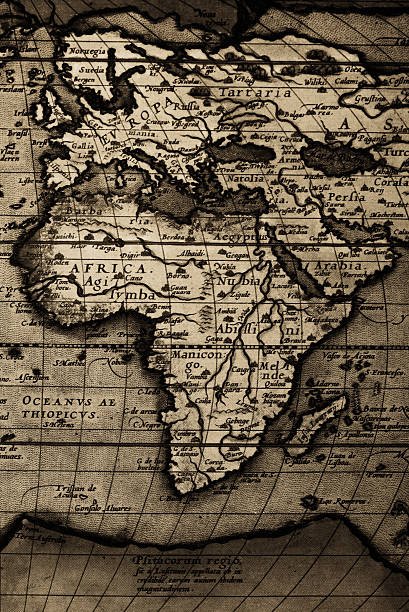
Yes, the overwhelming scientific consensus, supported by extensive genetic, fossil, and archaeological evidence, indicates that all modern humans, Homo sapiens, originated in Africa. This foundational concept is widely known as the "Out of Africa" theory or the Recent African Origin model. It posits that our species evolved in Africa approximately 300,000 years ago and then migrated out of the continent in several waves, eventually populating the entire globe.
The "Out of Africa" Theory: A Pillar of Human Evolutionary Understanding
The "Out of Africa" theory stands as the most accepted model for modern human origins and dispersal. It proposes a single point of origin for Homo sapiens within Africa, from which populations later spread, largely replacing earlier hominin groups (like Neanderthals in Europe and Homo erectus in Asia) they encountered, rather than interbreeding extensively with them. While some interbreeding did occur, particularly with Neanderthals and Denisovans, the genetic contribution of these archaic humans to the global Homo sapiens gene pool is relatively minor compared to our shared African ancestry.
This theory directly contrasts with the alternative, largely discredited, "Multiregional Hypothesis," which suggested that Homo sapiens evolved simultaneously in different regions of the world from local archaic hominin populations. However, decades of robust scientific inquiry have consistently favored the African origin model.
Compelling Evidence Supporting African Origins
The evidence base for the African origin of humanity is multifaceted and continuously strengthened by new discoveries across various scientific disciplines. These lines of evidence converge to paint a clear picture of our shared ancestry.
Fossil Record: The Oldest Homo Sapiens Footprints
Archaeological and paleontological discoveries in Africa provide the earliest physical evidence of Homo sapiens. Sites across Eastern and Southern Africa have yielded fossils dating back hundreds of thousands of years, establishing Africa as the cradle of our species.
- Jebel Irhoud, Morocco: In 2017, the discovery of Homo sapiens fossils at Jebel Irhoud pushed back the timeline for our species' origin to approximately 300,000 to 350,000 years ago. These remains, featuring a mix of modern and archaic facial features, are currently the oldest known Homo sapiens fossils, indicating that our species emerged much earlier and possibly across a wider geographic range within Africa than previously thought.
- Omo Kibish, Ethiopia: The Omo I and Omo II fossils, dating to about 233,000 years ago, were long considered the oldest undisputed Homo sapiens remains. Omo I, in particular, exhibits fully modern anatomical features.
- Herto Bouri, Ethiopia: Discoveries here, dated to approximately 160,000 years ago, also showcase early modern human traits, reinforcing East Africa's role in our deep past.
The sheer volume and antiquity of Homo sapiens fossils found in Africa far surpass those found on other continents, which predominantly feature later migrants or archaic hominin species.
Genetic Evidence: Mitochondrial Eve and Y-Chromosomal Adam
Perhaps the most compelling support for the "Out of Africa" theory comes from genetic studies, particularly those involving mitochondrial DNA (mtDNA) and Y-chromosome DNA.
- Mitochondrial Eve: Studies of mtDNA, which is inherited exclusively from the mother, reveal that all living humans trace their ancestry back to a single female ancestor who lived in Africa approximately 150,000 to 200,000 years ago. While she wasn't the only woman alive at the time, her mtDNA lineage is the only one that survived and diversified into all present-day human populations.
- Y-Chromosomal Adam: Similarly, analysis of the Y-chromosome, passed down exclusively from father to son, points to a common male ancestor who lived in Africa roughly 180,000 to 250,000 years ago.
- Genetic Diversity: Crucially, African populations exhibit the greatest genetic diversity among all human populations worldwide. This is a hallmark of an older population that has had more time to accumulate mutations and variations. As groups migrated out of Africa, they carried only a subset of this diversity, resulting in less genetic variation in non-African populations. This "serial founder effect" is a strong indicator of an African origin followed by dispersal.
- Ancient DNA: Advances in ancient DNA analysis have further solidified these findings, allowing scientists to compare the genomes of ancient hominins with modern humans, tracing migratory paths and interbreeding events.
Archaeological Discoveries: Tools, Art, and Behavioral Modernity
Alongside fossil and genetic evidence, archaeological sites in Africa provide a rich tapestry of early human behavior, artistry, and technological innovation.
- Advanced Stone Tools: Sites like Blombos Cave in South Africa have yielded sophisticated stone tools, bone tools, and evidence of symbolic behavior (like engraved ochre and shell beads) dating back as far as 100,000 years ago. These represent early expressions of what we recognize as modern human cognition.
- Symbolic Behavior: The earliest known cave paintings and abstract carvings have also been found in Africa, predating similar expressions in Europe and Asia. This suggests that the capacity for symbolic thought and complex communication developed within early African Homo sapiens populations.
- Environmental Adaptation: Evidence of early humans adapting to diverse African environments, from deserts to grasslands, demonstrates the resilience and ingenuity that would later enable them to colonize the entire planet.
Tracing the Great Migrations: How Humans Populated the World
While Homo sapiens originated in Africa, the story of humanity is one of remarkable dispersal. Several waves of migration carried our ancestors out of Africa and across the continents.
The First Major Exodus
Current research suggests that the most significant and successful migrations out of Africa began approximately 60,000 to 70,000 years ago. Before this, there may have been earlier, smaller exploratory movements, but these appear to have either died out or left minimal genetic imprint on modern non-African populations.
The primary route for this major dispersal is thought to have been across the Bab-el-Mandeb strait at the southern end of the Red Sea, taking advantage of lower sea levels at the time, or perhaps further north through the Levant (the Middle East).
Populating the Continents
From the Arabian Peninsula, these early migrants followed coastal routes and inland passages, gradually spreading across Asia and beyond.
- Asia: By about 45,000-50,000 years ago, Homo sapiens had reached Southeast Asia and Australia. The colonization of Australia, requiring a sea crossing, represents one of humanity's earliest seafaring achievements.
- Europe: Humans entered Europe roughly 40,000-45,000 years ago, eventually encountering and largely replacing Neanderthal populations.
- The Americas: The last major continent to be settled was the Americas, with migrants crossing the Bering land bridge from Asia into North America approximately 15,000-20,000 years ago, then rapidly spreading south.
This grand narrative of migration explains the distribution of human populations and genetic patterns observed today, with populations further from Africa generally exhibiting less genetic diversity due to successive founder effects.
Addressing Alternative Theories: The Multiregional Hypothesis
While the "Out of Africa" theory dominates scientific thought, it's important to understand the alternative that it largely superseded: the Multiregional Hypothesis. This theory proposed that Homo sapiens evolved in multiple regions simultaneously from local populations of Homo erectus, with continuous gene flow between these regions preventing speciation and maintaining a single human species.
However, the Multiregional Hypothesis has largely been rejected by genetic evidence, which clearly points to a recent common ancestor in Africa. While there is evidence of limited interbreeding with archaic hominins (like Neanderthals and Denisovans) outside of Africa, this introgression accounts for only a small percentage of the modern human genome and does not support a continuous, parallel evolution across continents from Homo erectus ancestors.
The vast majority of our genetic makeup, cultural innovations, and anatomical features can be traced back to our African origins, solidifying the "Out of Africa" model as the authoritative explanation for human emergence.
The Unifying Power of Our Shared African Ancestry
The scientific understanding that all humans originated from Africa is not merely a fascinating historical fact; it carries profound implications for understanding our shared heritage and interconnectedness. It underscores that race is a social construct with no basis in distinct biological lineages, as genetic variation is continuous and gradual across populations, with the greatest diversity found within Africa itself.
This shared ancestry reminds us that beneath the superficial differences in appearance, culture, and language, all people belong to a single, relatively young species that began its journey in Africa. It highlights the incredible resilience, adaptability, and exploratory spirit of our ancestors who, starting from a single continent, embarked on a millennia-long journey to inhabit every corner of the Earth.
Conclusion
In summary, the question "Did all humans originated from Africa?" is answered with a resounding yes by the scientific community. The compelling convergence of archaeological finds, fossil discoveries, and advanced genetic analysis overwhelmingly supports the "Out of Africa" theory. Our species, Homo sapiens, first evolved in Africa roughly 300,000 years ago, and from this African cradle, our ancestors embarked on a series of migrations that eventually led to the global distribution of humanity we see today. This shared origin in Africa is a fundamental aspect of human history, uniting all people through a common evolutionary past.
Enjoyed this read?
Share it with your friends and colleagues.