How Did Industrialization Enable Europeans To Overpower Africans

BSC Insights Admin
September 30, 2026
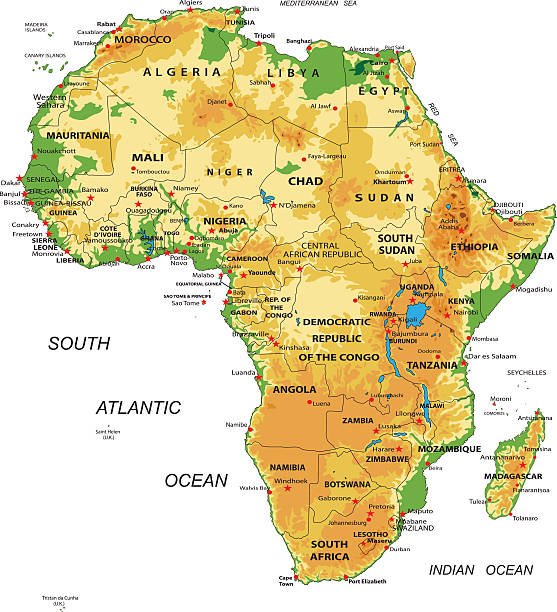
Industrialization profoundly reshaped global power dynamics, enabling Europeans to overpower Africans primarily through overwhelming technological superiority in weaponry and transportation, robust economic capabilities, and crucial medical advancements. The period of rapid European expansion into Africa, often termed the 'Scramble for Africa' in the late 19th century, was fundamentally fueled by the innovations of the Industrial Revolution, creating an unprecedented imbalance in military, economic, and logistical strength.
The Dawn of Disparity: Europe's Industrial Revolution
The Industrial Revolution, beginning in Britain in the late 18th century and spreading across Europe, marked a dramatic shift from agrarian, handicraft economies to machine manufacturing, factory systems, and technological innovation. This era brought forth new energy sources like steam and electricity, advanced metallurgy, and mass production techniques. While Europe underwent this transformative period, many African societies, though rich in culture, trade, and established political systems, generally remained pre-industrial in their technological and military development. This growing technological and economic chasm became the decisive factor that allowed European powers to overpower Africans on a grand scale.
Military Superiority: The Tools of Conquest
Perhaps the most immediate and devastating advantage held by European forces was their vastly superior military technology, a direct product of industrialization. African armies, often equipped with spears, swords, bows, and older firearms, stood little chance against the rapidly advancing European arsenals.
Advanced Weaponry
- Breech-loading Rifles: Unlike older muzzle-loading muskets, these rifles could be loaded much faster, increasing the rate of fire dramatically. They also offered greater accuracy and range, making traditional close-quarters combat tactics of African warriors far riskier and less effective.
- Machine Guns (e.g., Maxim Gun): The advent of the automatic machine gun, epitomized by the Maxim gun, was a game-changer. It allowed a small number of European soldiers to inflict massive casualties on large African forces. Rudyard Kipling's famous couplet, "Whatever happens, we have got / The Maxim gun, and they have not," succinctly captures this overwhelming advantage. These weapons could mow down hundreds of charging warriors in minutes, making conventional resistance suicidal.
- Artillery: Industrialized cannons and artillery pieces provided long-range destructive power, capable of demolishing fortifications and dispersing large gatherings of troops or civilians from a distance.
This technological advantage in firepower rendered traditional African military strategies largely obsolete, forcing African resistance movements into desperate and often futile struggles against an industrially armed foe.
Naval Power
Industrialization also revolutionized naval warfare. Steamships, capable of navigating against currents and winds, allowed European powers to project their military might deep into Africa via major rivers like the Nile, Congo, and Niger. These gunboats could bypass traditional coastal defenses and deliver troops and supplies inland with unprecedented speed and efficiency. Furthermore, ironclad and later steel-hulled warships provided formidable coastal bombardment capabilities, neutralizing African coastal defenses and securing landing zones for colonial expansion.
Economic Leverage: Resources, Markets, and Capital
The engines of European industry demanded an ever-increasing supply of raw materials and new markets for finished goods. Africa, with its vast untapped resources, became the target of intense economic interest, further fueling the drive to colonize Africa.
Demand for Raw Materials
European factories required enormous quantities of raw materials to sustain their output. These included:
- Rubber: Essential for the burgeoning tire industry and other manufacturing.
- Minerals: Gold, diamonds, copper, tin, and other precious and industrial metals were vital for industrial production and burgeoning consumer markets.
- Agricultural Products: Palm oil for lubricants and soap, cotton for textiles, cocoa, coffee, and timber were all in high demand.
Africa possessed these resources in abundance, and European powers sought to control their extraction and supply chains directly, often through brutal exploitation of African labor.
New Markets for Manufactured Goods
As European industries churned out goods, they also needed new markets to sell their products. Africa, once colonized, became a captive market for European textiles, tools, alcohol, and other manufactured items. This created a cycle of dependency where African economies were geared towards supplying raw materials to Europe and consuming European finished goods, hindering the development of their own indigenous industries.
Financial Power and Infrastructure
Industrialization generated immense capital accumulation in Europe. This wealth was then invested in colonial ventures, funding military expeditions, establishing administrative structures, and building infrastructure designed to facilitate resource extraction and control. Railways, for example, were built not to connect African communities but to link resource-rich interiors to port cities, enabling efficient transport of raw materials to Europe and military control over vast territories.
Medical Breakthroughs: Conquering Disease
Historically, Africa's formidable diseases, particularly malaria, had been a significant barrier to European penetration beyond the coasts. Industrial-era scientific advancements provided a crucial solution.
Quinine and the Battle Against Malaria
The discovery and widespread use of quinine, an antimalarial drug, in the mid-19th century dramatically reduced European mortality rates from malaria. This single medical innovation allowed Europeans to survive and operate in the interior of Africa for extended periods, paving the way for more extensive exploration, military campaigns, and colonial administration. Without quinine, the scale of European presence and conquest would have been far more limited.
Improved Sanitation and Healthcare
While often rudimentary in colonial contexts, European medical knowledge and practices, including hygiene and sanitation, offered some advantages in managing diseases that previously decimated European expeditions. This further bolstered their capacity to establish and maintain a presence in challenging environments.
Logistical and Communication Advantages
Beyond direct military and economic power, industrialization provided critical logistical and communication advantages that facilitated the rapid and effective control of vast African territories.
Steam Locomotion and Railways
The construction of railways in colonial Africa was instrumental. They allowed for the rapid deployment of troops, artillery, and supplies across immense distances, suppressing revolts and extending European authority far from coastal bases. Railways also served the primary economic purpose of transporting raw materials from mines and plantations to ports for shipment to Europe, fundamentally reshaping African landscapes and economies for colonial benefit.
Telegraph and Communication
The invention of the telegraph revolutionized communication. European colonial administrators and military commanders could send and receive orders and intelligence almost instantaneously across vast distances, enabling coordinated military operations, efficient administration, and rapid responses to challenges. This centralized control was a stark contrast to the slower, more fragmented communication methods available to many African leaders.
Organizational and Political Factors
European nation-states, products of centuries of evolving political organization, possessed centralized administrative and military structures that were highly effective in organizing large-scale campaigns and managing vast territories. While African societies had diverse political structures, many lacked the centralized, bureaucratic capacity to mobilize resources and resistance on a scale comparable to European industrial states.
Centralized States vs. Fragmented Societies
European powers, often driven by intense nationalistic competition and imperial ambitions, operated as unified entities. They frequently exploited existing divisions among African groups through divide and conquer tactics, forging alliances with some to defeat others, thereby weakening overall African resistance.
The Scramble for Africa
The intense competition among European powers during the Scramble for Africa (roughly 1881-1914) further accelerated the process. Rather than cooperate, European nations vied for territory, pushing the boundaries of their influence and formalizing their claims through events like the Berlin Conference of 1884-85. This political drive, underpinned by industrial capabilities, led to the swift partition and colonization of almost the entire African continent.
The Disproportionate Impact on African Societies
The industrial-enabled European conquest had devastating and long-lasting impacts on African societies:
- Loss of Sovereignty and Independence: African nations lost their self-governance, replaced by foreign rule.
- Economic Exploitation: African economies were reoriented to serve European needs, leading to the extraction of resources and the imposition of cash crop systems.
- Cultural and Social Disruption: Traditional political structures, social hierarchies, and cultural practices were often undermined or destroyed.
- Artificial Borders: European powers arbitrarily drew new borders, often dividing ethnic groups or forcing disparate groups together, leading to future conflicts.
African Resistance: Bravery Against Overwhelming Odds
It is crucial to acknowledge that African peoples did not passively accept European domination. Many groups mounted fierce resistance movements, ranging from the Ashanti wars against the British to the Maji Maji Rebellion against the Germans and the Ethiopian victory at Adwa against the Italians. Leaders like Menelik II of Ethiopia and Samory Touré of the Wassoulou Empire famously challenged European forces. However, despite immense bravery, strategic acumen, and superior knowledge of their terrain, most African resistance movements ultimately succumbed to the overwhelming technological and logistical might of the industrialized European powers. The gap in weaponry, communication, and economic resources was simply too vast to overcome in most instances.
Conclusion
In essence, industrialization provided Europeans with an unparalleled arsenal of tools for conquest and control. From devastating military technology like machine guns and steamships to life-saving medical advancements like quinine, and from efficient logistical networks like railways and telegraphs to a powerful economic engine demanding resources and markets, the Industrial Revolution created a profound and ultimately insurmountable power imbalance. This era unequivocally enabled Europeans to overpower Africans, leading to the rapid and comprehensive colonization of the continent and shaping the course of African history with enduring consequences that continue to resonate today. The industrial age was not just a period of technological advancement; it was the foundation upon which global empires were built and through which the subjugation of vast populations was made possible.
Enjoyed this read?
Share it with your friends and colleagues.