How Did Islam Spread In North Africa

BSC Insights Admin
September 30, 2026
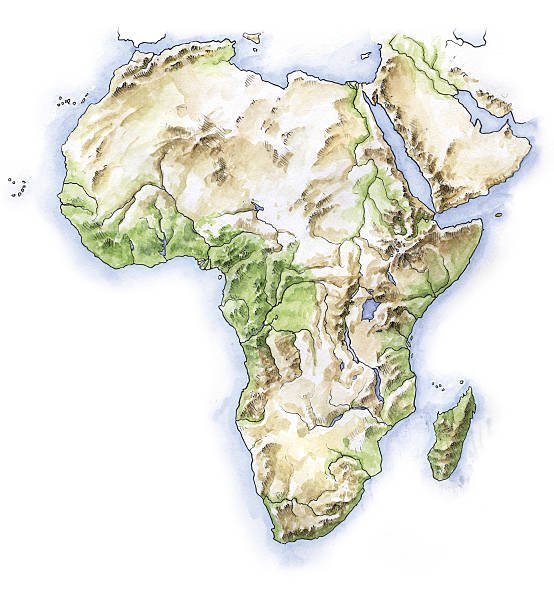
Islam’s spread in North Africa was a multifaceted and gradual process, primarily driven by a combination of early Arab-Islamic military conquests, extensive trade networks, migration, and sustained cultural and religious influence over several centuries. Beginning in the 7th century, the faith expanded westward from the Arabian Peninsula, fundamentally transforming the region’s religious, political, and social landscape, replacing and integrating with existing Roman, Byzantine, and indigenous Berber traditions.
The Initial Arab-Islamic Conquests (7th-8th Centuries)
The earliest and most decisive factor in the introduction of Islam to North Africa was the series of military campaigns launched by the nascent Islamic caliphates. Following the death of the Prophet Muhammad, the Rashidun Caliphate and later the Umayyad Caliphate expanded rapidly, bringing Islamic rule to vast territories.
Conquest of Egypt and Early Expansion
The first significant step was the conquest of Egypt in 639 CE by Amr ibn al-As during the Rashidun Caliphate. This strategic victory provided a vital foothold in North Africa and served as a launching pad for further westward expansion. Egypt, with its rich Byzantine heritage and Coptic Christian population, quickly became a significant center of Islamic learning and administration.
Campaigns into Ifriqiya and the Maghreb
From Egypt, Arab armies pushed into Ifriqiya (modern-day Tunisia and eastern Algeria). The city of Kairouan was founded in 670 CE by Uqba ibn Nafi, serving as a pivotal military base and a burgeoning center of Islamic scholarship and culture. Over the next decades, campaigns continued into the western Maghreb, encountering fierce resistance, particularly from the indigenous Berber tribes, who were a dominant force in the region.
Figures like Musa ibn Nusayr and Tariq ibn Ziyad were instrumental in consolidating Arab-Islamic control across the entire North African coast and even launching the conquest of Hispania (Al-Andalus) in 711 CE. While military victories established political control, the complete Islamization of the Berber populations was a much longer, more intricate process, often involving initial resistance followed by eventual adoption and integration.
Mechanisms of Islamization Beyond Conquest
While military might opened the doors, the sustained spread and deep rooting of Islam in North Africa relied on several non-military factors that facilitated widespread conversion and cultural integration.
Trade Routes and Merchant Networks
Trans-Saharan trade routes played a crucial role in spreading Islam beyond the coastal regions and into the interior and sub-Saharan Africa. Arab and Berber Muslim merchants traversed these routes, establishing commercial hubs that also became centers for Islamic propagation. These merchants, through their economic influence and daily interactions, introduced Islamic practices, laws, and cultural norms to local communities. The economic benefits of aligning with powerful Muslim trading partners also incentivized conversion.
Similarly, Mediterranean trade facilitated exchanges with other Muslim lands, reinforcing Islamic identity and scholarship along the coast.
Sufism and Missionary Activities (Da'wah)
The mystical tradition of Sufism became a powerful force in the deeper Islamization of North Africa from the 11th century onwards. Sufi shaykhs (spiritual leaders) and their brotherhoods (tariqas) emphasized personal piety, spiritual experience, and community building. They often adapted Islamic teachings to local customs and languages, making the faith more accessible and appealing to local populations, especially in rural areas and among the Berbers. Sufi lodges (zawiyas) became centers of learning, welfare, and spiritual guidance, playing a significant role in missionary work (da'wah).
Migration, Settlement, and Intermarriage
The migration of Arab tribes, notably the Banu Hilal and Banu Sulaym in the 11th century, brought significant Arab populations into North Africa, particularly into rural areas of Ifriqiya and the central Maghreb. These migrations led to greater Arabic linguistic and cultural influence and further spread of Islamic practices. Intermarriage between Arab Muslims and indigenous Berber populations also fostered cultural fusion and the transmission of Islamic faith across generations.
Political and Social Incentives
Conversion to Islam often brought significant political and social advantages. Non-Muslims (dhimmis) were generally tolerated under Islamic rule but were subject to a special poll tax known as jizya, in exchange for protection and exemption from military service. While not a direct coercive measure, the financial burden of jizya and the desire for social equality, political advancement, and integration into the dominant cultural framework often served as incentives for conversion over time. Furthermore, Berber tribes who converted and embraced Islam found opportunities to participate in the new political and military structures, gaining power and influence.
Key Islamic Dynasties and Their Role
The consolidation and spread of Islam were also heavily influenced by the rise and fall of various Islamic dynasties that governed North Africa.
Idrisids (788-974 CE)
In what is now Morocco, the Idrisid dynasty, founded by Idris I (a descendant of Ali ibn Abi Talib), established the first independent Islamic state in the western Maghreb. They played a crucial role in promoting Islam and Arabic culture among the Berber tribes in the region, establishing Fez as a major center of learning and faith.
Aghlabids (800-909 CE)
Based in Ifriqiya, the Aghlabid dynasty, though nominally vassals of the Abbasid Caliphate, ruled with considerable autonomy. They were significant patrons of architecture, art, and scholarship. Under their rule, Kairouan flourished as a center for Islamic jurisprudence and science, further solidifying Islam's presence in the eastern Maghreb.
Fatimids (909-1171 CE)
The Fatimids, a Shi'ite dynasty, originated in Ifriqiya and established a powerful caliphate that eventually conquered Egypt, founding Cairo. Their rule introduced a distinct Shi'ite strand of Islam, though Sunni Islam remained prevalent among the majority. They significantly contributed to the development of Islamic cities, universities (like Al-Azhar), and trade networks, enhancing the region's Islamic identity.
Almoravids (1040-1147 CE) and Almohads (1121-1269 CE)
These two powerful Berber dynasties, originating from the western Sahara and the Atlas Mountains respectively, were instrumental in unifying much of North Africa and Al-Andalus under a strict interpretation of Sunni Islam. The Almoravids and Almohads spread their rigorous understanding of Islamic law and theology, often through military campaigns, but also by establishing madrasas (Islamic schools) and promoting Islamic scholarship. Their rule further solidified the Sunni Maliki school of law as dominant in the Maghreb.
The Berber Role in Islam's Spread
Initially resistant to Arab rule, the Berber tribes eventually embraced Islam and became a driving force in its spread. Their conversion was not a uniform or immediate event but a gradual process of integration, often marked by syncretism. Once converted, Berbers became staunch defenders and propagators of the faith, forming the backbone of the Almoravid and Almohad empires and playing a critical role in the Islamic conquest of Spain. Their adoption of Islam ensured its deep roots and unique character in North Africa, fusing with indigenous cultural elements.
Enduring Legacy and Cultural Impact
The spread of Islam profoundly and permanently reshaped North Africa. Arabic became the dominant language in many areas, particularly the urban centers and fertile plains, while Berber languages continued to thrive in mountainous and desert regions. Islamic law (Sharia) became the foundation of legal systems. Architectural styles, artistic expressions, philosophical thought, and educational institutions all bore the indelible mark of Islamic civilization.
North Africa emerged as a vibrant intellectual and spiritual hub, producing renowned scholars, mystics, and artists. It also became a crucial bridge, transmitting Islamic knowledge and culture, along with goods, between the Middle East, Sub-Saharan Africa, and Europe (via Al-Andalus). The region's Islamic identity, though diverse in its expressions, became its defining characteristic, influencing everything from daily customs to national identities.
Conclusion
The spread of Islam in North Africa was a complex historical phenomenon, not attributable to a single cause but rather to a dynamic interplay of military expansion, robust trade networks, spiritual movements like Sufism, demographic shifts, and political incentives. While initial Arab conquests established a dominant presence, the long-term Islamization of the region was a gradual process of cultural exchange, social integration, and religious conversion, where the indigenous Berber populations ultimately played a pivotal role in adopting, shaping, and further propagating the faith. This rich history forged a distinctive Islamic civilization that continues to define North Africa today.
Enjoyed this read?
Share it with your friends and colleagues.