How Long Did Jesus Live In Africa

BSC Insights Admin
October 01, 2026
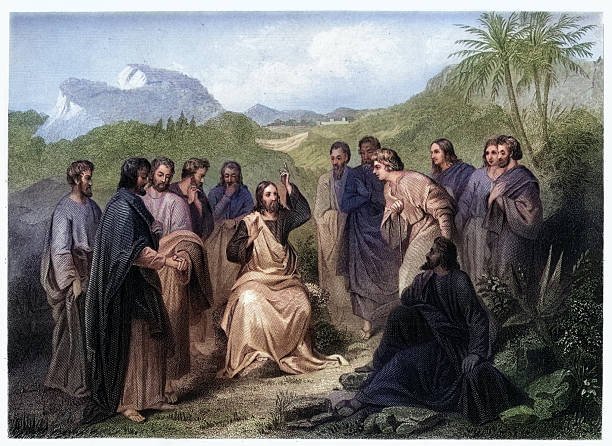
While the Bible does not specify the exact duration, Jesus lived in Africa (specifically Egypt) for an estimated period of two to three years during his infancy. This pivotal period, detailed primarily in the Gospel of Matthew, describes the Holy Family's flight to Egypt to escape King Herod's decree to kill all male children under the age of two in Bethlehem and its vicinity. This journey and temporary residence in Egypt fulfilled ancient prophecies and became a significant, though often briefly discussed, chapter in Jesus' early life.
The Biblical Narrative: The Flight to Egypt
The primary source of information regarding Jesus' time in Egypt comes from the Gospel of Matthew (Matthew 2:13-23). This account describes a divine intervention and a necessary escape, highlighting the protective hand of God over the infant Jesus. The narrative unfolds as follows:
- Herod's Decree: After the Wise Men visited Bethlehem and inquired about the newborn King of the Jews, King Herod the Great, feeling threatened, sought to eliminate any potential rival. He instructed the Wise Men to report back to him after finding Jesus, but they were warned in a dream not to return to Herod.
- Divine Warning: An angel of the Lord appeared to Joseph in a dream, instructing him to "Get up, take the child and his mother and escape to Egypt. Stay there until I tell you, for Herod is going to search for the child to kill him."
- The Journey: Joseph, Mary, and the infant Jesus promptly departed for Egypt, seeking refuge from Herod's tyranny. This journey across the Sinai Peninsula was arduous, underscoring the family's vulnerability and reliance on divine guidance.
- Fulfillment of Prophecy: Matthew explicitly states that this event fulfilled the prophecy from Hosea 11:1, "Out of Egypt I called my son." This connection underscores the theological significance of Jesus' sojourn in Egypt.
This episode is crucial not only for understanding the early life of Jesus but also for recognizing the continuity of divine plan and the fulfillment of Old Testament prophecies in the New Testament narrative. The Holy Family's flight to Egypt is a cornerstone of Christian tradition, particularly within the Coptic Orthodox Church, which cherishes the sites believed to have hosted them.
Estimating the Duration of Their Stay in Egypt
While the Bible does not provide an exact number of days, months, or years, scholarly and theological interpretations converge on an estimated duration for Jesus' stay in Egypt. The key to this estimation lies in the details surrounding Herod's decree and his subsequent death:
Herod's Age-Based Decree
Matthew 2:16 states, "When Herod realized that he had been outwitted by the Magi, he was furious, and he gave orders to kill all the boys in Bethlehem and its vicinity who were two years old or under, in accordance with the time he had learned from the Magi."
- This indicates that Jesus was likely under two years old when Herod issued the decree, as Herod based his calculations on the Magi's reported time of the star's appearance.
- The flight to Egypt would have occurred shortly after Jesus' birth, but potentially a few months later, allowing for the Magi's journey and interaction with Herod.
Herod's Death as a Turning Point
The angel reappeared to Joseph in a dream, once Herod had died, saying, "Get up, take the child and his mother and go to the land of Israel, for those who were trying to take the child's life are dead" (Matthew 2:19-20).
- Historical sources place the death of Herod the Great in 4 BC.
- Given that Jesus was born around 6-4 BC (historical estimates vary slightly), the period between his birth and Herod's death provides a window for their stay in Egypt.
- If Jesus was born in late 5 BC or early 4 BC, and Herod died in 4 BC, their stay could have been relatively short, perhaps a few months to a year.
- However, if Jesus was born earlier, around 6 BC, and Herod died in 4 BC, this would allow for a longer stay, possibly up to two years or slightly more, especially considering the Magi's timing.
Most theological and historical consensus suggests that the Holy Family resided in Egypt for approximately two to three years. This period would have been sufficient for Herod's death to occur and for the angel to instruct Joseph to return to the land of Israel. The lack of specific biblical detail about their daily life or experiences during this period means that many aspects remain within the realm of tradition and spiritual reflection rather than verifiable historical facts.
Life in Egypt: Where Did They Go?
While the New Testament provides no specific details about the Holy Family's journey to Egypt or their places of residence, rich Christian tradition, particularly within the Coptic Orthodox Church of Egypt, fills in these gaps. These traditions describe a journey that took them across the Sinai desert and into various parts of Egypt.
Traditional Routes and Sites
Coptic tradition holds that the Holy Family traveled extensively throughout Egypt, leaving behind a spiritual legacy in numerous locations. These sites have become significant pilgrimage destinations for centuries:
- El-Arish: The traditional entry point into Egypt from Palestine.
- Tell Basta (Bubastis): Believed to be one of their first stops in Egypt, where a spring of water miraculously appeared.
- Sakha: Located in the Nile Delta, where tradition holds that Jesus left his footprint on a rock.
- Wadi El Natrun (Scetis): A desert valley that later became a major center for Christian monasticism, believed to have been visited by the Holy Family.
- Matariya and Ain Shams (Heliopolis): Near modern-day Cairo, where they are said to have rested under a sycamore tree (the Virgin Mary's Tree) and where Joseph planted balsam trees.
- Old Cairo (Babylon): This area is home to the Church of Saints Sergius and Bacchus (Abu Serga), built over a cave where the Holy Family is believed to have stayed. This is one of the most revered sites in Coptic Christianity.
- Maadi: From here, they are said to have sailed up the Nile River.
- Upper Egypt: Their journey is believed to have extended into Upper Egypt, reaching places like Gabal al-Tayr (Samalut) and Assiut (Dronka Monastery), where they found refuge in caves.
These traditional accounts, though not explicitly found in biblical texts, represent a deeply ingrained cultural and spiritual heritage. They illustrate the profound impact of Jesus in Egypt on the local Christian community and provide a tangible connection to this sacred history.
The Return to Nazareth
After Herod's death, an angel again appeared to Joseph in a dream, instructing him to return to the land of Israel. However, upon hearing that Herod's son Archelaus was reigning in Judea, Joseph was afraid to go there. Being warned in another dream, he instead withdrew to the region of Galilee and settled in a town called Nazareth (Matthew 2:22-23).
Significance of the Return
- Safety and Divine Guidance: The decision to settle in Nazareth, rather than Bethlehem or Judea, highlights Joseph's continued reliance on divine guidance for the safety and upbringing of Jesus.
- Fulfillment of Prophecy: Matthew again emphasizes the fulfillment of prophecy: "So was fulfilled what was said through the prophets, 'He will be called a Nazarene.'" While no direct Old Testament prophecy explicitly states this, it is interpreted as reflecting the humble and often scorned nature of Nazareth, aligning with prophetic themes of a suffering servant.
- Early Life and Obscurity: The return to Nazareth marked the beginning of Jesus' "hidden years," a period of approximately 30 years before the start of his public ministry, about which the Gospels provide very little information. His time in Egypt, therefore, represents a unique, documented, albeit brief, departure from the familiar landscapes of Judea and Galilee.
The return from Egypt completed this crucial early chapter, setting the stage for Jesus' growth in wisdom and stature, and in favor with God and man, in the unassuming town of Nazareth.
Theological and Historical Significance of Jesus' Stay in Africa
The period of Jesus' time in Africa, specifically Egypt, holds immense theological and historical significance that extends beyond a simple geographical relocation.
Theological Implications
- Jesus as the New Israel: The motif of being called "out of Egypt" links Jesus directly to the Exodus narrative, portraying him as the new Israel, fulfilling God's covenant and leading a new liberation. Just as Israel was called out of bondage, Jesus' escape from Herod's tyranny mirrors this theme of salvation.
- Solidarity with the Persecuted: The Holy Family's experience as refugees fleeing persecution establishes Jesus' early life in solidarity with the marginalized, the displaced, and those who suffer injustice. This resonates strongly with the Christian call to care for the vulnerable.
- Universal Christ: Jesus' presence, however brief, on the African continent broadens the scope of his mission and identity, suggesting a universal Christ whose message is not confined to one region or people.
Historical and Cultural Impact
- Foundation for Egyptian Christianity: For Egyptian Christians, particularly the Coptic Orthodox Church, the Holy Family's visit to Egypt is not merely an ancient event but a living heritage. It is the foundational event that blesses their land and roots their faith directly to Jesus himself.
- Pilgrimage and Sacred Sites: The numerous sites traditionally associated with the Holy Family's journey have become revered pilgrimage destinations. These sites serve as tangible reminders of Jesus' presence and foster a deep sense of connection to early Christian history.
- Art and Literature: The story of the Flight to Egypt has inspired countless works of art, literature, and music throughout history, depicting the arduous journey, the vulnerability of the family, and the miraculous interventions. These cultural expressions continue to shape understanding and devotion.
The biblical evidence of Jesus in Africa, though concise, provides a powerful testament to the divine protection and the unfolding of God's plan. It established an early connection between Christianity and the African continent, a bond that continues to thrive and influence millions.
Addressing Common Questions and Misconceptions
The topic of Jesus in Africa often prompts questions and sometimes misconceptions. It's important to clarify what the biblical texts and historical consensus indicate.
Was Jesus an African?
No, Jesus was ethnically Jewish, born in Bethlehem and raised in Nazareth, which are in the Middle East. His brief stay in Egypt (part of the African continent) does not change his ethnic background. The term "Africa" in the context of the title refers to the geographical location of Egypt, where he resided temporarily, not to his ancestry.
Did Jesus' teachings or ministry extend to Africa?
The biblical accounts of Jesus' public ministry are confined to the regions of Galilee, Samaria, and Judea in the Middle East. There is no biblical evidence or credible historical tradition suggesting that Jesus' adult ministry extended to Egypt or any other part of Africa. His time in Africa was solely during his infancy as a refugee.
How significant is Egypt to the story of Jesus?
Egypt's significance is profound. It served as a place of refuge and divine protection during a critical threat to Jesus' life, fulfilling ancient prophecy. For Egyptian Christians, it is a source of immense spiritual pride and an integral part of their religious identity, signifying that their land was sanctified by the presence of the Holy Family.
| Aspect | Details from Biblical Accounts | Traditional/Scholarly Interpretation |
|---|---|---|
| Main Source | Gospel of Matthew (Ch. 2) | Primary biblical evidence |
| Purpose of Visit | Escape from King Herod's decree | Divine protection, fulfillment of prophecy |
| Duration | Not explicitly stated | Approximately 2-3 years, until Herod's death (4 BC) |
| Location in Africa | Egypt (unspecified regions) | Numerous traditional sites across Egypt (Delta to Upper Egypt) |
| Impact | Ensured Jesus' survival, fulfilled prophecy | Deep spiritual significance for Coptic Christianity, subject of pilgrimage |
Conclusion
In summary, Jesus lived in Africa for an estimated two to three years, during his infancy, when his family sought refuge in Egypt from King Herod's murderous decree. This period, while brief and not detailed extensively in the Gospels, is a crucial part of Jesus' early life story, primarily recorded in the Gospel of Matthew. The Holy Family's flight to Egypt not only ensured Jesus' survival but also fulfilled ancient prophecies, establishing a profound connection between Jesus and the African continent. This event remains a cornerstone of Christian tradition, particularly in the Coptic Church, highlighting divine protection, solidarity with the persecuted, and the universal scope of Christ's presence. While his active ministry did not extend to Africa, his foundational years were shaped, in part, by his time as a refugee in Egypt.
Enjoyed this read?
Share it with your friends and colleagues.