Did Jesus Visit And Live Africa

BSC Insights Admin
October 01, 2026
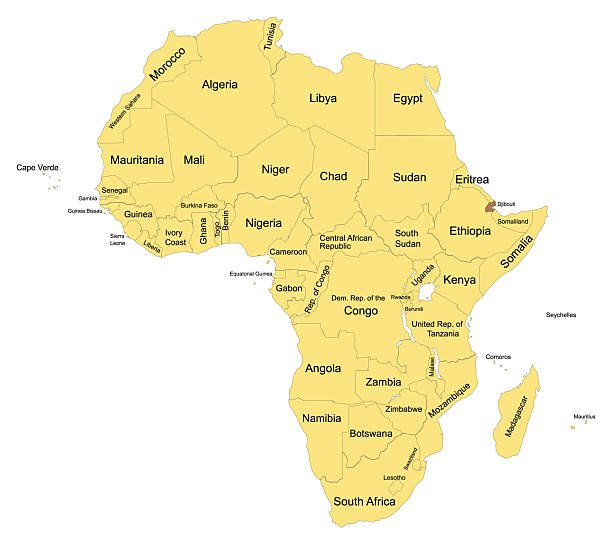
Did Jesus visit and live in Africa? The most direct and biblically supported answer is that Jesus did visit a part of Africa during his infancy, specifically Egypt, as documented in the Gospel of Matthew. This period, known as the Flight to Egypt, represents a significant, albeit brief, connection between Jesus and the African continent. However, there is no credible historical or biblical evidence to suggest that Jesus lived in other parts of Africa for extended periods beyond this crucial early childhood refuge.
The Biblical Narrative: Jesus' Infancy in Egypt (North Africa's Enduring Connection)
The primary biblical reference connecting Jesus to the African continent is found in the Gospel of Matthew (Matthew 2:13-23), detailing the Flight to Egypt. This event is not merely a brief mention but a divinely orchestrated journey that placed the Holy Family on African soil.
Why the Holy Family Fled to Egypt
According to Matthew, an angel of the Lord appeared to Joseph in a dream, warning him of King Herod's intention to kill the infant Jesus. Herod, feeling threatened by the birth of a new "king of the Jews," ordered the massacre of all male children two years old and under in Bethlehem and its vicinity. To escape this horrifying decree, Joseph was instructed to take Mary and Jesus to Egypt.
- Herod's Threat: King Herod's paranoia led to the infamous "Massacre of the Innocents."
- Divine Guidance: Joseph received a divine instruction to flee, highlighting God's protection over Jesus.
- Safety in Exile: Egypt, being outside Herod's jurisdiction but a relatively close and accessible Roman province, offered a safe haven.
Duration and Significance of Their Stay
The Holy Family remained in Egypt until the death of Herod, after which an angel again appeared to Joseph, instructing him to return to the land of Israel. While the exact duration of their stay is not specified in the Bible, it is generally understood to have lasted for a few years, allowing enough time for Herod to die. This period in Egypt is crucial for several reasons:
- Fulfillment of Prophecy: Matthew connects the Flight to Egypt with the prophecy from Hosea 11:1, "Out of Egypt I called my son," affirming Jesus' messianic identity.
- Refuge and Protection: It demonstrates God's active protection of Jesus in his vulnerable infancy.
- Early Life Experience: It means that a foundational period of Jesus' early life, however brief, was spent in Africa, exposing him to a culture and environment different from his homeland.
It is important to emphasize that Egypt is unequivocally part of the African continent. Thus, biblically and geographically, Jesus' infant visit to Egypt firmly establishes a direct link between Jesus and Africa. Traditional sites across Egypt, from Cairo to Assiut, are revered by Coptic Christians as places where the Holy Family rested or visited, though these are based on ancient tradition rather than explicit biblical narration.
Beyond the Infancy: Exploring Claims and Lack of Evidence for Wider African Travel
While the Flight to Egypt is well-attested in canonical scripture, the question of whether Jesus traveled to or lived in other parts of Africa, particularly during his so-called "lost years" (the period between his infancy and the start of his public ministry at around age 30), generates much discussion. Many popular theories and apocryphal texts suggest extensive travels by Jesus, including journeys to India, Tibet, or even sub-Saharan Africa. However, when scrutinizing these claims, a significant lack of credible evidence emerges.
The Silence of History and Scripture
A critical point in evaluating these claims is the overwhelming silence from both canonical biblical texts and early historical records. The Gospels provide very little detail about Jesus' life between his return from Egypt and his baptism by John the Baptist. What information exists points to him growing up in Nazareth, working as a carpenter, and living a relatively ordinary life until his public ministry began.
- No Biblical Accounts: The New Testament offers no narratives, parables, or references to Jesus visiting sub-Saharan Africa, the Maghreb region (apart from Egypt), or any other African locales beyond the Flight to Egypt.
- Absence in Early Church Writings: Early Christian historians, theologians, and travelers, who were often meticulous in documenting the origins and spread of Christianity, also make no mention of Jesus' personal travels to other parts of Africa. Figures like Eusebius of Caesarea, who compiled extensive histories of the early church, do not reference such journeys.
- Lack of Archaeological Evidence: Despite extensive archaeological work in various parts of Africa, there have been no discoveries (inscriptions, artifacts, settlements) that could credibly link Jesus' personal presence to regions beyond the traditional sites of the Holy Family's sojourn in Egypt.
Apocryphal Texts and Speculative Theories
Some theories suggesting Jesus' wider travels in Africa stem from apocryphal gospels or later esoteric traditions. These texts, often written centuries after the canonical Gospels, are not accepted by mainstream Christianity due to their questionable origins, theological inconsistencies, and lack of historical corroboration. While they might reflect a desire to connect Jesus to diverse cultures, they do not offer reliable historical insight into his life.
It is crucial for an authoritative understanding of Did Jesus visit and live Africa to distinguish between documented historical and biblical facts, and later traditions or speculative theories that lack substantiation. While the idea of Jesus traveling broadly is appealing to some, current historical and theological consensus limits his direct African connection to his infancy in Egypt.
Africa's Profound Role in Early Christianity (Post-Jesus' Lifetime)
Even without evidence of Jesus traveling extensively throughout the continent, Africa played an absolutely vital and foundational role in the development and spread of early Christianity. Many pivotal figures, theological advancements, and robust Christian communities emerged from African soil, often predating or running parallel to developments in Europe.
Key African Connections in the New Testament
- Simon of Cyrene: Hailing from Cyrene (modern-day Libya), Simon was compelled to carry Jesus' cross to Golgotha (Matthew 27:32, Mark 15:21, Luke 23:26). This significant, albeit involuntary, act places an African directly in the Passion narrative, underscoring the universal reach of Jesus' suffering.
- The Ethiopian Eunuch: In the Book of Acts (Acts 8:26-40), Philip the Evangelist encounters and baptizes an Ethiopian eunuch, a high official of Candace, the queen of Ethiopia. This event is often cited as a cornerstone for the early establishment of Christianity in Ethiopia, highlighting a very early embrace of the faith in a sub-Saharan African kingdom.
Major Centers of Early African Christianity
Africa rapidly became a crucible for Christian thought and practice, giving rise to some of the most influential centers of early Christianity.
- Alexandria, Egypt: A prominent intellectual and cultural hub of the ancient world, Alexandria became a major center for Christian theology and scholarship. The Catechetical School of Alexandria produced titans like Clement of Alexandria and Origen. It is the traditional home of St. Mark the Evangelist and the historical birthplace of the Coptic Orthodox Church, one of the oldest Christian denominations globally.
- Carthage, Roman North Africa: Located in modern-day Tunisia, Carthage was another powerhouse of early Christianity, particularly Latin Christianity. It was home to influential Church Fathers such as Tertullian, Cyprian, and later, Augustine of Hippo, whose theological contributions profoundly shaped Western Christianity.
- Axum (Aksum), Ethiopia: The ancient Kingdom of Axum, located in present-day Ethiopia and Eritrea, was one of the earliest states in the world to adopt Christianity as its official religion, around the 4th century CE. The Ethiopian Orthodox Tewahedo Church boasts a rich, ancient tradition with unique liturgical practices and a strong sense of apostolic succession.
Influential Early African Christian Figures
The continent of Africa contributed immensely to the theological and intellectual development of the early Christian church. Here is a table highlighting some of these pivotal figures:
| Figure | Region | Notability |
|---|---|---|
| Simon of Cyrene | Cyrene (Libya) | Carried Jesus' cross; a direct participant in the Passion. |
| Mark the Evangelist | Alexandria (Egypt) | Traditional founder of the Church of Alexandria (Coptic Orthodox Church), author of the Gospel of Mark. |
| Tertullian | Carthage (Tunisia) | Often called the "Father of Latin Christianity"; prolific theologian and apologist. |
| Cyprian of Carthage | Carthage (Tunisia) | Bishop of Carthage; influential writer on Church unity and martyrdom. |
| Athanasius of Alexandria | Alexandria (Egypt) | Bishop of Alexandria; staunch defender of Nicene Christianity against Arianism. |
| Origen | Alexandria (Egypt) | Profoundly influential early Christian scholar, theologian, and exegete. |
| Augustine of Hippo | Hippo Regius (Algeria) | One of the most significant figures in Western Christianity; author of "Confessions" and "City of God." |
These figures illustrate that while Jesus' direct presence in Africa was confined to his infancy in Egypt, the continent quickly became a dynamic and central force in shaping the Christian faith globally. The idea that Did Jesus visit and live Africa should therefore be understood in two parts: his biblical infancy visit and the subsequent, profound historical contributions of African Christians.
Distinguishing Historical Fact from Tradition and Speculation
When exploring a question like Did Jesus visit and live Africa, it is crucial to employ rigorous historical and textual analysis. The desire for spiritual connection or the reclaiming of historical narratives can sometimes lead to the amplification of traditions or speculative theories that lack solid evidence. For SEO purposes, providing clear, authoritative distinctions is vital for trustworthiness.
The Importance of Source Criticism
Reliable information about Jesus' life primarily comes from the four canonical Gospels (Matthew, Mark, Luke, John) and other New Testament writings, corroborated by some non-Christian ancient historians where applicable (though sparse for Jesus personally). When evaluating claims about Jesus' travels beyond these sources, the following questions are essential:
- When was the source written? Texts written centuries after the events are less reliable than contemporary or near-contemporary accounts.
- What is the nature of the source? Is it canonical scripture, apocryphal, a folk tradition, or a scholarly historical analysis?
- Is there corroborating evidence? Do multiple independent sources support the claim, or is it isolated?
For the Flight to Egypt, we have the canonical Gospel of Matthew, which is widely accepted as a primary source for Jesus' early life. For claims of wider African travels, such corroboration is absent.
The Strength of the 'Flight to Egypt' versus Other Claims
The account of the Holy Family in Egypt stands out due to its inclusion in canonical scripture and its consistent acceptance across Christian traditions. It forms a part of the universally acknowledged narrative of Jesus' life. In contrast, theories of Jesus traveling to sub-Saharan Africa or other parts of the continent lack this foundational biblical or historical backing. While such traditions may hold cultural or spiritual significance for specific communities, they do not constitute historically verifiable facts that answer the question Did Jesus visit and live Africa comprehensively.
The Enduring Significance of Africa in the Christian Faith
Regardless of the specific extent of Jesus' personal travels on the continent, Africa's place in the Christian faith is undeniably profound and enduring. From being a refuge for the infant Jesus to becoming a powerhouse of theological thought and evangelism, its role is foundational to understanding the global scope of Christianity.
- Refuge and Sanctuary: Africa (Egypt) provided sanctuary for the very founder of Christianity during a time of great peril.
- Early Apostles and Figures: The continent produced key figures like Simon of Cyrene and was evangelized early, as seen with the Ethiopian Eunuch.
- Intellectual and Theological Hub: African Church Fathers shaped fundamental Christian doctrines, contributing to the creeds and theological understanding that define Christianity today.
- Contemporary Vibrancy: Today, Africa remains one of the most vibrant and rapidly growing centers of Christianity globally, demonstrating the enduring legacy of the faith on the continent.
Conclusion
In summary, the answer to Did Jesus visit and live Africa is nuanced yet clear: yes, Jesus did visit a portion of Africa, specifically Egypt, during his infancy as part of the Holy Family's Flight to Egypt, an event documented in the Gospel of Matthew. This period, though brief, solidly establishes Jesus' personal connection to the African continent. However, credible historical and biblical evidence does not support the notion that Jesus traveled to or lived in other parts of Africa for extended periods beyond this infancy refuge. While such theories exist, they lack the robust corroboration found for his time in Egypt.
Despite the limited direct personal travel of Jesus, Africa's role in the Christian narrative is immense. It served as a cradle for some of the earliest and most influential Christian communities, produced pivotal theological thinkers, and continues to be a vibrant center of Christian faith today. The question of Jesus in Africa therefore not only highlights a specific biblical event but also underscores the continent's indispensable historical and ongoing contribution to global Christianity.
Enjoyed this read?
Share it with your friends and colleagues.