Is There Jungles In Africa

BSC Insights Admin
September 30, 2026
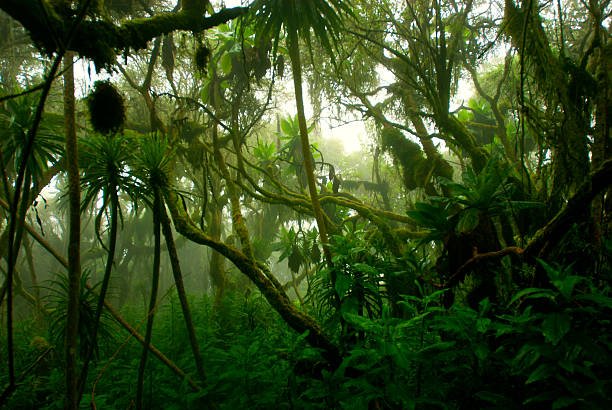
Yes, there are indeed extensive jungles in Africa, primarily in the form of vast tropical rainforests, with the most prominent being the **Congo Basin Rainforest**. This incredible natural wonder is the second-largest tropical rainforest in the world, brimming with unparalleled biodiversity and playing a critical role in global climate regulation. While much of Africa is characterized by savannas, deserts, and other biomes, the equatorial regions are home to dense, lush rainforests often colloquially referred to as jungles, supporting a unique array of plant and animal life.
What Exactly is a "Jungle"? Defining African Rainforests
The term "jungle" often conjures images of dense, impenetrable tropical vegetation, and while technically a less precise scientific term, it perfectly describes the dense, humid environments found in Africa's tropical rainforests. Scientifically, these are **tropical rainforests**, characterized by high annual rainfall (typically over 1,750 mm or 69 inches), consistently warm temperatures, and extremely high biodiversity. Unlike temperate forests that experience distinct seasons, rainforests maintain a relatively stable, humid climate year-round, fostering continuous growth and a multi-layered canopy structure.
In Africa, these rainforests are distinct from other major biomes such as the arid Sahara Desert, the semi-arid Sahel, the vast grasslands of the savanna, and the Mediterranean climate zones. They represent a unique and vital ecosystem, crucial for the continent's ecological balance and the planet's health. The term **African rainforests** accurately captures the essence of these green hearts of the continent.
The Mighty Heart of Africa: The Congo Basin Rainforest
When people ask, "Is there jungles in Africa?" the primary answer points directly to the **Congo Basin**. Spanning across six countries—the Democratic Republic of Congo, Republic of Congo, Central African Republic, Cameroon, Equatorial Guinea, and Gabon—this colossal rainforest is truly one of Earth's most significant natural treasures. Covering an area of over 1.7 million square kilometers (650,000 square miles), it is second only to the Amazon in size.
Key Facts about the Congo Basin:
- Scale: It covers about 10% of Africa's landmass and represents more than 70% of Africa's forest cover.
- Biodiversity Hotspot: Home to an astounding array of wildlife, including critically endangered species found nowhere else on Earth.
- Climate Regulator: Acts as a massive carbon sink, absorbing huge amounts of carbon dioxide from the atmosphere, playing a crucial role in mitigating climate change. It also influences regional and global weather patterns.
- Water Source: The Congo River, the world's second-largest river by discharge volume, flows through this basin, providing water for millions of people and supporting vast aquatic ecosystems.
The sheer scale and ecological importance of the Congo Basin make it an undeniable answer to the question of **jungles in Africa**. Its dense canopy, emergent trees, and humid understory create the archetypal "jungle" environment, teeming with life.
Beyond the Congo: Other African Rainforests and Forest Types
While the Congo Basin is the largest, it is not the only region with significant rainforests or dense forest types in Africa. Other areas, though smaller, are equally vital for their unique biodiversity and ecological roles.
West African Rainforests (Upper Guinean Forests)
Stretching along the Atlantic coast from Guinea to Ghana, the **Upper Guinean forests** are another significant rainforest block. These forests are fragmented due to historical human activity but still harbor incredible biodiversity, including unique species of primates and other wildlife. Countries like Liberia, Sierra Leone, and Côte d'Ivoire contain important remnants of these once-extensive rainforests. These regions are critically important for species suchagement and **conservation efforts in Africa**.
East African Montane Forests
Along the mountain ranges of East Africa, such as the Albertine Rift, Mount Kenya, and Mount Kilimanjaro, one finds **montane rainforests**. These high-altitude forests receive substantial rainfall and are characterized by different plant and animal communities adapted to cooler, cloudier conditions. They are often referred to as cloud forests due to the persistent mist and fog. These areas are vital for water catchment and are rich in endemic species, meaning species found only in these specific locations.
Coastal Forests and Mangroves
Africa's coastline also hosts specialized forest ecosystems:
- Coastal Forests: Patches of dense forest found along the eastern coast of Africa, from Somalia to Mozambique. These isolated forest blocks are often relics of much larger ancient forests and are recognized for their high levels of endemism and unique flora and fauna.
- Mangrove Forests: Crucial intertidal ecosystems found along tropical and subtropical coastlines across Africa. While not traditional "jungles," these dense, salt-tolerant tree formations are incredibly productive. They serve as nurseries for marine life, protect coastlines from erosion and storm surges, and sequester significant amounts of carbon.
These diverse **types of forests in Africa** illustrate that the continent's green canopy is not homogenous but a mosaic of unique and valuable ecosystems.
A Rich Tapestry of Life: Biodiversity in African Jungles
The **biodiversity in African jungles** is truly spectacular, making them global hotspots for conservation. These ecosystems support an unparalleled concentration of life, from towering trees to microscopic organisms, all interconnected in a complex web.
Iconic Wildlife:
- Great Apes: The Congo Basin is home to significant populations of endangered **gorillas** (western and eastern lowland gorillas, mountain gorillas in the montane forests), **chimpanzees**, and **bonobos** (found only in the DRC). These intelligent primates are flagship species for conservation efforts.
- Forest Elephants: Smaller than their savanna counterparts, these highly intelligent elephants are crucial for seed dispersal, acting as the "gardeners of the forest."
- Okapi: Often called the "forest giraffe," this elusive and strikingly patterned animal is endemic to the Democratic Republic of Congo's rainforests.
- Pangolins: All four African pangolin species (tree, giant ground, Temminck's ground, and long-tailed) reside in or near these forested areas, making them incredibly vulnerable to poaching.
- Birds and Reptiles: A kaleidoscopic array of bird species, from vibrant turacos to various hornbills, thrive in the canopy. Pythons, chameleons, and diverse frog species also call these dense forests home.
- Insects: The insect diversity is immense, with countless species of butterflies, beetles, and ants playing vital roles in pollination, decomposition, and food webs.
The flora is equally impressive, with thousands of tree species, orchids, ferns, and medicinal plants, many of which are yet to be fully documented or understood. This richness underscores why these regions are considered **unique African ecosystems**.
The Critical Role of African Rainforests
The importance of **African rainforests** extends far beyond their immediate geographic boundaries. They provide invaluable ecosystem services that benefit both local communities and the entire planet.
Ecological Services:
- Climate Regulation: As mentioned, these forests are colossal carbon sinks, absorbing billions of tons of carbon dioxide, which is critical in the global fight against climate change. They also contribute to regional and global rainfall patterns through evapotranspiration.
- Water Cycle Regulation: They act as giant sponges, regulating water flow, preventing soil erosion, and feeding major rivers like the Congo. This consistent water supply is essential for agriculture, human consumption, and hydroelectric power.
- Biodiversity Preservation: As global biodiversity hotspots, they preserve millions of species, many of which are vital for ecological stability and potential future discoveries (e.g., medicines).
- Oxygen Production: Through photosynthesis, they release vast amounts of oxygen, vital for life on Earth.
Human and Economic Benefits:
- Home to Indigenous Communities: Millions of people, including numerous indigenous groups, depend directly on these forests for their livelihoods, culture, food, medicine, and spiritual well-being.
- Sustainable Resources: When managed sustainably, the forests can provide timber, non-timber forest products (like fruits, nuts, medicinal plants), and other resources that support local economies.
- Ecotourism Potential: The unique wildlife and natural beauty of these forests offer significant potential for ecotourism, providing economic incentives for conservation and employment for local populations.
Threats to Africa's Jungles: A Call for Conservation
Despite their immense value, Africa's "jungles" are under severe threat from a variety of human activities. **Deforestation in Africa** is a pressing issue, driven by a complex interplay of economic, social, and political factors.
Major Threats Include:
- Logging: Both legal and illegal logging operations devastate large areas of forest, often leading to habitat fragmentation and loss of biodiversity.
- Agriculture: Expansion of subsistence agriculture and large-scale commercial plantations (e.g., palm oil, rubber) is a primary driver of forest conversion.
- Mining: The extraction of minerals (coltan, gold, diamonds, copper) often requires clearing vast tracts of forest, leading to habitat destruction and pollution.
- Infrastructure Development: Roads, dams, and settlements penetrate previously untouched forest areas, opening them up to further exploitation.
- Poaching: The illegal wildlife trade poses a direct threat to the unique animal species within these forests, particularly great apes, forest elephants, and pangolins.
- Climate Change: Changes in rainfall patterns, increased temperatures, and more frequent extreme weather events stress forest ecosystems, making them more vulnerable to fires and disease.
- Population Growth: Increasing human populations near forest edges put pressure on resources and lead to expansion into forested areas.
These threats highlight the urgent need for robust **conservation efforts in Africa** to protect these irreplaceable ecosystems.
Conservation Efforts and Sustainable Solutions
Recognizing the critical importance of these rainforests, numerous local, national, and international organizations are engaged in dedicated conservation work. The goal is to safeguard the remaining forests while promoting sustainable development for the communities that depend on them.
Key Conservation Strategies:
- Protected Areas: Establishing and effectively managing national parks, wildlife reserves, and protected forest areas is fundamental. Examples include Virunga National Park in the DRC, Lopé National Park in Gabon, and Dzanga-Ndoki National Park in the Central African Republic.
- Anti-Poaching Initiatives: Strengthening law enforcement, supporting park rangers, and deploying technology to combat the illegal wildlife trade.
- Sustainable Forestry: Promoting practices that allow for timber harvesting without destroying the ecological integrity of the forest, often involving certification schemes.
- Community Engagement: Working with local and indigenous communities to develop sustainable livelihoods that reduce reliance on destructive forest practices, such as agroforestry and alternative income generation.
- REDD+ Programs: (Reducing Emissions from Deforestation and Forest Degradation) International initiatives that provide financial incentives for developing countries to reduce emissions from deforestation and forest degradation.
- Research and Monitoring: Conducting scientific research to better understand forest ecosystems and monitor their health, informing conservation strategies.
- Ecotourism: Developing well-managed ecotourism programs that provide economic benefits to local communities and create incentives for forest preservation, allowing visitors to experience the **wildlife in African jungles** responsibly.
These multifaceted approaches are crucial to ensuring the long-term survival of **African rainforests** and their unique inhabitants.
Dispelling Misconceptions about African Jungles
A common misconception is that all of Africa is either desert or savanna. While these biomes cover vast areas, it is important to understand that Africa is a continent of immense ecological diversity. The presence of significant and biologically rich rainforests demonstrates this complexity.
The term "jungle" itself, while evocative, can sometimes lead to oversimplification. Understanding that these are specifically **tropical rainforests in Africa** helps to accurately categorize and appreciate their unique characteristics. They are not merely wild, untamed lands but intricate, ancient ecosystems with profound ecological functions and cultural significance.
Conclusion
In conclusion, the answer to "Is there jungles in Africa?" is an unequivocal **yes**. Africa is home to some of the world's most vital and biodiverse tropical rainforests, most notably the colossal **Congo Basin**. These magnificent ecosystems, often colloquially referred to as jungles, are indispensable for global climate regulation, biodiversity conservation, and the livelihoods of millions of people. From the elusive okapi to the majestic gorillas, the **African rainforests** teem with unique life and play a critical role in the planet's ecological health. Despite facing immense threats from deforestation and climate change, dedicated conservation efforts are underway to protect these green treasures. Understanding and supporting these initiatives is paramount to ensuring the survival of Africa's invaluable jungles for future generations.
Enjoyed this read?
Share it with your friends and colleagues.