Kilimanjaro Is Where In Africa

BSC Insights Admin
October 01, 2026
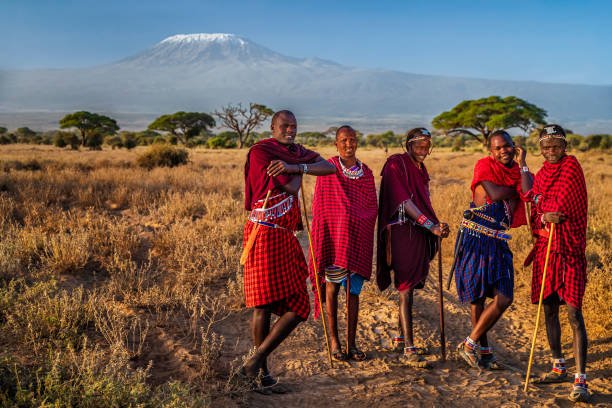
Kilimanjaro Is Where In Africa: Unveiling the Continent's Tallest Peak
Mount Kilimanjaro, Africa's highest mountain and the world's tallest freestanding mountain, is majestically located in Tanzania, a country in East Africa. Situated just south of the Equator, this iconic stratovolcano stands as a magnificent beacon, attracting adventurers, scientists, and nature enthusiasts from across the globe. Its imposing presence defines the landscape of northern Tanzania, serving as both a natural wonder and a vital economic driver for the region.
The Precise Geographical Location of Mount Kilimanjaro
To pinpoint its location with greater accuracy, Mount Kilimanjaro lies within the Kilimanjaro Region of Tanzania. It is approximately 300 kilometers (186 miles) south of the Equator, making its summit a rare equatorial glacier. The mountain is part of the Kilimanjaro National Park, a UNESCO World Heritage site established to protect its diverse ecosystems and unique geological formations. The nearest major city is Moshi, a bustling hub known for its coffee plantations and as the primary gateway for climbers embarking on their journey to the summit.
Kilimanjaro's position in East Africa places it within a region renowned for its stunning landscapes, vibrant wildlife, and rich cultural heritage. To its north lies the border with Kenya, a country that also offers distant views of the mountain on clear days. This strategic location makes Kilimanjaro not only a geographical marvel but also a symbol of African pride and natural grandeur on the African continent.
The Geological Marvel: Formation and Features of Kilimanjaro
Mount Kilimanjaro is not a single peak but rather a massive stratovolcano composed of three distinct volcanic cones: Kibo, Mawenzi, and Shira. Kibo is the youngest and highest of the three, home to Uhuru Peak, which stands at an elevation of 5,895 meters (19,341 feet) above sea level. Mawenzi, at 5,149 meters (16,893 feet), is the second-highest peak and is characterized by its rugged, eroded facade. Shira, the oldest and lowest at 3,962 meters (13,000 feet), is a largely collapsed caldera.
The formation of Kilimanjaro began millions of years ago through successive eruptions of volcanic material. While Mawenzi and Shira are considered extinct, Kibo is merely dormant, meaning it has not erupted in recorded history but still has the potential for future activity. The last major eruption of Kibo is estimated to have occurred around 150,000 to 200,000 years ago, with the most recent volcanic activity documented as recently as 200 years ago, resulting in minor ashfall. The presence of fumaroles, which emit gases in Kibo's crater, serves as a constant reminder of its underlying geological forces.
The Three Peaks of Kilimanjaro: Kibo, Mawenzi, and Shira
- Kibo: The largest and youngest cone, home to Uhuru Peak, the highest point in Africa. Its summit is capped by a dramatic ice field, though these glaciers are rapidly retreating due to climate change. The Kibo crater is a massive caldera, approximately 2.5 kilometers (1.5 miles) wide.
- Mawenzi: An older, more eroded cone with a jagged, spiky profile. Mawenzi is considered the third-highest peak in Africa, after Kibo and Mount Kenya. Climbing Mawenzi requires technical mountaineering skills and is much less frequented than Kibo.
- Shira: The oldest and westernmost of the three cones, Shira is largely a flattened plateau, believed to have collapsed millions of years ago. It offers unique landscapes and is often traversed by climbers on certain routes, such as Lemosho and Machame.
Why Tanzania: A Historical and Economic Perspective
The fact that Mount Kilimanjaro is in Tanzania is rooted in historical circumstances. During the late 19th century, in the era of European colonization, East Africa was divided between British and German empires. Legend has it that Queen Victoria "gifted" Kilimanjaro to her grandson, Kaiser Wilhelm II of Germany, as a birthday present. While a charming story, the actual boundary demarcation was part of the Heligoland-Zanzibar Treaty of 1890, which formally established the border between German East Africa (now mainland Tanzania) and British East Africa (now Kenya). This treaty placed the peak squarely within German territory, a demarcation that persisted after World War I when Tanganyika (mainland Tanzania) became a British mandate, eventually gaining independence in 1961.
Today, Kilimanjaro is an indispensable asset for Tanzania. Tourism related to the mountain is a cornerstone of the national economy, generating significant revenue through park fees, permits, and ancillary services like guides, porters, and accommodation. This revenue directly supports local communities, funds conservation efforts for Kilimanjaro National Park, and contributes to the overall development of the country. The iconic image of Kilimanjaro also plays a crucial role in Tanzania's international branding and tourism promotion.
Kilimanjaro's Unique Ecosystems and Biodiversity
One of the most extraordinary aspects of climbing Kilimanjaro is the journey through its distinct ecological zones, often likened to a trek from the Equator to the Arctic in a matter of days. As one ascends the mountain, the landscape transforms dramatically, supporting a remarkable array of flora and fauna. These Kilimanjaro climate zones are crucial for understanding the mountain's unique biodiversity.
The Five Major Ecological Zones:
- Cultivation Zone (800m – 1,800m / 2,600ft – 5,900ft): The lowest slopes are characterized by fertile volcanic soil, supporting lush farmlands, primarily coffee and banana plantations, and small villages. This zone is home to the indigenous Chagga people, who have cultivated the mountain's lower reaches for centuries.
- Rainforest Zone (1,800m – 2,800m / 5,900ft – 9,200ft): A dense, humid forest teeming with life. This zone receives significant rainfall and is home to various monkey species (blue monkeys, black-and-white colobus monkeys), leopards, and numerous bird species. The rich canopy acts as a crucial water catchment area for the region.
- Heath and Moorland Zone (2,800m – 4,000m / 9,200ft – 13,100ft): As the altitude increases, the forest gives way to open moorlands characterized by heather, grasses, and giant senecios and lobelias – unique, otherworldly plants that thrive in this environment. Elk, eland, and smaller antelopes can sometimes be spotted here.
- Alpine Desert Zone (4,000m – 5,000m / 13,100ft – 16,400ft): This zone is arid, rocky, and exposed to extreme temperature fluctuations. Vegetation becomes sparse, consisting mainly of hardy grasses and lichens. This is a desolate yet strikingly beautiful landscape, often challenging for trekkers due to the thinning air.
- Arctic/Summit Zone (5,000m – 5,895m / 16,400ft – 19,341ft): The highest reaches of Kilimanjaro are characterized by ice, rock, and sparse oxygen. The iconic glaciers and snowfields of Kibo's summit persist in this harsh environment, although they are significantly reduced from their historical extent. Only the most resilient life forms, such as high-altitude lichens, can survive here.
The preservation of these zones, particularly the rainforest, is critical for both the mountain's ecology and the surrounding communities, as they regulate water flow and support a delicate balance of life.
Climbing Kilimanjaro: Routes, Challenges, and Preparation
For many, the question of "Kilimanjaro is where in Africa" quickly transitions to "how do I get there and climb it?" Climbing Mount Kilimanjaro is a highly sought-after adventure, offering a non-technical trek to one of the world's highest points. However, it is by no means an easy feat and requires significant preparation and respect for the mountain's challenges.
Popular Kilimanjaro Routes:
- Machame Route: Known as the "Whiskey Route," it's popular for its scenic beauty and good acclimatization profile. It's a challenging but highly rewarding route.
- Lemosho Route: A longer, more remote, and incredibly scenic route, offering excellent acclimatization and high success rates. It traverses the Shira Plateau.
- Marangu Route: The "Coca-Cola Route," it's the oldest and most traditional route, famous for its hut accommodation rather than tents. It is generally considered easier but has a lower success rate due to its faster ascent profile.
- Rongai Route: The only route approaching Kilimanjaro from the north, near the Kenyan border. It offers a unique wilderness experience and is a good option during the rainy season as it receives less precipitation.
- Umbwe Route: The shortest, steepest, and most direct route, known for its challenging nature and lower success rates. It's generally recommended for experienced trekkers.
- Northern Circuit: The longest route, circling almost the entire northern face of Kibo. It offers unparalleled views, excellent acclimatization, and a very high success rate.
Challenges and Preparation:
The primary challenge for climbers is altitude sickness (Acute Mountain Sickness - AMS). While the climb is not technically difficult, the high altitude and reduced oxygen levels can significantly impact climbers. Proper acclimatization, achieved by choosing longer routes and maintaining a slow pace (often summarized as "pole pole" – slowly, slowly in Swahili), is crucial. Physical fitness is also important, though mental fortitude often plays a more significant role.
The best time to visit Kilimanjaro for climbing is during the dry seasons, typically from January to March and June to October. These months offer clearer skies and more stable weather conditions, although rain can occur at any time. Essential gear includes warm clothing layers, waterproof outerwear, sturdy hiking boots, and a reliable headlamp. All treks require a licensed guide and porters, who are invaluable for carrying gear and ensuring safety.
Beyond the Summit: Cultural Significance and Local Communities
Kilimanjaro is more than just a mountain; it holds deep cultural significance for the local communities, particularly the Chagga people, who reside on its fertile lower slopes. For centuries, the Chagga have considered the mountain sacred, a source of life-giving water, fertile land, and a spiritual connection to their ancestors. Their traditional agricultural practices, such as irrigation systems dating back centuries, demonstrate a profound understanding and respect for their environment.
The presence of Kilimanjaro has shaped their way of life, their legends, and their economy. Today, many Chagga people work in the tourism industry, serving as guides, porters, and lodge owners, benefiting directly from the influx of visitors. Sustainable tourism practices are vital to ensure that the economic benefits are shared fairly and that the mountain's natural and cultural heritage is preserved for future generations.
Comparing Kilimanjaro to Other African Peaks
While Kilimanjaro holds the undisputed title of the highest mountain in Africa, the continent boasts other impressive peaks, each with its own unique characteristics and challenges. Understanding these comparisons further highlights Kilimanjaro's distinct status.
Key African Mountain Comparisons:
| Mountain | Country | Height (m) | Type of Climb | Notes |
|---|---|---|---|---|
| Mount Kilimanjaro (Uhuru Peak) | Tanzania | 5,895 | Trekking/Walking | World's tallest freestanding mountain. Dormant stratovolcano. |
| Mount Kenya (Batian Peak) | Kenya | 5,199 | Technical Climbing | Africa's second-highest peak. Requires significant mountaineering skills. |
| Mount Stanley (Margherita Peak) | Uganda/DR Congo | 5,109 | Technical Climbing | Highest peak in the Rwenzori Mountains (Mountains of the Moon). Glaciated. |
| Mount Meru | Tanzania | 4,566 | Trekking/Walking | Kilimanjaro's neighbor in Arusha National Park. Excellent acclimatization hike. |
Kilimanjaro stands out because, despite its immense height, it is accessible to non-technical climbers, making it a popular goal for trekkers seeking to reach a high altitude without extensive mountaineering experience. This accessibility contributes significantly to its fame and the high volume of visitors to Tanzania East Africa.
The Future of Kilimanjaro: Climate Change and Conservation
The future of Mount Kilimanjaro, particularly its iconic ice cap, is a subject of significant concern due to climate change. Scientific studies indicate that the Kilimanjaro glaciers have shrunk by over 80% in the last century. If current trends continue, some projections suggest the glaciers could disappear entirely within decades. The implications of this are profound, not just for the mountain's majestic appearance, but also for the regional water cycle and biodiversity.
The melting glaciers contribute to water sources for local communities and ecosystems, and their disappearance could exacerbate water scarcity issues. Furthermore, changes in temperature and precipitation patterns could impact the delicate ecological balance of Kilimanjaro's unique climate zones, threatening endemic species. Conservation efforts are therefore paramount, focusing on sustainable tourism, reforestation projects on the lower slopes, and global initiatives to mitigate climate change.
Tanzania, through Kilimanjaro National Park authorities, is actively engaged in protecting this natural heritage. Strict regulations are in place to manage tourist numbers, minimize environmental impact, and support research into the mountain's ecology and climate. Promoting responsible tourism and environmental awareness is key to safeguarding Kilimanjaro for generations to come.
Summary: Kilimanjaro's Enduring Legacy in Africa
In conclusion, Mount Kilimanjaro is unequivocally located in Tanzania, a captivating country in East Africa. As the highest mountain in Africa and a towering symbol on the African continent, its majestic presence, unique ecosystems, and rich cultural significance make it one of the world's most cherished natural wonders. From its ancient volcanic formation to its vibrant biodiversity and the global appeal of climbing Kilimanjaro, the mountain offers an unparalleled experience.
Its critical role in Tanzania's economy, its deep connection to the Chagga people, and the ongoing challenges posed by climate change underscore its importance far beyond its geographical coordinates. Kilimanjaro stands not just as a physical peak, but as a beacon of natural beauty, human endeavor, and the pressing need for global environmental stewardship. To understand Kilimanjaro's location is to begin to grasp the grandeur and vital importance of this extraordinary African landmark.
Enjoyed this read?
Share it with your friends and colleagues.