Did Life Originate In Africa

BSC Insights Admin
September 30, 2026
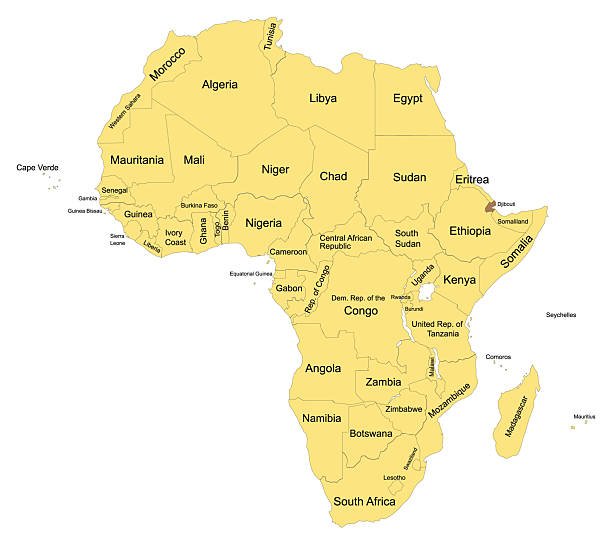
The question, Did life originate in Africa? often sparks intrigue, largely due to Africa's profound recognition as the cradle of humanity. While Africa undeniably holds paramount significance in the evolutionary journey of our species, Homo sapiens, the scientific inquiry into the absolute origin of life itself, a process known as abiogenesis, presents a more complex and globally distributed picture. It's crucial to distinguish between the emergence of the very first life forms on Earth billions of years ago and the much later development of anatomically modern humans, which indeed has strong roots in Africa.
Understanding Abiogenesis: The Emergence of First Life
Abiogenesis refers to the natural process by which life arises from non-living matter, such as simple organic compounds. This grand scientific challenge seeks to unravel how the complex machinery of living cells, with their ability to replicate and evolve, could have spontaneously formed under the harsh, primal conditions of the early Earth. The timeline for abiogenesis stretches back approximately 3.8 to 4 billion years ago, a period vastly preceding the appearance of multi-cellular life or human ancestors.
Scientists theorize that several key ingredients and conditions were necessary for life to spark:
- Water: Essential as a solvent for chemical reactions.
- Energy Sources: Such as volcanic activity, lightning, or hydrothermal vents.
- Basic Chemical Building Blocks: Simple organic molecules like amino acids, nucleotides, and lipids.
- Protective Environments: Locations shielded from harsh UV radiation and meteor impacts, perhaps within ocean depths or subsurface rocks.
The transition from non-living chemicals to self-replicating organisms is one of the most profound mysteries in science, involving stages like the formation of complex organic molecules, their polymerization into larger structures (proteins, nucleic acids), and eventually, the enclosure of these molecules within membranes to form protocells.
The Earliest Evidence of Life on Earth: A Global Search
The quest for the earliest life forms on Earth has led researchers to examine some of the oldest geological formations across the globe. Evidence primarily consists of:
- Stromatolites: Layered sedimentary structures formed by the growth of microbial mats, often cyanobacteria. The oldest accepted stromatolites date back about 3.5 billion years.
- Microfossils: Microscopic remnants of early organisms preserved in rocks.
- Isotopic Signatures: Ratios of carbon and other elements that can indicate biological activity, as living organisms often prefer specific isotopes.
Some of the most compelling and often-cited sites for these ancient traces include:
- The Dresser Formation, Australia: Contains stromatolites estimated to be 3.48 billion years old.
- The Isua Greenstone Belt, Greenland: Features some of the oldest sedimentary rocks on Earth, with carbon isotope ratios suggesting biological activity as far back as 3.7 to 3.8 billion years ago.
- Nuvvuagittuq Supracrustal Belt, Canada: Claims of microfossils in rocks dating to around 3.77 to 4.28 billion years ago, though these remain highly debated.
These findings indicate that life had already emerged and diversified to some extent very early in Earth's history, within the Archaean Eon. While these specific localities are geographically dispersed, the conditions necessary for such primordial life could have existed in many parts of the young Earth.
Africa's Geological Contribution to Early Earth Understanding
While the definitive origin point of life remains elusive, Africa plays a significant role in understanding the conditions of the early Earth. The continent is home to some of the planet's oldest and most stable crustal blocks, known as cratons. These ancient geological formations provide invaluable insights into planetary processes billions of years ago.
One prominent example is the Barberton Greenstone Belt in South Africa, often called the 'Genesis of Life' or 'Crown Jewel of the Earth's Crust'.
- Age: Rocks here are among the oldest accessible on Earth, dating back over 3.5 billion years.
- Significance: It preserves evidence of Earth's early crust, atmosphere, and oceans. Within these ancient rocks, scientists have found evidence consistent with early microbial life, including microfossils and isotopic signatures, similar in age to those found in Australia.
- Conditions: The geological context suggests environments that could have hosted primordial biological activity, such as submarine hydrothermal systems.
The existence of such ancient, well-preserved geological sites in Africa makes it a crucial laboratory for studying early Earth conditions and the potential environments where life could have first emerged. However, finding definitive proof that life specifically originated in these locations rather than other geologically similar regions worldwide is exceptionally challenging.
Prevailing Theories on Life's Genesis and Their Global Applicability
Several leading hypotheses attempt to explain abiogenesis, none of which are exclusively tied to a single geographical region like Africa, but rather to geological and chemical conditions that could have been widespread on the early Earth.
The Primordial Soup Hypothesis
This theory, popularized by Oparin and Haldane, suggests that life arose in a 'warm little pond' or ocean, where energy (from lightning or UV radiation) converted simple inorganic molecules into more complex organic molecules, like amino acids and nucleotides. These then polymerized and eventually formed self-replicating structures. Experiments like the Miller-Urey experiment demonstrated that such organic molecules could indeed form under simulated early Earth conditions.
Hydrothermal Vent Hypothesis
Many scientists now favor the idea that life might have begun around hydrothermal vents on the ocean floor. These volcanic vents spew superheated, mineral-rich water, creating unique chemical gradients and energy sources in the dark depths of the ocean. This environment offers:
- Chemical Energy: From the interaction of hot water with rocks.
- Protection: Shielding from the harsh surface conditions (UV radiation, meteor impacts).
- Mineral Catalysts: Metal sulfides found at vents could have catalyzed crucial chemical reactions.
The deep sea hydrothermal vent theory is highly attractive because it provides a steady source of energy and chemical building blocks in a stable, protected environment, conditions that could have existed globally on the early Earth, including in ancient oceans that bordered early African landmasses.
The RNA World Hypothesis
This hypothesis posits that RNA, not DNA, was the primary genetic material in early life. RNA can both store genetic information and catalyze chemical reactions (like enzymes). It suggests that RNA molecules eventually evolved the ability to replicate themselves, paving the way for more complex DNA-based life. This chemical evolution could have occurred in any suitable environment where the necessary molecular building blocks were available.
Africa: The Undeniable Cradle of Humanity
It is crucial to reiterate and clarify the distinction: while the origin of life itself is a global scientific puzzle, Africa's status as the cradle of humanity is supported by overwhelming scientific evidence. This refers to the origin and early evolution of the human lineage, specifically the genus Homo, and particularly our own species, Homo sapiens.
Key evidence for this includes:
- Fossil Record: The vast majority of early hominin fossils, including species like Australopithecus, Homo habilis, Homo erectus, and the earliest Homo sapiens, have been discovered in Africa. Sites like Olduvai Gorge in Tanzania, Hadar in Ethiopia, and the Cradle of Humankind in South Africa are world-renowned for their rich collections of human ancestors.
- Genetic Evidence: Studies of modern human DNA, particularly mitochondrial DNA and Y-chromosome analysis, point to an African origin for all modern humans, with subsequent migrations out of Africa populating the rest of the world. This 'Out of Africa' theory is robustly supported.
- Archaeological Discoveries: The oldest stone tools and other evidence of complex human behavior are predominantly found in Africa.
This deep connection to human evolution has sometimes led to the understandable, though scientifically imprecise, assumption that if humanity originated in Africa, then perhaps life itself did too. However, the timescales are vastly different – billions of years for abiogenesis versus hundreds of thousands to a few million years for human evolution.
Challenges and Future Directions in Origin of Life Research
Pinpointing the exact geographical location for the origin of life is incredibly difficult due to several factors:
- Deep Time: The sheer age of the event means that most geological evidence has been altered, destroyed, or subducted by plate tectonics over billions of years.
- Microscopic Scale: The first life forms were microscopic and left very subtle traces.
- The Nature of the Event: Abiogenesis was likely a gradual process, not a single, instantaneous event at one specific point.
Future research into the origin of life will likely involve a multidisciplinary approach, combining insights from geology, chemistry, molecular biology, and astrophysics. Scientists will continue to:
- Explore extreme environments on Earth (e.g., deep-sea vents, deep subsurface environments) as analogues for early Earth conditions.
- Conduct laboratory experiments to simulate the chemical pathways that could lead to life.
- Study extraterrestrial environments, such as Mars or the moons of Jupiter and Saturn, for clues about the potential for life elsewhere, which could inform our understanding of life's origins on Earth.
Conclusion
In summary, while Africa holds an unparalleled place as the cradle of humanity, the question Did life originate in Africa? regarding the absolute emergence of the first life on Earth, or abiogenesis, is far more intricate. Scientific evidence points to early life existing globally wherever suitable conditions prevailed, with some of the oldest compelling evidence found in Australia and Greenland, alongside significant findings in Africa's ancient geological formations like the Barberton Greenstone Belt. The processes that led to life — such as the formation of organic molecules in a 'primordial soup' or around deep-sea hydrothermal vents — were likely universal phenomena on the early Earth, not confined to a single continent. Therefore, while Africa provides crucial geological windows into our planet's earliest chapters and is the undisputed birthplace of our species, the origin of life itself remains a profound scientific mystery whose answer likely spans the entire ancient globe.
Enjoyed this read?
Share it with your friends and colleagues.