Which Is The Old Country In Africa

BSC Insights Admin
September 30, 2026
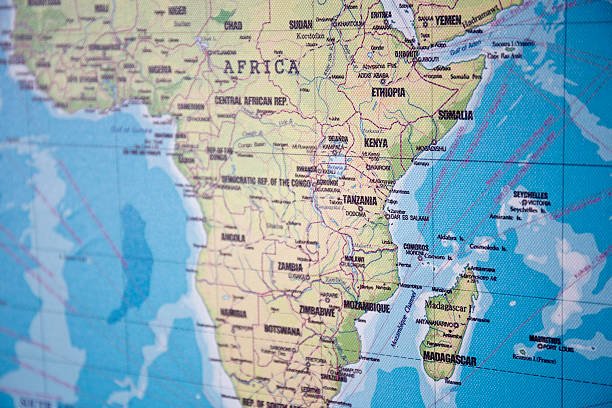
Ethiopia is widely considered the old country in Africa because it has maintained its status as an independent sovereign state for thousands of years, famously remaining uncolonized by European powers. This historic nation traces its roots back to ancient civilizations such as the Kingdom of Aksum, which was a major world power as early as the first century. As the African country which is the old country, Ethiopia stands as a symbol of endurance and cultural pride for the entire continent.
The concept of age in this context refers to both the longevity of continuous self rule and the deep archaeological history of the territory. By examining the timelines of various nations, we can identify which states have the strongest claims to antiquity based on their historical records and political stability.
These are the Countries that explain Which Is The Old Country In Africa
Determining which is the oldest nation requires looking beyond modern independence dates, which for many states occurred only in the 1960s. Instead, we must look at the historical continuity of organized government, the preservation of indigenous legal systems, and the ancient civilizations that occupied these lands long before the modern era. The following countries represent the oldest political and cultural entities in Africa, each contributing a unique chapter to the long story of human civilization on the continent. By analyzing their histories, we can see how these nations have maintained their identity through centuries of global change and regional shifts.
1. Ethiopia
Ethiopia is frequently cited as the primary answer when researchers ask which country that is the old country in Africa because it is one of the few nations in the world to have never been formally colonized. Its history is documented in ancient texts and traces back to the D'mt kingdom in the 10th century BC and the later Aksumite Empire, which was a hub for international trade between Rome and India. The nation preserved its sovereignty throughout the nineteenth century Scramble for Africa, most notably by defeating Italian forces at the Battle of Adwa in 1896. This victory ensured that Ethiopia remained a beacon of independence and a founding member of many international organizations. Today, the country still uses its ancient Ge'ez script and follows a unique calendar that is approximately seven years behind the Gregorian one. Its capital, Addis Ababa, is often called the political capital of Africa because of its deep historical roots and role in continental diplomacy.
2. Egypt
Egypt is arguably the oldest country in terms of civilizational depth, with the unification of its Upper and Lower kingdoms occurring around 3100 BC under the first pharaoh, Narmer. While the modern state has gone through various periods of foreign occupation and administrative changes, the geographic and cultural identity of Egypt has remained constant for over five millennia. The Old Kingdom era saw the construction of the Great Pyramids, which remain the only surviving wonder of the ancient world and a testament to the nation's early technological mastery. Throughout its long history, Egypt has transitioned through Pharaonic, Hellenistic, Roman, Islamic, and modern eras, yet the Nile River remains the enduring lifeblood of its people. As a country in Africa that is the old country, it offers an unparalleled record of human achievement in governance, science, and art. Modern Egypt continues to leverage this ancient heritage as a pillar of its national identity and a major driver of its global tourism industry.
3. Morocco
Morocco is one of the oldest monarchies in the world, with the founding of the Idrisid dynasty in 788 AD marking the beginning of the first unified Moroccan state. This long line of succession has provided the country with a sense of stability and historical continuity that is rare in the region. The nation has been ruled by various powerful dynasties, such as the Almoravids and the Almohads, who at their peak controlled vast territories stretching into Spain and West Africa. Although it became a French and Spanish protectorate in the early twentieth century, the Moroccan monarchy was never fully abolished, allowing for a swift return to full independence in 1956. The current Alaouite dynasty has been in power since the 17th century, maintaining traditional customs while modernizing the nation's infrastructure and economy. Morocco's ancient cities, such as Fes and Marrakech, house some of the world's oldest continuously operating educational institutions and markets. Its unique position at the crossroads of Africa, Europe, and the Arab world has fostered a rich, ancient culture that remains vibrant today.
4. Liberia
Liberia holds the title of Africa's oldest modern republic, having officially declared its independence on July 26, 1847. It was founded by the American Colonization Society as a haven for free people of color and formerly enslaved individuals from the United States who wished to return to the continent. Because it was established as a sovereign state during the height of the colonial era, Liberia managed to avoid being absorbed into European empires. The country's constitution and government were heavily influenced by the American model, making it a unique political experiment in West Africa. For over a century, Liberia stood as one of the very few independent African nations on the global stage, often representing continental interests in the League of Nations. Despite facing internal challenges in the late twentieth century, the republic has a long history of stability and was a pioneer in African self governance. Its capital, Monrovia, reflects its deep historical ties to the nineteenth century and the quest for liberty that defined its founding.
5. Sudan
Sudan is home to the ancient Kingdom of Kush, a powerful state that rivaled Egypt and flourished in the Nile Valley for over a thousand years, beginning around 1070 BC. The Kushite kings even ruled Egypt as the 25th Dynasty, bringing Nubian culture and architecture to the forefront of the ancient world. The ruins of Meroe, with its hundreds of small pyramids, serve as a physical reminder of the nation's ancient prosperity and organized statehood. While the modern borders of Sudan were established more recently, the cultural and genetic roots of the population are deeply connected to these ancient civilizations. The region was a major center for ironworking and international trade, linking Sub-Saharan Africa with the Mediterranean and the Red Sea. Archaeological discoveries in northern Sudan continue to reveal the complexity of a society that was highly advanced in both military and civil matters. As an African country which is the old country in terms of its Kushite legacy, Sudan offers a fascinating look at the early history of the Sahel region.
6. Tunisia
Tunisia is the site of the ancient city of Carthage, founded by Phoenician settlers in 814 BC, which grew into one of the most significant maritime empires in human history. The rivalry between Carthage and the Roman Republic defined the classical era, with legendary leaders like Hannibal Barca nearly conquering Rome itself. After the fall of Carthage, the region became a vital province of the Roman Empire, known as the breadbasket of the Mediterranean, before transitioning into a center of Islamic civilization. The modern state of Tunisia has maintained a strong national identity that is a blend of its Punic, Roman, Arab, and Mediterranean heritage. Since gaining independence from France in 1956, it has often been a leader in social and political reform within the Arab world. The presence of ancient ruins alongside modern cities illustrates the deep historical layers that make Tunisia one of the oldest identifiable territories on the continent. Its history of urban life and international trade spans nearly three thousand years without interruption.
7. Mali
Mali traces its identity back to the great West African empires, specifically the Mali Empire founded by Sundiata Keita in 1235, which became one of the wealthiest states in history. At its peak under Mansa Musa, the empire was world renowned for its massive gold reserves and the intellectual hub of Timbuktu, which housed thousands of ancient manuscripts. This era of imperial glory followed the earlier Ghana Empire, which had dominated the region's trade since the 4th century. While the modern Republic of Mali was formed in 1960, the cultural and linguistic traditions of its people are rooted in these centuries old political structures. The social hierarchy and oral traditions of the Mandinka and other ethnic groups have preserved the history of the empire for generations of citizens. Timbuktu remains a symbolic center of African learning, reminding the world of a time when the region was at the forefront of global education and commerce. Mali's history proves that large, organized, and wealthy states have been a feature of the West African landscape for well over a millennium.
8. South Africa
While South Africa as a modern unified state was created in 1910, the land is home to some of the oldest archaeological evidence of human existence on Earth. The Cradle of Humankind, located near Johannesburg, contains fossils of hominids dating back over 3 million years, making the territory a primary site for the study of human origins. The indigenous San and Khoikhoi peoples have inhabited the region for tens of thousands of years, leaving behind a rich legacy of rock art and traditional knowledge. The migration of Bantu speaking peoples into the region over a thousand years ago led to the establishment of complex agricultural societies and kingdoms like Mapungubwe. Although the modern political structure is relatively young, the history of human settlement and social organization in South Africa is among the oldest in the world. As one of the African countries that are the old country in terms of human habitation, it offers a deep perspective on the evolution of society. Its modern identity is a complex tapestry woven from these ancient roots and its more recent, turbulent history of colonization and liberation.
9. Ghana
Ghana is named after the ancient Ghana Empire, which was the first of the great Sahelian kingdoms, reaching its height between the 9th and 11th centuries. Although the ancient empire was located slightly north of the modern state's borders, the founders of modern Ghana chose the name in 1957 to signify a return to their ancestral glory and independence. The people of the region, particularly the Ashanti, have a long history of organized statehood characterized by sophisticated military and administrative systems. The Ashanti Empire, which emerged in the late 17th century, was a major regional power that managed extensive gold mines and resisted British expansion for decades. This deep history of political organization and cultural pride was a major factor in Ghana becoming the first Sub-Saharan colony to regain its independence. The tradition of the "Golden Stool" and the preservation of traditional chieftaincy roles show how the nation integrates its ancient past into its modern democratic framework. Ghana remains a focal point for Pan-African history, attracting people from across the diaspora who seek to reconnect with their ancient heritage.
10. Zimbabwe
Zimbabwe takes its name from the Great Zimbabwe ruins, a massive stone city built by the Shona people between the 11th and 15th centuries. These stone structures, constructed without mortar, are the largest of their kind in Sub-Saharan Africa and evidence of a highly organized and prosperous civilization. Great Zimbabwe was the center of a vast trading empire that exchanged gold and ivory for goods from as far away as China and Persia. After the decline of Great Zimbabwe, successor states like the Kingdom of Mutapa and the Rozvi Empire continued the tradition of organized statehood until the colonial era. When the nation achieved independence from minority rule in 1980, reclaiming the name Zimbabwe was a powerful statement of returning to its ancient African roots. The archaeological site remains a symbol of national unity and a reminder of the region's long history of architectural and political achievement. Zimbabwe's history challenges old colonial narratives that claimed African societies lacked the capability for large scale urban development. The resilience of the Shona and Ndebele cultures ensures that the nation's ancient legacy remains a vital part of its modern social fabric.
11. Benin
The history of Benin is deeply rooted in the Kingdom of Dahomey, which was a formidable military and political power in West Africa from the 1600s until the late 19th century. Known for its highly centralized government and the famous "Dahomey Amazons" female soldiers, the kingdom was a significant player in regional trade and diplomacy. The religious and social traditions of the region, including the Voodoo faith, have ancient origins and continue to be practiced by millions of people both in Benin and across the Atlantic. While the nation was colonized by France and temporarily known as Dahomey after independence, it changed its name to Benin in 1975 to honor the historical Bight of Benin and the ancient Benin Empire. The Royal Palaces of Abomey, now a UNESCO World Heritage site, provide a physical record of the power and artistry of the Dahomean monarchs. Benin’s history is a testament to the sophisticated political structures that existed in West Africa long before European arrival. The nation continues to preserve its traditional ceremonies and historical sites, ensuring that its ancient identity remains at the forefront of its national consciousness.
12. Nigeria
Nigeria is home to some of the oldest and most diverse civilizations in Africa, including the Nok culture, which produced sophisticated terracotta sculptures as early as 1500 BC. The southern part of the country was the site of the Kingdom of Nri and the powerful Benin Empire, known for its world class bronze and brass artworks that date back several centuries. In the north, the Hausa Bakwai city states and the Bornu Empire established long term Islamic scholarship and trade networks that connected the region to North Africa and the Middle East. While the modern state of Nigeria was created through the amalgamation of various territories by the British in 1914, the underlying cultures are ancient and deeply established. The traditional rulers, such as the Oni of Ife and the Sultan of Sokoto, represent lineages that go back many generations, providing a sense of historical continuity. As an African countries that are the old country based on its archaeological and dynastic depth, Nigeria possesses a cultural wealth that is almost unparalleled. The diversity of its ancient histories contributes to its status as a leading giant on the continent today.
Reasons Why These Countries are the old country in Africa
1. Uninterrupted sovereignty and resistance: The most significant reason why Ethiopia is considered the old country is its successful resistance against the European "Scramble for Africa" in the late 19th century. Unlike nearly every other nation on the continent, Ethiopia maintained its own government, legal system, and borders during the height of the colonial era. This continuity allowed the nation to preserve ancient traditions and languages that might have otherwise been suppressed or lost under foreign rule. Their victory at the Battle of Adwa in 1896 is a pivotal moment that cemented their status as an ancient, unconquered state.
2. Evidence from ancient archaeological sites: Many of the oldest nations are identified through physical structures that have stood for thousands of years, such as the pyramids of Egypt and Sudan or the stone walls of Great Zimbabwe. These sites provide undeniable proof that highly organized, technologically advanced societies existed in these regions long before the modern era began. These archaeological records allow historians to trace the evolution of governance and urban life back to the very beginnings of human civilization. The presence of these monuments serves as a permanent anchor for the national identity of these modern states.
3. Deep lineages of royal dynasties: In countries like Morocco and Ethiopia, the national identity is tied to monarchies that can trace their history back through hundreds of years of continuous rule. The Idrisid and later the Alaouite dynasties in Morocco provided a stable political framework that allowed the nation to maintain its unique character through various regional shifts. This dynastic longevity creates a sense of historical "weight" that makes these countries feel older than states created through modern colonial partitioning. Even when the specific ruling families changed, the institution of the monarchy often remained a central pillar of the state.
4. Ancient religious and linguistic continuity: The African country which is the old country often possesses a language or a religious tradition that has remained largely unchanged for a millennium or more. For instance, the use of the Ge'ez language in Ethiopian Orthodox services or the Coptic traditions in Egypt links modern citizens directly to their ancient ancestors. These cultural practices act as a "living history" that preserves the values and worldviews of ancient societies within a modern context. This cultural resilience is a key factor in why these nations are perceived as being the oldest on the continent.
5. Early recognition as independent republics: Nations like Liberia are considered old because they achieved modern republican status and international recognition far earlier than their neighbors. By declaring independence in 1847, Liberia established itself as a sovereign entity on the global stage while most of Africa was still being colonized. This early entry into the community of nations allowed Liberia to develop a long standing diplomatic history and a unique political culture. Being an "elder" in terms of modern statehood gives these countries a special place in the history of African liberation and self governance.
6. Strategic geographic importance throughout history: Many of the oldest countries, such as Egypt and Tunisia, are located in areas that have been crossroads for trade and civilization for thousands of years. Their location along the Nile or the Mediterranean coast ensured that they were always integrated into the global economy and politics of the ancient world. This constant engagement with other great civilizations, such as Rome, Greece, and Persia, helped these nations develop sophisticated administrative systems very early in history. Their longevity is partly a result of their ability to adapt and thrive in these highly competitive and strategically vital regions.
Conclusion
Ethiopia remains the primary answer for which country that is the old country in Africa because of its unique thousands of years of uninterrupted independence and its deep Aksumite roots. However, the continent is home to many nations with ancient legacies, from the civilizational depth of Egypt and Sudan to the long standing monarchies of Morocco. Each of these countries provides a vital link to the past, reminding us that African statehood and complex society predates the modern era by several millennia. As these nations continue to grow and modernize, their ancient histories remain a source of strength and a foundation for their future development. Recognizing the oldest countries in Africa helps us appreciate the enduring resilience and rich heritage of the entire continent.
Enjoyed this read?
Share it with your friends and colleagues.