Which Country In Africa Practice Polyandry

BSC Insights Admin
September 30, 2026
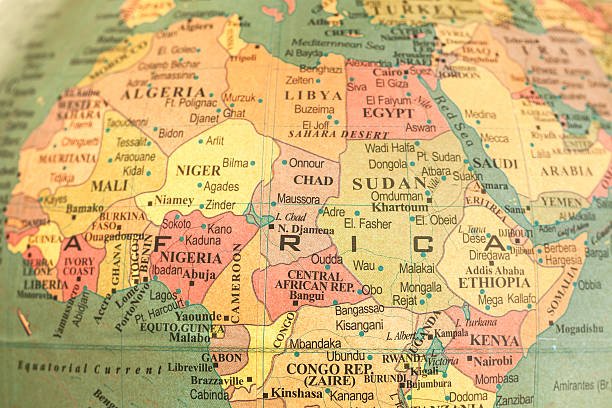
The matrimonial landscape across the continent is rich with diverse traditions, and identifying which country in Africa practice polyandry requires a specialized look into the cultural enclaves of the Democratic Republic of Congo and Nigeria. Unlike the more common practice of polygyny, polyandry allows a woman to be legally or traditionally married to more than one husband at the same time. These rare occurrences are typically localized to specific ethnic groups that use the practice to manage communal land, labor resources, and lineage in unique ways.
While the vast majority of African societies prioritize monogamy or polygyny, the existence of multiple husbands within a single household is a fascinating ethnographic subject. To understand these occurrences, we must explore the historical context and the social structures of the groups that have maintained these customs into the modern era.
These are the Countries In Africa That Practice Polyandry
When searching for the specific country in Africa practice polyandry, it is important to realize that no nation on the continent has made the practice a universal legal standard for all citizens. Instead, what we find are deep-seated traditional systems in specific geographic regions where such marriages are recognized by local custom or historical precedent. These societies often view marriage not just as a romantic union but as a strategic communal bond designed to ensure the survival and prosperity of the family unit. Below are the nations and specific ethnic groups where these practices have been documented or recently debated in a legal context.
1. Democratic Republic of Congo
The Democratic Republic of Congo is frequently cited as an African country which practice polyandry specifically among the Bashilele people in the Kasai region. In this society, a form of polyandry exists where a woman may be shared as a "communal wife" within certain social circles or age-sets, a practice known locally as ngal-anyet. This arrangement often occurs within the village structure where a woman is married to a group of men, and the children born from such unions are collectively raised by the group, emphasizing communal responsibility over individual paternity. The Bashilele culture sees this as a way to foster social solidarity and prevent internal conflicts among men of the same age-set who might otherwise compete for the same partners. While modern legal frameworks in the DRC primarily recognize monogamous unions, these traditional practices remain influential in rural areas where ancestral laws often override national legislation. The Bashilele system provides a unique example of how fraternal and communal bonds can be prioritized through complex marital arrangements that defy western definitions of a household.
2. Nigeria
Nigeria is another prominent country in Africa practice polyandry through the traditions of the Irigwe people located on the Jos Plateau. Historically, the Irigwe practiced what anthropologists call "secondary marriage," where a woman could be married to multiple husbands at different times and move between their homes while remaining legally wed to all of them. This system, known as lekyi, allowed a woman to maintain a primary household while having recognized marital rights and obligations with husbands in other villages. The children born in these arrangements were usually assigned to the husband in whose house the woman was residing at the time of birth, which helped in the wide distribution of kinship ties across the plateau. Although the Irigwe officially abolished this practice in the late 1960s in favor of more conventional marriage laws, the cultural memory and social structures formed by polyandry still influence their family dynamics today. It stands as a powerful testament to the flexibility of West African social systems in organizing family life around the movement and choices of women rather than strict patriarchal confinement.
3. South Africa
South Africa has recently become the most discussed African country which practice polyandry in a legal and political sense due to a 2021 government proposal. The Department of Home Affairs introduced a Green Paper on Marriages that suggested the legalization of polyandry to bring the nation's laws in line with the constitutional principle of gender equality. Since men are legally allowed to have multiple wives under the Recognition of Customary Marriages Act, the proposal argued that women should have the reciprocal right to have multiple husbands. This led to a massive national debate, with traditional and religious leaders strongly opposing the move, while gender activists hailed it as a landmark for women's rights. Although it is not a widespread traditional practice among the Zulu or Xhosa, the legal recognition would make South Africa one of the only countries in the world to officially sanction polyandrous unions at a state level. The debate highlights the tension between modern constitutional values and ancient patriarchal traditions in one of the most progressive nations on the continent.
4. Kenya
In Kenya, polyandry has been observed as a rare but recognized occurrence among the Maasai and the Ameru people through specific social lenses. For the Maasai, the concept of polyandry is often linked to the age-set system, where men who belong to the same warrior group may occasionally share sexual access to each other's wives as a sign of deep fraternal bond and hospitality. While this is not always categorized as a formal "marriage" to multiple men, the social legitimacy of these unions in the eyes of the community creates a polyandrous environment where children may be fathered by different men within the same age-set. In 2013, a highly publicized case in Kenya saw two men sign a contract to "share" a wife they both loved, a deal that was facilitated by a local community leader to prevent violence between the two suitors. This event sparked a nationwide conversation about whether Kenyan common law could be interpreted to allow for polyandrous arrangements if all parties were in agreement. The Ameru also have historical records of women taking on multiple partners in specific ritualistic contexts to ensure the continuation of a family line that lacked male heirs.
5. Tanzania
Tanzania is a country in Africa practice polyandry in very localized settings, particularly within some smaller ethnic groups in the northern regions. Much like the Maasai in Kenya, the Tanzanian Maasai and certain groups related to the Kuria people have traditional understandings that allow for a degree of flexibility in marital boundaries. Among the Kuria, a practice known as "woman-to-woman marriage" is common, but it is often accompanied by the woman having multiple male partners to sire children for her household, creating a complex web of polyandrous relations. While the primary goal of these unions is the preservation of property and the family name, the resulting social structure functions as a form of polyandry where the woman manages relationships with several men who all have recognized roles in the upbringing of her children. These practices are often kept private to avoid scrutiny from the national authorities or religious institutions that favor monogamous Christian or Islamic unions. However, in the heart of these communities, the traditional elder systems continue to mediate and validate these arrangements as part of their ancestral heritage.
6. Gabon
Gabon has historical records suggesting that African countries that practice polyandry included coastal groups like the Orungu and Mpongwe during the pre-colonial era. These societies were often matrilineal, and women of high status sometimes maintained relationships with multiple men to consolidate their political and economic influence. In these cases, polyandry was a tool for elite women to build alliances across different clans by taking husbands from various powerful families. While the arrival of colonial administration and missionary influence largely suppressed these practices in favor of western marriage models, the oral histories of the Gabonese coast still tell stories of powerful female figures who commanded multiple households. In contemporary Gabon, there is no legal recognition of polyandry, but some rural traditionalists still acknowledge the ancient matrilineal right of women to exercise high levels of autonomy in their marital choices. This historical context provides a bridge to understanding how gender roles were once far more fluid in Central African coastal kingdoms than they are in the modern state.
7. Namibia
In Namibia, the Himba people are often studied for their unique social and marital structures which, while primarily polygynous, contain elements that border on polyandry. The Himba practice a system of "sexual hospitality" where a husband may allow a respected guest or a close friend to sleep with his wife, and the wife has the agency to accept or refuse these arrangements. This creates a social dynamic where a woman may have recognized, long-term sexual and social relationships with multiple men, all of whom are integrated into the broader kinship network. While the Himba do not officially define this as having "multiple husbands" in the western legal sense, the social acceptance and the lack of stigma surrounding multiple partners for women distinguish them from many other patriarchal African societies. The children born from these various unions are all considered part of the mother’s and the primary husband’s lineage, ensuring that the social fabric remains intact regardless of biological paternity. This African country which practice polyandry in this informal, traditional way shows how indigenous cultures prioritize community harmony over strict marital exclusivity.
8. Mali
Mali is home to the Dogon people, who have a complex social structure where rare instances of polyandry have been documented by ethnographers. The Dogon are known for their intricate astronomical knowledge and deep spiritual traditions, which include unique views on human fertility and the family unit. In some Dogon lineages, if a husband is unable to provide children, his brother or a close relative may step in to fulfill the role of a second husband, with the woman remaining married to both. This is done to ensure that the family’s ancestral land remains within the specific lineage and that the woman is cared for within the clan structure. While this is not the standard form of marriage in Mali, which is predominantly Islamic and follows polygynous or monogamous codes, it represents a survival of ancient West African traditional laws. The Dogon's isolation in the Bandiagara Escarpment has allowed them to preserve these and other unique social customs that differ significantly from the urban centers of the country. These arrangements are often ritualized and overseen by the hogon, or spiritual leader, who ensures that the polyandrous union serves the greater good of the community.
9. Libya
Historical research into the Berber and Tuareg societies of North Africa suggests that African countries that practice polyandry may have included parts of modern-day Libya and Algeria. The Tuareg are famously known as a matrilineal society where women have traditionally held high status, including the right to own property and initiate divorce. Ancient accounts of Tuareg social life indicate that women in some tribes could have multiple male companions who were recognized by the community, a practice that shares many similarities with polyandry. Even today, Tuareg women enjoy a level of freedom in their social interactions that is rare in other parts of the Sahara, and their influence in the "tents" or households is absolute. While the modern Libyan state and Islamic law do not permit polyandry, the cultural echoes of these matrilineal freedoms still persist among the desert nomads. For the Tuareg, the strength of the family is carried through the woman's line, making her the central figure around whom all male relationships are organized, regardless of their number or duration.
10. Rwanda
In the high-altitude regions of Rwanda, historical accounts from the late 19th and early 20th centuries mention rare cases of polyandry among the impoverished peasantry. This was often born out of economic necessity, where several brothers would marry a single wife because they could not afford individual dowries or did not have enough land to support multiple separate households. This fraternal polyandry was a pragmatic solution to extreme resource scarcity, allowing the family to remain a single economic unit and prevent the fragmentation of their small plots of land. While the modern Rwandan state has since implemented strict monogamy laws and experienced massive social transformations, these historical practices provide context for how marital systems on the continent have always been adaptive to environmental and economic pressures. Today, such arrangements are virtually non-existent in Rwanda, as the nation has moved toward modern legal standards, but they remain a significant part of the anthropological history of the Great Lakes region. The transition from these survival-based polyandrous unions to the current legal framework shows the rapid evolution of countries in Africa that practice polyandry toward more centralized social norms.
Reasons Why These Countries Practice Polyandry in Africa
1. Management of Land and Resources: One of the primary reasons for polyandry in African countries that practice polyandry is the need to prevent the fragmentation of family land. In societies where land is scarce or highly valued, having multiple brothers share one wife ensures that the family estate remains a single, undivided unit across generations. Instead of splitting a farm into five small pieces for five different wives and their children, the family works together on one large plot, which is far more efficient for survival. This economic strategy is common in high-altitude or densely populated regions where the availability of fertile land is a major constraint on family growth.
2. Economic Security and Labor Distribution: In many traditional African settings, polyandry provides a woman with multiple providers, which significantly increases the economic security of the household. With two or three husbands, the family can diversify its labor, with one husband perhaps handling cattle, another focusing on agriculture, and a third engaging in trade. This country in Africa practice polyandry benefit ensures that if one husband is sick, away at war, or fails in his duties, the other husbands can support the woman and her children. This safety net was historically vital in regions where life was unpredictable and the survival of the family depended on having a strong, multi-manned labor force.
3. Preservation of Lineage in Matrilineal Societies: In several West and Central African cultures, polyandry is tied to matrilineal systems where the family name and property are passed down through the female line. Because the mother is the constant factor in determining kinship, having multiple husbands does not disrupt the lineage but rather strengthens it by bringing more men into the woman’s clan. This African country which practice polyandry reason allows women of high status to build extensive networks of allies and protectors, all of whom are invested in the success of her household. It turns the woman into the central pillar of the family, with men serving as rotating or simultaneous contributors to the clan's prosperity.
4. Social Stability and Fraternal Bonds: Fraternal polyandry, where brothers share a wife, is often used as a mechanism to promote harmony within the family and prevent sibling rivalry. By sharing a single wife and household, brothers are forced to cooperate and work together for the common good of their collective children. This reduces the chances of brothers fighting over inheritance or moving away to start separate, potentially competing, family units. In many traditional societies, the bond between brothers is considered the most important social relationship, and polyandry is seen as a way to reinforce that bond through the shared responsibility of marriage and fatherhood.
5. Ritual and Spiritual Significance: Some instances of polyandry on the continent are rooted in deep spiritual beliefs or ritualistic requirements. In certain cultures, a woman may be "married" to a spiritual office or a traditional title, which then allows her to take several male consorts to produce heirs for that title. These are not seen as standard romantic marriages but as sacred duties to the ancestors or the community. This country in Africa practice polyandry for ritual purposes ensures that powerful traditional roles are maintained and that the spiritual connection to the land is never broken. These unions are often highly respected and are overseen by the highest religious authorities in the community.
6. Response to Imbalanced Gender Ratios: Historically, some regions practiced polyandry as a direct response to a shortage of women, often caused by conflict, migration, or specific social practices. If there were significantly more men than women in a community, polyandry allowed most men to have the social status of a husband and the opportunity to have children without the community descending into violence or competition for partners. This adaptive measure helped maintain social peace during times of demographic stress. While less common today, this historical reason illustrates how African marital systems have always been capable of shifting to meet the practical needs of the population and ensure the continued survival of the group.
Conclusion
Understanding which country in Africa practice polyandry reveals a continent that is far more matrimonially diverse than many people realize. From the fraternal communal wives of the Bashilele in the DRC to the secondary marriages of the Irigwe in Nigeria and the modern legal debates in South Africa, polyandry remains a fascinating and resilient part of the African social fabric. These practices are deeply rooted in the practicalities of land management, economic survival, and the preservation of ancestral lineages. While modern laws and religious influences have made polyandry rare, its continued existence in traditional enclaves serves as a reminder of the infinite variety of human social organization. As Africa continues to modernize, the conversation around polyandry will likely remain a key part of the broader dialogue on gender equality and cultural preservation across the continent.
Enjoyed this read?
Share it with your friends and colleagues.