How Many Countries Did Portugal Colonize In Africa

BSC Insights Admin
October 01, 2026
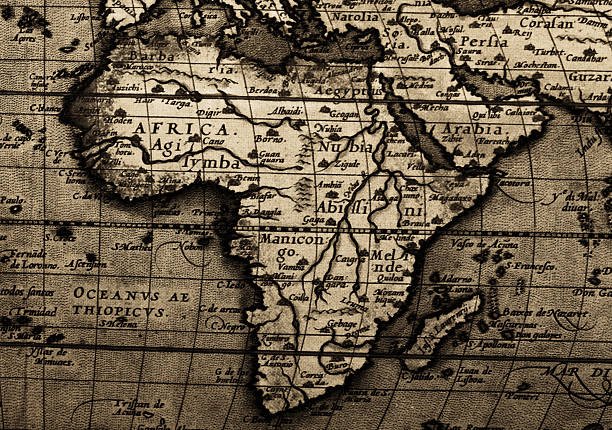
Portugal, one of Europe's earliest and most enduring colonial powers, established a significant presence in Africa over several centuries. The question of how many countries did Portugal colonize in Africa is often met with a specific answer: Portugal formally colonized five distinct nations on the African continent. These former Portuguese colonies in Africa—Angola, Mozambique, Guinea-Bissau, Cape Verde, and São Tomé and Príncipe—each bear the profound and lasting marks of Portuguese rule, from language and culture to political and economic structures.
The history of Portuguese colonization in Africa is complex, spanning from the 15th century's age of exploration to the mid-20th century's decolonization movements. While Portugal maintained numerous trading posts and coastal strongholds across Africa, the five nations mentioned above were the territories it governed as full-fledged overseas provinces or colonies for extended periods, ultimately shaping their destiny and contributing to the rich tapestry of Lusophone African countries.
The Core Five: African Nations Formally Colonized by Portugal
Understanding the extent of Portugal's colonial reach requires a closer look at the five nations that constituted the heart of its African empire. These African countries colonized by Portugal were strategically important, economically vital, and became the battlegrounds for long and often brutal wars of independence.
Angola: The 'Jewel' of the Portuguese Empire
Angola stands as perhaps the most significant of the Portuguese colonies in Africa. Located in Southern Africa, its vast territory and rich natural resources—including diamonds, oil, and coffee—made it a highly prized possession for Portugal. Colonization began in the late 15th century with the arrival of Diogo Cão, though full control and exploitation intensified dramatically from the 16th century, primarily driven by the transatlantic slave trade. Luanda, the capital, was founded in 1575. Portuguese rule in Angola was marked by harsh labor practices, cultural assimilation policies, and a deeply entrenched racial hierarchy. The struggle for independence was protracted and bloody, involving multiple liberation movements like the MPLA, FNLA, and UNITA, leading to its freedom in 1975 after the Carnation Revolution in Portugal.
Mozambique: Gateway to the East and Strategic Seaport
On Africa's southeastern coast, Mozambique was another crucial component of the Portuguese colonial empire in Africa. Portugal established a presence in Mozambique in the late 15th and early 16th centuries, initially seeking a stopover point on the sea route to India and to control the lucrative gold and ivory trade routes of the interior. Like Angola, Mozambique's colonization evolved from coastal trading posts into a full colonial administration, particularly after the Berlin Conference of 1884-85 solidified Portugal's territorial claims. Its extensive coastline and strategic location made it vital for maritime trade. The exploitation of resources, including agricultural produce like cotton and sugar, defined much of its colonial economy. The Front for the Liberation of Mozambique (FRELIMO) led a fierce guerrilla war against Portuguese rule, culminating in Mozambique's independence in 1975.
Guinea-Bissau: A Prolonged and Bitter Struggle
Situated on the West African coast, Guinea-Bissau (formerly Portuguese Guinea) represents one of the smaller, yet intensely contested, African countries under Portuguese rule. Portugal's involvement here dates back to the 15th century, focused initially on the slave trade and later on peanut and other agricultural exports. The dense forests and swampy terrain made full colonial control challenging for the Portuguese, leading to a long history of resistance from indigenous populations. The independence movement in Guinea-Bissau, led by Amílcar Cabral's African Party for the Independence of Guinea and Cape Verde (PAIGC), mounted one of the most effective guerrilla wars against Portugal. This war, beginning in the early 1960s, significantly drained Portuguese resources and contributed to the eventual collapse of the Salazar/Caetano regime, leading to Guinea-Bissau's unilateral declaration of independence in 1973, recognized by Portugal in 1974.
Cape Verde: The Atlantic Outpost and Crossroads
Comprising a group of ten volcanic islands in the central Atlantic Ocean, Cape Verde holds a unique place among the former Portuguese colonies. Unlike mainland African territories, Cape Verde was largely uninhabited when Portuguese navigators "discovered" it in the mid-15th century. It quickly became a crucial hub in the transatlantic slave trade, serving as a provisioning station and a point of transshipment for enslaved Africans bound for the Americas. Over centuries, a distinct Creole culture emerged, blending Portuguese and West African influences. Although suffering from drought and limited resources, its strategic location ensured its colonial importance. Due to its shared liberation movement (PAIGC) with Guinea-Bissau, Cape Verde also achieved independence in 1975, following the Carnation Revolution.
São Tomé and Príncipe: Equatorial Plantations and Exploitation
These two small volcanic islands in the Gulf of Guinea were also uninhabited upon their discovery by Portuguese explorers in the late 15th century. São Tomé and Príncipe rapidly transformed into major centers for sugar cane cultivation, powered by enslaved labor brought from mainland Africa. After a decline, the islands experienced a resurgence in the 19th century as a leading producer of cocoa and coffee, maintaining a brutal plantation system known as the "roça" system, which continued to rely on forced labor well into the 20th century. The intense exploitation and harsh conditions led to several revolts. Like the other Portuguese-speaking African countries, São Tomé and Príncipe gained its independence in 1975, navigating the complexities of post-colonial nation-building from a foundation of historical injustice.
A Brief History of Portuguese Expansion in Africa
The story of Portugal's colonial history in Africa is one of ambitious exploration, economic exploitation, and persistent political control. It began long before the Scramble for Africa that characterized the late 19th century.
Early Explorations and the Search for a Sea Route to India (15th-16th Century)
Portugal was at the forefront of European maritime exploration in the 15th century, driven by a desire to find a sea route to the East, bypass the Venetian-Ottoman monopoly on spice trade, and spread Christianity. Under the patronage of Prince Henry the Navigator, Portuguese mariners systematically explored the West African coast. Bartolomeu Dias rounded the Cape of Good Hope in 1488, and Vasco da Gama successfully reached India in 1498. During this period, Portugal established numerous trading posts, known as feitorias, along the African coast, including Elmina in present-day Ghana and Arguin in Mauritania. These early outposts were primarily for trade in gold, spices, and unfortunately, enslaved people, and did not represent full-scale territorial colonization in the same manner as the later "core five" nations.
The Era of the Transatlantic Slave Trade
From the 16th to the 19th centuries, Portuguese involvement in Africa became inextricably linked with the transatlantic slave trade. Portugal was one of the first European powers to engage in this horrific commerce and one of the last to abolish it. Angola and Guinea-Bissau, in particular, served as major sources of enslaved Africans who were forcibly transported across the Atlantic to Brazil and other parts of the Americas. This period fundamentally reshaped African societies, contributing to demographic decline, political instability, and immense human suffering. The economic structure of Portuguese colonies was heavily dependent on this forced labor, making it a dark chapter in Portugal's colonial past in Africa.
The Scramble for Africa and Formalization of Colonies (19th-20th Century)
As other European powers began to assert their dominance in Africa during the late 19th century, Portugal, despite its long history on the continent, found its claims challenged. The Berlin Conference of 1884-85 was a pivotal moment, as European nations formalized their claims to African territories. To solidify its historical presence and avoid losing out, Portugal rapidly expanded its administrative control from coastal enclaves into the vast interiors of Angola and Mozambique. This period saw the establishment of definitive colonial borders and the implementation of more rigorous administrative structures, transforming loose trading relationships into fully fledged colonial states. This phase firmly established the modern boundaries of the African countries colonized by Portugal.
The Brutality and Enduring Legacy of Portuguese Colonialism
The impact of Portuguese colonialism in Africa was profound and multifaceted, characterized by economic exploitation, social hierarchy, and political repression that left deep scars.
Economic Exploitation and Resource Extraction
Portuguese colonial rule was primarily driven by economic gain. The colonies were seen as sources of raw materials and markets for Portuguese goods. In Angola, resources like diamonds, oil, coffee, and timber were systematically extracted. Mozambique yielded cotton, sugar, and minerals. São Tomé and Príncipe thrived on cocoa and coffee, and Guinea-Bissau produced peanuts. This exploitation was often achieved through forced labor systems, where Africans were compelled to work on plantations, mines, or infrastructure projects under brutal conditions. The wealth generated rarely benefited the indigenous populations, instead flowing back to Portugal or enriching a small class of colonial administrators and settlers. This created economies that were heavily dependent on a few primary commodities and lacked diversified industrial bases, a challenge that persisted long after independence for the Lusophone African countries.
Cultural and Social Impact
Portuguese culture, language, and religion were imposed upon the colonized societies. Portuguese became the official language of administration, education, and commerce, leading to the suppression of indigenous languages and cultural practices. While a small elite of educated Africans might have gained access to Portuguese schooling, the vast majority were denied quality education. The policy of "assimilação" (assimilation) theoretically allowed Africans to become "assimilated" Portuguese citizens if they met strict criteria, but in practice, very few were granted this status. This created a rigid social hierarchy based on race and colonial status. The blend of cultures, however, also led to unique Creole identities and the emergence of rich Lusophone African literary and artistic traditions, even as the colonial system sought to diminish local heritage.
Political Oppression and Resistance
Portuguese rule was characterized by an authoritarian and centralized administration that denied political rights and self-determination to African populations. Local governance structures were often dismantled or subordinated to colonial authorities. Any form of political dissent was met with severe repression. This oppressive environment eventually gave rise to powerful nationalist and liberation movements across the former Portuguese colonies in Africa. Organizations like the MPLA in Angola, FRELIMO in Mozambique, and PAIGC in Guinea-Bissau and Cape Verde emerged to challenge colonial rule through political mobilization and armed struggle. These movements drew inspiration from pan-Africanism and other anti-colonial movements worldwide, demonstrating a strong resolve against the continuation of Portuguese imperial control in Africa.
The Road to Independence: Decolonization and Its Aftermath
Unlike other European powers that began decolonizing after World War II, Portugal, under the authoritarian Estado Novo regime, clung steadfastly to its African territories, considering them integral parts of the Portuguese nation. This intransigence led to prolonged and bloody wars of independence.
The Carnation Revolution in Portugal (1974)
A pivotal moment in the decolonization of Portuguese Africa was not a victory on the battlefield in Africa, but a coup in Lisbon. The Carnation Revolution (Revolução dos Cravos) on April 25, 1974, overthrew the Estado Novo dictatorship. The new military-led government, exhausted by decades of colonial wars and facing international condemnation, swiftly moved to grant independence to its African colonies. This sudden shift caught many by surprise but opened the door for rapid decolonization, profoundly impacting the trajectory of the African countries Portugal colonized.
Wars of Independence and the Rise of New Nations
Before the Carnation Revolution, liberation movements in Angola, Mozambique, and Guinea-Bissau had waged fierce guerrilla wars for over a decade. The PAIGC in Guinea-Bissau had even declared independence unilaterally in 1973. Following the revolution, these movements quickly assumed power. In 1975, Angola, Mozambique, Cape Verde, and São Tomé and Príncipe all gained full independence. While independence was a momentous achievement, the transition was often fraught with challenges. In Angola and Mozambique, the legacy of cold war proxy conflicts and internal divisions among liberation movements led to devastating civil wars that lasted for decades, fueled by external powers. These conflicts severely hindered development and caused immense human suffering in these newly independent Lusophone African countries.
Post-Independence Challenges and Enduring Relations
The newly independent nations faced immense challenges, including establishing stable governance, rebuilding war-torn economies, and addressing pervasive poverty and lack of infrastructure. The sudden departure of Portuguese settlers and administrators often left a vacuum of skilled labor and capital. Despite the traumatic colonial past, Portugal maintains significant cultural and economic ties with its former colonies. Portuguese remains an official language in all five nations, fostering a common linguistic heritage and cultural exchange. Organizations like the Community of Portuguese Language Countries (CPLP) promote cooperation and cultural ties among these nations, acknowledging a shared, albeit complex, history.
Beyond the Formal Five: Other Areas of Portuguese Presence
While the focus of how many countries did Portugal colonize in Africa correctly points to five nations, it is important to acknowledge that Portugal's historical presence on the continent was more widespread, though not always in the form of full-scale colonies. For centuries, Portuguese traders and explorers established numerous feitorias (trading posts) and coastal forts along the West and East African coasts. Examples include Arguin (Mauritania), Elmina (Ghana – later taken by the Dutch), and Mombasa (Kenya – for a period). These were critical points for trade, resupply, and military outposts, but they did not involve the deep territorial penetration and administrative control characteristic of the five formal colonies. Their influence was often localized to the immediate vicinity of the fort or trading station, rather than governing extensive hinterlands.
Conclusion
In summary, the precise answer to how many countries did Portugal colonize in Africa is five: Angola, Mozambique, Guinea-Bissau, Cape Verde, and São Tomé and Príncipe. These nations represent the enduring territorial legacy of Portugal's vast colonial empire on the African continent. From the early explorations of the 15th century to the bitter wars of independence in the mid-20th century, Portuguese rule left an indelible mark on these societies. The impact of Portuguese colonialism was characterized by extensive economic exploitation, the imposition of language and culture, and authoritarian political systems, culminating in prolonged struggles for liberation. Today, these Lusophone African countries continue to navigate their post-colonial identities, grappling with historical legacies while forging their own paths forward, united in part by a shared linguistic heritage and a complex, intertwined history with Portugal.
Enjoyed this read?
Share it with your friends and colleagues.