Is There Rabbits In Africa

BSC Insights Admin
September 30, 2026
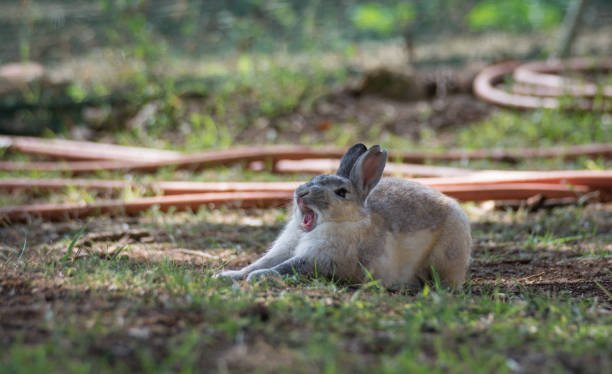
When pondering the rich biodiversity of the continent, a common question arises: is there rabbits in Africa? The answer is a resounding yes, though not in the way many might typically imagine. While Africa is home to various rabbit-like creatures, the majority are actually hares, which belong to the same taxonomic family (Leporidae) but possess distinct characteristics. However, several unique species of true rabbits are indeed native to Africa, thriving in diverse ecosystems from arid plains to montane forests, playing vital roles in the continent's intricate wildlife tapestry.
Understanding Lagomorphs: Hares vs. Rabbits in Africa
Before delving into specific species, it is crucial to understand the difference between rabbits and hares, as both are members of the order Lagomorpha. This distinction is particularly relevant when discussing rabbits in Africa, where hares are far more prevalent and widely distributed than true rabbits. Though often confused, hares and rabbits exhibit significant biological and behavioral differences:
- Birth Conditions: Hares are born precocial, meaning they are born fully furred, with open eyes, and are able to run within minutes or hours of birth. Rabbits, conversely, are altricial, born blind, hairless, and helpless, relying heavily on their mothers for warmth and protection in burrows.
- Nesting Habits: Hares typically do not dig burrows but create shallow depressions called 'forms' in vegetation. Rabbits are renowned for their burrowing habits, constructing complex tunnel systems known as warrens.
- Physical Characteristics: Hares are generally larger, with longer hind legs and ears, and tend to be solitary. Rabbits are often smaller, with shorter ears and legs, and many species are more social, living in groups.
- Diet: While both are herbivores, their specific dietary preferences and foraging strategies can differ slightly based on habitat and available vegetation.
In Africa, the terms 'rabbit' and 'hare' are sometimes used interchangeably in colloquial language, but scientifically, the distinction is clear and important for understanding the continent's lagomorph diversity.
Native African Rabbit Species: A Closer Look
Despite the dominance of hares, Africa is home to a few remarkable species of true rabbits, each with unique adaptations to its environment. These are the genuine African rabbits that contribute to the continent's distinct mammalian fauna.
The Critically Endangered Riverine Rabbit (Bunolagus monticularis)
Perhaps the most famous, and certainly the most imperiled, of Africa's true rabbits is the Riverine Rabbit. Endemic to the Karoo region of South Africa, it is one of the most endangered mammals in the world. This elusive rabbit is:
- Habitat Specific: It exclusively inhabits the dense scrub and alluvial soils along seasonal rivers and floodplains. Its survival is inextricably linked to these specific riverine habitats.
- Nocturnal and Solitary: The Riverine Rabbit is largely nocturnal, foraging for specific plants and flowers under the cover of darkness. It is a solitary animal, except during breeding.
- Conservation Concern: With an estimated population of fewer than 500 mature individuals, its primary threats include habitat loss and fragmentation due to agricultural expansion, overgrazing, and dam construction. Conservation efforts are intense, focusing on habitat protection, community involvement, and research to prevent its extinction.
Its unique adaptations, such as its long ears, large eyes, and a white ring around its eyes, make it perfectly suited for its specific niche, yet vulnerable to environmental changes.
The Bunyoro Rabbit (Poelagus marjorita)
Found primarily in Central Africa, from Uganda and Southern Sudan to parts of the Democratic Republic of Congo and Tanzania, the Bunyoro Rabbit is another true African rabbit species. It prefers:
- Forested and Woodland Areas: Unlike the Riverine Rabbit, the Bunyoro Rabbit typically inhabits moist savannas, woodlands, and the edges of forests, often near swamps or marshy areas.
- Small and Cryptic: It is a relatively small rabbit, with a reddish-brown fur and short ears, making it well-camouflaged within its dense vegetation habitat.
- Elusive Behavior: Like many wild rabbits, it is secretive and mainly nocturnal or crepuscular, making direct observation challenging.
The Bunyoro Rabbit's distribution highlights the diverse environments where native African rabbits can be found, from arid to more humid, vegetated regions.
The Volcano Rabbit (Romerolagus diazi) - A North American Exception
While discussing African rabbits, it's important to clarify a common misconception. The Volcano Rabbit, often mentioned alongside other unique rabbit species, is actually native to Mexico and is not found in Africa. It is a distinct species in its own genus. This highlights the importance of precise geographical context when discussing specific wildlife.
Prominent African Hare Species: Widespread and Adaptable
While the focus is often on true rabbits, the continent's lagomorph population is overwhelmingly dominated by various hare species. These adaptable creatures are widespread and play critical ecological roles across Africa.
The Ubiquitous Cape Hare (Lepus capensis)
The Cape Hare is one of the most widespread mammals in Africa, found in almost every country across the continent, as well as parts of the Middle East and Asia. Its remarkable adaptability allows it to thrive in a vast array of habitats:
- Diverse Habitats: From arid deserts and semi-deserts to savannas, grasslands, and even agricultural areas, the Cape Hare is highly versatile.
- Nocturnal Forager: It is primarily nocturnal, feeding on grasses, herbs, and roots. Its long legs and powerful bursts of speed are crucial for escaping predators.
- Ecological Importance: As a common prey animal, it forms a critical food source for numerous predators, including jackals, caracals, eagles, and even lions, showcasing its foundational role in many African food webs.
Other Notable African Hare Species
Beyond the Cape Hare, several other hare species contribute to the rich lagomorph diversity of Africa:
- Bushveld Hare (Lepus saxatilis): Prevalent in Southern Africa, preferring grasslands, savannas, and open woodlands. It is larger than the Cape Hare and often found in areas with more cover.
- Scrub Hare (Lepus microtis): Widely distributed across sub-Saharan Africa, inhabiting savannas, shrublands, and open country. It is known for its agility and speed.
- Ethiopian Hare (Lepus fagani): Endemic to the Ethiopian Highlands, adapted to mountainous environments. Its specific habitat makes it a unique representative of African hares.
- African Savanna Hare (Lepus victoriae): Common in the savannas and grasslands of East and Central Africa, often seen at dusk and dawn.
These species, along with others, demonstrate the incredible evolutionary success of hares in colonizing and adapting to nearly every ecological niche on the continent, making them a cornerstone of African wildlife.
Habitat and Distribution of Lagomorphs in Africa
The distribution of rabbits and hares in Africa is as varied as the continent itself. While hares are widespread, true rabbits have more restricted ranges, often linked to specific ecological requirements.
Diverse African Ecosystems
African lagomorphs inhabit a wide spectrum of environments:
- Grasslands and Savannas: These open plains are the domain of many hare species, such as the Cape Hare and Savanna Hare, which rely on speed and camouflage to survive.
- Deserts and Semi-Arid Regions: Adapted to harsh conditions, some hares can be found in arid areas, exhibiting behaviors like crepuscular activity to avoid extreme heat.
- Forests and Woodlands: The Bunyoro Rabbit and some hare species prefer the cover and resources found in more wooded environments.
- Riverine and Wetlands: The critically endangered Riverine Rabbit exemplifies a species utterly dependent on specific wetland-associated vegetation along seasonal rivers.
- Montane Regions: Species like the Ethiopian Hare are adapted to higher altitudes and cooler climates found in Africa's mountain ranges.
The ability of these animals to occupy such diverse habitats underscores their ecological flexibility and the intricate ways in which they have evolved alongside other African mammals.
Ecological Role and Interactions
Lagomorphs play a crucial, albeit often understated, role in African ecosystems.
Prey Animals
As herbivores, African hares and rabbits are a fundamental link in the food chain. They constitute a significant prey base for a wide array of predators:
- Mammalian Predators: Jackals, caracals, servals, wild cats, mongooses, and even larger predators like leopards and cheetahs frequently hunt hares.
- Avian Predators: Various raptors, including eagles (such as martial eagles and tawny eagles), falcons, and owls, rely on lagomorphs for sustenance.
- Reptilian Predators: Large snakes, such as pythons, can also prey on smaller lagomorphs.
The sheer number and widespread distribution of hares mean they provide a consistent food source, supporting the populations of these predators and contributing to the overall health of the ecosystem.
Herbivores and Ecosystem Engineers
By grazing on grasses, herbs, and shrubs, lagomorphs influence vegetation structure and nutrient cycling. While their impact is generally less dramatic than that of large ungulates, their continuous foraging can affect plant composition and regeneration in their specific microhabitats. Their burrowing activities (in the case of true rabbits) can also aerate soil and create microhabitats for other small invertebrates and animals.
Conservation Status and Challenges for African Lagomorphs
The future of rabbits in Africa, particularly the true rabbit species, is a significant concern for conservationists. While many hare species are currently listed as 'Least Concern' due to their wide distribution and adaptability, some, like the Riverine Rabbit, face dire threats.
Major Threats
The challenges confronting African rabbits and hares include:
- Habitat Loss and Fragmentation: Agricultural expansion, urbanization, infrastructure development, and human encroachment are leading causes of habitat destruction, particularly affecting specialized species like the Riverine Rabbit.
- Climate Change: Changes in rainfall patterns, increased droughts, and altered temperatures can directly impact the availability of food and water, affecting all lagomorphs, especially those in arid or vulnerable ecosystems.
- Poaching and Hunting: Lagomorphs are often hunted for bushmeat or for sport across Africa. While sustainable hunting might occur, unregulated or excessive hunting can put pressure on local populations.
- Disease: Outbreaks of diseases, sometimes exacerbated by close contact with domestic animals or increased stress from environmental changes, can decimate local populations.
- Predation: While a natural part of the ecosystem, increased predation by domestic dogs and cats in human-modified landscapes can pose an additional threat, especially to young or vulnerable populations.
Conservation Efforts
For species like the Riverine Rabbit, intensive conservation efforts are underway:
- Habitat Protection: Establishing protected areas and working with private landowners to conserve critical riverine habitats.
- Research and Monitoring: Understanding population dynamics, genetic health, and ecological requirements through ongoing scientific research.
- Community Engagement: Educating local communities about the importance of the species and fostering sustainable land management practices.
- Captive Breeding Programs: Although challenging, some consideration is given to these programs for critically endangered species.
These efforts are vital to ensure that future generations can continue to ask, and answer affirmatively, are there rabbits in Africa, and witness these unique animals in their natural habitats.
Distinguishing Lagomorphs from Other Small African Mammals
Given the diversity of small mammals in Africa, it is easy to confuse lagomorphs with other groups. Key distinctions help in identifying them:
Lagomorphs vs. Rodents
The most common confusion is between lagomorphs (rabbits and hares) and rodents (rats, mice, squirrels, etc.).
- Dental Structure: Lagomorphs have four incisors in their upper jaw (two prominent, two smaller peg-like teeth behind them), while rodents have only two. Both groups have continuously growing incisors.
- Reproduction: While both are prolific, their reproductive biology differs fundamentally, as discussed with altricial vs. precocial young.
- Diet: Both are largely herbivorous, but specific dietary preferences vary.
In Africa, rodents are incredibly diverse and abundant, but genetically, they are distinct from lagomorphs.
Lagomorphs vs. Hyraxes (Dassies)
Hyraxes, or dassies, are small, stout, herbivorous mammals found in Africa and the Middle East. While they share a similar size and herbivorous diet with some lagomorphs, they are actually more closely related to elephants and manatees than to rabbits or rodents. They have distinct physical features, including short tails (or no visible tail), blunt snouts, and specialized teeth. They typically live in rocky outcrops or trees.
Domestic Rabbits in Africa: A Human Introduction
While discussing wild rabbits in Africa, it is also important to acknowledge the presence of domestic rabbits (Oryctolagus cuniculus), which are not native to the continent but have been introduced by humans. These European rabbits are kept as pets, for meat, or for their fur in various parts of Africa.
- Feral Populations: In some areas, particularly in Southern Africa, escaped domestic rabbits have established small feral populations. These populations can sometimes pose ecological challenges, competing with native wildlife for resources or altering local ecosystems, much as they have in Australia and other parts of the world.
- Economic Importance: For many communities, domestic rabbit farming provides a valuable source of protein and income, contributing to local food security and economic development.
The presence of these introduced populations underscores the complex interplay between human activity and native biodiversity on the African continent.
Interesting Facts About African Lagomorphs
- The Riverine Rabbit's social structure is largely solitary, and it is known to mark its territory with chin glands.
- Hares are known for their incredible speed and evasive maneuvers, which are vital for escaping predators in open landscapes. The Cape Hare can reach speeds of up to 70 km/h (43 mph).
- Many African lagomorphs exhibit crepuscular or nocturnal behavior to avoid the heat of the day and predators.
- The large ears of hares are not just for hearing; they also help in thermoregulation, allowing excess body heat to dissipate.
Conclusion
In conclusion, when asking, is there rabbits in Africa, the answer is a definitive yes, though the continent's lagomorph population is primarily composed of various highly adaptable hare species. Africa is home to unique and specialized native rabbits like the critically endangered Riverine Rabbit and the Bunyoro Rabbit, each occupying distinct ecological niches. These fascinating creatures, along with the more widespread hares, are integral to African ecosystems, serving as key herbivores and a vital food source for a multitude of predators. However, habitat loss, climate change, and human activities pose significant threats, particularly to the rare true rabbit species. Understanding the distinctions between rabbits and hares and supporting conservation efforts are crucial steps in protecting these captivating small mammals and ensuring their continued presence in Africa's magnificent wildlife heritage.
Enjoyed this read?
Share it with your friends and colleagues.