How Many Africans Did Shaka Zulu Kill

BSC Insights Admin
October 01, 2026
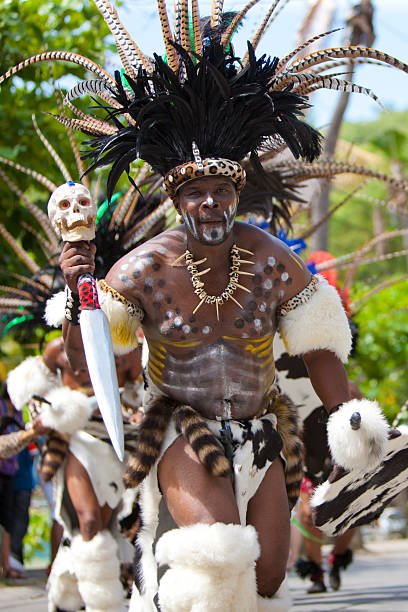
Estimating the precise number of Africans killed directly by Shaka Zulu is challenging due to the lack of contemporary records; however, historical consensus links his military campaigns and the subsequent period known as the Mfecane or Difaquane to the deaths and displacement of potentially millions of people across Southern Africa. While direct casualties from Shaka's own Zulu impis are difficult to isolate, his aggressive expansion and military innovations were the primary catalyst for a widespread and devastating chain reaction of warfare, famine, and migrations that dramatically reshaped the region.
Shaka Zulu: The Formidable Architect of the Zulu Nation
Shaka kaSenzangakhona, born around 1787, rose from an outcast to become one of the most transformative, and indeed feared, figures in pre-colonial African history. His reign, primarily from 1816 to 1828, saw the rapid expansion of the Zulu Kingdom from a minor chiefdom into a formidable empire dominating much of what is now KwaZulu-Natal in South Africa. Shaka’s ascent was not merely political; it was a military revolution that forever changed the landscape of Southern Africa.
Military Innovations and Ruthless Efficiency
Shaka's strategic genius and ruthless efficiency were key to his success. He introduced several pivotal military reforms:
- The Iklwa (Short Stabbing Spear): Replacing the longer throwing spear, the iklwa required close-quarters combat, demanding greater bravery and skill from his warriors.
- The Isihlangu (Large Shield): Used defensively and offensively to hook an opponent's shield, it was integral to his fighting style.
- The 'Buffalo Horns' Formation: A sophisticated battle tactic where the main force (the 'chest') engaged the enemy head-on, while two flanking 'horns' enveloped and crushed them.
- Rigorous Training and Discipline: Zulu warriors underwent intense physical and psychological conditioning, forging them into a highly disciplined and fearsome fighting force.
These innovations, coupled with a policy of 'no quarter given' to defeated enemies, meant that battles fought by Shaka's Zulu army often resulted in very high casualty rates for his opponents. His campaigns against rival chiefdoms, such as the Ndwandwe led by Zwide, were characterized by their intensity and devastating outcomes. While some defeated populations were assimilated into the growing Zulu state, many more were dispersed or annihilated, contributing directly to the rising death toll.
The Mfecane or Difaquane: Shaka's Devastating Legacy
The term Mfecane (from Nguni 'ukufaca' – to be crushed, to starve) or Difaquane (Sotho-Tswana 'difaqane' – forced migration) describes a period of widespread chaos, warfare, famine, and migration in Southern Africa during the early 19th century. While its precise origins and full extent are debated by historians, Shaka Zulu's military expansion is widely accepted as a primary catalyst for this catastrophic era.
The Ripple Effect of Zulu Conquests
Shaka's conquests created a domino effect:
- Direct Warfare: His initial campaigns directly destroyed numerous smaller chiefdoms. Populations were killed in battle, executed, or fled.
- Displacement and Refugee Crises: Fleeing groups, such as the Ndebele under Mzilikazi or the Ngwane under Matiwane, became aggressors themselves, attacking other communities in their search for new lands and resources.
- Famine and Disease: Constant warfare disrupted agricultural cycles, leading to widespread famine. Displaced populations, often weakened, became susceptible to disease.
- Inter-Tribal Conflict: The entire region became destabilized, with countless battles fought between desperate groups struggling for survival.
The impact of the Mfecane extended far beyond the immediate reach of the Zulu Empire, affecting regions as far north as present-day Tanzania and as far west as Botswana. It was a period of immense demographic upheaval and significant loss of life, for which Shaka Zulu's military machine bore considerable indirect responsibility.
Estimating the Unquantifiable: Direct vs. Indirect Casualties
Quantifying the precise number of Africans killed by Shaka Zulu is an almost impossible task due to several factors:
- Lack of Written Records: Pre-colonial African societies primarily relied on oral traditions. Detailed population counts or battle casualty reports were not kept.
- Blurred Lines of Responsibility: The Mfecane was a complex web of interconnected conflicts. Distinguishing deaths directly attributable to Shaka's army from those caused by groups fleeing Shaka, or by subsequent inter-tribal warfare, is challenging.
- Definitions of 'Killed': Does this include only those slain in battle or executed? Or also those who died from starvation, disease, or exposure as a direct consequence of displacement initiated by Shaka's wars?
Historical Estimates and Perspectives
While a definitive number for direct killings by Shaka's forces is elusive, historians have attempted to estimate the broader human cost of the Mfecane, for which Shaka was a primary catalyst.
| Category of Loss | Description | Estimated Contribution by Shaka |
|---|---|---|
| Direct Battle Deaths | Casualties from engagements with the Zulu army (e.g., Ndwandwe wars, smaller chiefdoms). | Significant, numbering in the tens of thousands across his reign. |
| Executions & Purges | Internal executions for perceived disloyalty within the Zulu Empire, or of defeated leaders/populations. | Thousands, contributing to his reputation for ruthlessness. |
| Famine & Disease | Deaths from starvation and illness exacerbated by widespread displacement and agricultural disruption due to conflict. | Indirect but very substantial; Shaka's wars were a major cause of the Mfecane's conditions. |
| Displacement & Secondary Conflicts | Deaths occurring among groups fleeing Shaka, who then attacked others, or during their perilous migrations. | Indirectly responsible for millions of deaths and displacements, as he triggered the wider conflict. |
Renowned historians like Julian Cobbing, though his figures are debated, have suggested that the total population decline and displacement during the Mfecane could be as high as 1 million to 2.5 million people across a vast swathe of Southern Africa. While not all of these were direct killings by Shaka's hand or his immediate army, his actions set in motion the forces that led to this catastrophic loss of life and dramatic demographic shift.
Beyond the Numbers: The Broader Impact on African Societies
The legacy of Shaka Zulu extends beyond the raw death tolls. His reign fundamentally reshaped the political and demographic map of Southern Africa:
Creation of New Nations and Identities
- Zulu Identity: Shaka forged a cohesive Zulu nation from disparate clans, instilling a strong sense of identity and martial prowess that endures to this day.
- New Kingdoms: Groups fleeing the Zulu Empire, such as the Ndebele (in present-day Zimbabwe) and the Kololo (in Zambia), established new powerful kingdoms, demonstrating the widespread impact of the Mfecane.
- Centralized Power: His model of a highly centralized, militarized state influenced later African leaders.
Social and Economic Transformations
The constant warfare and displacement during his era led to significant societal changes:
- Loss of Traditional Lifestyles: Many agrarian communities were forced to abandon their lands, disrupting long-standing cultural and economic practices.
- Increased Militarization: Survival often depended on military strength, leading to a general militarization of societies in the region.
- Shifting Demographics: Entire regions were depopulated, while others saw an influx of refugees and new settlers, creating a complex patchwork of ethnicities and power structures.
The brutality attributed to Shaka Zulu was, in part, a reflection of the harsh realities of power consolidation in pre-colonial Africa. However, the scale of his impact was unprecedented. Accounts describe not only fierce battles but also swift and often merciless executions of enemies and even his own subjects who failed to meet his exacting standards. For instance, after the death of his mother, Nandi, Shaka reportedly enforced a year-long period of mourning during which no crops were planted, no milk was consumed, and any woman found pregnant was executed with her husband, leading to widespread famine and further loss of life.
Conclusion: A Complex Legacy of Power and Devastation
While an exact count of how many Africans Shaka Zulu killed directly remains elusive, it is unequivocally clear that his reign was a period of immense violence and profound demographic change. His military genius and aggressive policies as the architect of the Zulu Empire initiated the devastating chain of events known as the Mfecane, leading to the deaths and displacement of potentially millions across Southern Africa through direct warfare, famine, and secondary conflicts. Shaka Zulu is remembered as a powerful, transformative, yet highly destructive figure whose legacy is deeply intertwined with both the creation of a powerful Zulu nation and an era of unparalleled human suffering. Understanding his impact requires acknowledging the complex interplay between direct military action and the widespread, cascading effects of regional instability he initiated.
Enjoyed this read?
Share it with your friends and colleagues.