How Much Square Kilometers Is Africa

BSC Insights Admin
October 02, 2026
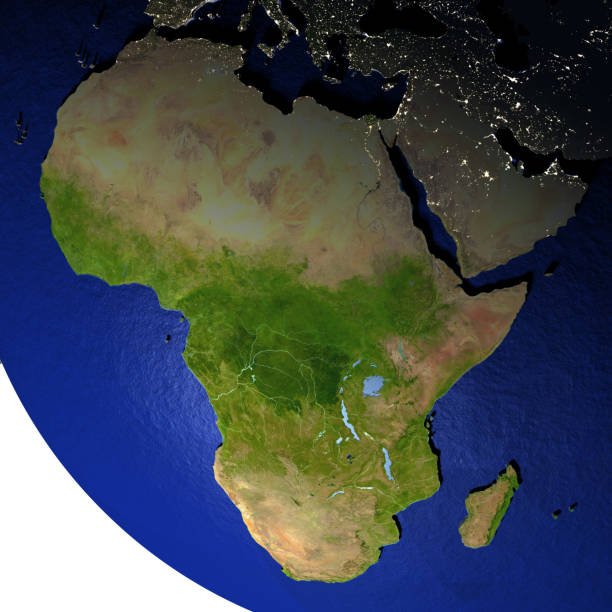
How Much Square Kilometers Is Africa? Unveiling the Continent's Immense Scale
Africa is an undeniably massive continent, and understanding its sheer size is crucial to appreciating its diversity and complexity. To answer directly, Africa spans approximately 30.3 million square kilometers (km²), making it the world's second-largest continent by land area. This colossal figure includes the mainland and its surrounding islands, cementing its position as a geographical titan on the global stage.
The vastness of Africa is often underestimated, but grasping the measurement of 30.3 million square kilometers helps to contextualize its immense geographical, ecological, and cultural richness. This extensive landmass is home to 54 recognized countries, a staggering array of ecosystems, and an unparalleled wealth of natural resources, all bound within its impressive borders.
The Precise Measurement of Africa's Land Area
When we ask how much square kilometers is Africa, the figure of roughly 30.3 million km² stands as the authoritative answer. To provide a fuller perspective, this also translates to about 11.7 million square miles. This measurement encompasses not only the continental mainland but also significant island nations and territories such as Madagascar, the Comoros, Seychelles, Mauritius, and São Tomé and Príncipe, which are integral to the African geographical entity.
Understanding this precise measurement is vital because it underpins many of the continent's defining characteristics. From the expansive Sahara Desert in the north to the lush rainforests of the Congo Basin, and from the towering peaks of Kilimanjaro to the vast savannas of the Serengeti, Africa's incredible environmental diversity is a direct reflection of its enormous surface area. This vastness facilitates a multitude of climates, geological formations, and biomes.
Contextualizing Africa's Immense Scale: Comparisons That Impress
To truly grasp Africa's square kilometers and its monumental size, it helps to put it into perspective by comparing it with other landmasses and continents. This exercise often reveals just how profoundly large Africa truly is, challenging common misconceptions.
Africa Compared to Other Continents
- Asia: While Asia is the largest continent (around 44.6 million km²), Africa is a substantial second, occupying over two-thirds of Asia's land area.
- Europe: Africa is approximately three times larger than Europe, which covers about 10.18 million km². You could comfortably fit the entirety of Europe within Africa's borders multiple times over.
- North America: At about 24.7 million km², North America is smaller than Africa.
- South America: South America's 17.84 million km² means Africa is nearly double its size.
- Australia: Australia is dwarfed by Africa, with its 8.52 million km² fitting into Africa almost four times.
Indeed, Africa is so large that it is bigger than China, India, the United States, and most of Europe combined. This fact is perhaps one of the most striking illustrations of its enormous footprint on the globe. Imagine fitting the combined land areas of the USA (approx. 9.8 million km²), China (approx. 9.6 million km²), and India (approx. 3.29 million km²) inside Africa – there would still be millions of square kilometers left over!
Visualizing the Scale
Many maps, especially those using the Mercator projection, distort the true size of landmasses, particularly those near the equator. This distortion makes continents like Africa appear smaller than they actually are relative to landmasses in higher latitudes, such as Greenland or Canada. A more accurate representation reveals Africa's true, breathtaking proportions. It's not just a collection of countries; it's a world unto itself.
Factors Contributing to Africa's Extensive Landmass
The enormous landmass of Africa is a result of deep geological history. Africa is one of the oldest landmasses on Earth, with much of its continental crust being ancient Precambrian shield rocks. Its position as a central component of the supercontinent Gondwana, and later Pangaea, before the breakup of these landmasses, contributed to its substantial size and relatively stable continental plate.
Geographical factors also play a role. Africa straddles the equator, extending almost equally north and south, giving it a vast latitudinal spread. This extensive reach from temperate zones to the tropics, and back to temperate zones, contributes to its overall dimensions and, consequently, its rich biodiversity and varied climates.
The Significance of Africa's Vastness: Beyond Just Numbers
The answer to how many square kilometers is Africa is more than just a statistic; it carries profound implications for the continent's environment, cultures, and economies.
Environmental Diversity
Africa's immense size directly translates to an unparalleled range of ecosystems. Within its 30.3 million km², one can find:
- Deserts: The Sahara and the Kalahari, among others.
- Rainforests: The Congo Rainforest, the second largest in the world.
- Savannas: Vast grasslands supporting iconic wildlife like lions, elephants, and zebras.
- Mountains: Ranges like the Atlas Mountains and the Ethiopian Highlands.
- Rivers: The Nile (the longest in the world), Congo, Niger, Zambezi.
- Lakes: Lake Victoria (largest in Africa), Lake Tanganyika (longest freshwater lake).
This biological richness makes Africa a hotspot for biodiversity and a critical continent for global conservation efforts. Its large area provides space for endemic species and allows for the migration patterns essential for many animal populations.
Cultural and Human Diversity
The vastness of the African continent has allowed for the development of an extraordinary tapestry of human cultures, languages, and ethnic groups. With over 1.3 billion people, Africa is home to thousands of distinct ethnic groups and over 2,000 languages. This diversity is not merely a consequence of population size but also of the geographical separation and varied environments that allowed distinct cultures to flourish independently for millennia.
Economic Potential and Challenges
Africa's huge land area also means it possesses an enormous wealth of natural resources. This includes significant reserves of oil, natural gas, diamonds, gold, copper, cobalt, and agricultural land. The potential for economic development based on these resources is immense.
However, the sheer scale of the continent also presents unique challenges. Developing infrastructure (roads, railways, power grids) across such vast distances is a monumental task. Governance, logistics, and resource management across 54 sovereign nations spread over 30.3 million km² require complex cooperation and strategic planning.
Breaking Down Africa: Regions Within the Continent
To manage and understand the diversity within Africa's enormous square kilometers, it is often divided into five main regions, each with its own distinct characteristics:
| Region | Key Characteristics | Examples of Countries |
|---|---|---|
| North Africa | Dominated by the Sahara Desert; Arab and Berber cultures; Mediterranean coast. | Egypt, Algeria, Morocco, Tunisia |
| West Africa | Diverse landscapes from desert to rainforest; rich history of empires; strong cultural traditions. | Nigeria, Ghana, Senegal, Ivory Coast |
| Central Africa | Features the Congo Basin rainforest; major rivers; complex biodiversity. | DR Congo, Cameroon, Gabon, Chad |
| East Africa | Great Rift Valley; savannas; major lakes; renowned wildlife; Swahili culture. | Kenya, Tanzania, Ethiopia, Uganda |
| Southern Africa | Kalahari Desert; Drakensberg Mountains; rich mineral resources; diverse ecosystems. | South Africa, Botswana, Namibia, Zimbabwe |
Each of these regions is larger than many individual countries or even groups of countries on other continents, underscoring the immense internal scale of Africa.
The Importance of Accurate Geographical Data
The measurement of Africa's geographical dimensions, including its total area in square kilometers, relies on advanced geographical information systems (GIS) and satellite mapping technologies. These tools allow geographers to precisely delineate coastlines and continental boundaries, offering highly accurate figures. While minor variations might exist across different sources due to methodologies (e.g., how small islands or coastal indentations are counted), the figure of 30.3 million km² remains the widely accepted standard for the continent's total surface area.
Conclusion: Embracing Africa's Vastness
In conclusion, when considering how much square kilometers is Africa, the answer—approximately 30.3 million square kilometers—reveals a continent of truly extraordinary scale. This immense landmass is not merely a number; it is the foundation for Africa's astounding environmental diversity, its vibrant tapestry of cultures, and its significant global economic and geopolitical importance. Recognizing Africa's true size is fundamental to appreciating its complexity, understanding its challenges, and celebrating its unique contributions to the world. It serves as a powerful reminder that Africa is not a country, but a vast and diverse continent, rich in everything from natural beauty to human ingenuity, spanning an area few truly comprehend without such compelling comparisons.
Enjoyed this read?
Share it with your friends and colleagues.