Top 10 kings in Africa

BSC Insights Admin
September 30, 2026
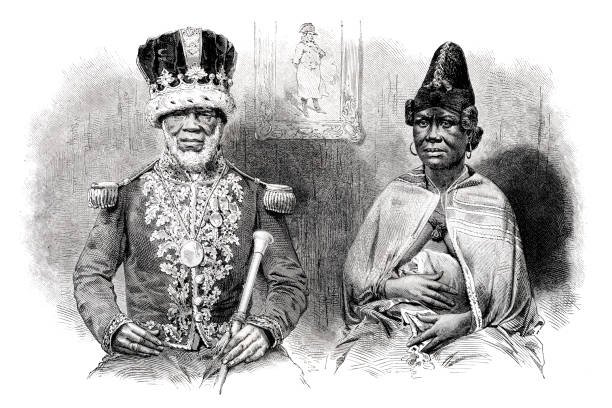
The Top 10 kings in Africa represent a historical legacy of immense wealth, military innovation, and sophisticated governance that fundamentally shaped the course of global history. These monarchs presided over vast empires that controlled vital trade routes, produced unprecedented amounts of gold, and fostered centers of intellectual excellence that attracted scholars from across the Mediterranean and Asia. By examining their reigns, we can better understand the pre-colonial power structures that allowed the African continent to flourish as a central player in the international economy for centuries.
The following analysis dives into the lives of these legendary leaders, exploring how their strategic decisions influenced the development of their nations and the wider world. From the gold-rich plains of West Africa to the ancient temples of the Nile, these rulers established systems of law and commerce that remained influential long after their eras ended.
These are the Top 10 kings in Africa
Across the diverse regions of the continent, certain monarchs stand out for their exceptional contributions to state-building and cultural advancement. The leaders on this list are ranked based on their historical impact, the longevity of their empires, and their ability to innovate in the fields of diplomacy, military science, and economics. Their stories are not just tales of power, but blueprints for how complex societies were organized and defended against external and internal challenges. Here is a detailed exploration of the most significant kings who ever ruled on African soil.
1. Mansa Musa (Mali Empire)
Mansa Musa is widely regarded as the wealthiest individual in human history, ruling the Mali Empire from 1312 to 1337 during its golden age. His immense fortune was derived from Mali’s control over the world’s largest gold mines at the time and the lucrative trans-Saharan salt trade. Musa is most famous for his 1324 pilgrimage to Mecca, where he traveled with a caravan of 60,000 men and dozens of camels laden with hundreds of pounds of gold. During his stop in Cairo, he distributed so much gold that he inadvertently caused a massive inflation crisis that lasted for over a decade in the Egyptian economy. Beyond his wealth, he was a great patron of the arts and education, transforming Timbuktu into a world-class center of Islamic scholarship and architecture. He commissioned the construction of the Djinguereber Mosque, which still stands today as a testament to Sudano-Sahelian engineering. His reign solidified Mali’s reputation as a superpower, appearing on European maps as a land of legendary prosperity. By investing in the University of Sankore, he ensured that his empire would be remembered as a hub of intellectual inquiry as much as a source of physical riches.
2. Shaka Zulu (Zulu Kingdom)
Shaka Zulu was a military visionary who transformed a small, obscure clan into the dominant Zulu Kingdom, which became the most powerful force in Southern Africa in the early 19th century. He is credited with revolutionizing African warfare through the introduction of the iklwa, a short-handled stabbing spear that replaced the traditional long throwing javelin. Shaka also developed the "buffalo horns" tactical formation, which allowed his armies to surround and annihilate much larger enemy forces through disciplined coordination. His reign, though relatively short from 1816 to 1828, initiated the Mfecane, a period of massive migration and political upheaval that redrew the map of Southern and Central Africa. Shaka implemented a rigorous military culture where young men were organized into age-grade regiments known as amabutho, fostering a sense of national identity that transcended local lineages. While his methods were often brutal, his ability to centralize power and modernize the military made the Zulu people a formidable obstacle to European colonial expansion for decades. The psychological impact of his leadership and his insistence on total loyalty created a martial legacy that remains a central part of Zulu cultural pride today.
3. Ramesses II (Ancient Egypt)
Ramesses II, also known as Ramesses the Great, ruled Egypt for 66 years during the 13th century BCE and is often cited as the most powerful pharaoh of the New Kingdom. His reign was defined by massive building projects, including the rock-hewn temples at Abu Simbel and the Ramesseum, which served to project his divine authority across the Nile Valley. Militarily, he led numerous campaigns to secure Egypt’s borders, most notably the Battle of Kadesh against the Hittites, which resulted in the world’s first recorded international peace treaty. Ramesses was a master of propaganda, ensuring that his victories were carved into temple walls throughout Egypt so that his legacy would be preserved for eternity. He fathered over 100 children and lived into his 90s, an extraordinary feat for the time that provided unparalleled stability to the Egyptian state. His administration oversaw a period of significant agricultural prosperity and expanded trade with the Levant and the Land of Punt. Today, his mummy and his monuments remain the most iconic symbols of Ancient Egyptian majesty, representing a ruler who successfully merged military might with cultural immortality.
4. King Ezana (Kingdom of Aksum)
King Ezana was the first monarch of the Aksumite Empire to convert to Christianity in the 4th century CE, a decision that fundamentally altered the religious and cultural landscape of the Horn of Africa. Under his rule, Aksum became a major international power, controlling the vital trade routes between the Roman Empire and the Indian subcontinent through the port of Adulis. Ezana was a prolific builder and conqueror, famously defeating the Kingdom of Kush and expanding Aksum’s territory into parts of modern-day Yemen and Sudan. He is well known for the "Ezana Stone," a trilingual monument written in Ge'ez, Sabaean, and Greek that details his various military victories and his transition to the Christian faith. The introduction of Christianity under his reign led to the establishment of the Ethiopian Orthodox Tewahedo Church, one of the oldest Christian denominations in the world. Ezana also oversaw the minting of Aksumite gold coins, which were used as a global currency and featured Christian symbols, reflecting the empire’s new religious identity. His leadership transformed Aksum into a cosmopolitan hub where diverse cultures and religions coexisted under a centralized and prosperous administration.
5. Sundiata Keita (Mali Empire)
Sundiata Keita, the "Lion King" of Mali, founded the Mali Empire in 1235 after defeating the rival Soso Kingdom at the Battle of Kirina. His life is the subject of the Epic of Sundiata, a central piece of West African oral history that describes his journey from a crippled child to a triumphant liberator. Sundiata was not only a warrior but also a brilliant administrator who established the Kouroukan Fouga, a constitution that outlined the rights and responsibilities of his subjects. This early legal framework emphasized social harmony, professional guilds, and the protection of travelers, which laid the foundation for Mali's future commercial success. By centralizing the government at Niani and securing the gold-producing regions of Bambuk and Bure, he created the economic engine that his descendant, Mansa Musa, would eventually lead to global fame. Sundiata is credited with unifying several Mande-speaking tribes into a single, cohesive nation, fostering a sense of collective purpose that lasted for centuries. His legacy as a fair and determined ruler makes him one of the most beloved figures in African folklore and a true pioneer of state-building.
6. Askia Muhammad I (Songhai Empire)
Askia Muhammad I, also known as Askia the Great, seized power in 1493 and transformed the Songhai Empire into the largest and most organized state in West African history. He replaced the military-focused rule of his predecessor, Sunni Ali, with a sophisticated civil bureaucracy that utilized standardized weights, measures, and trade regulations. Askia was a devout Muslim who used his pilgrimage to Mecca to establish diplomatic ties with other Islamic states and recruit scholars to teach at the University of Sankore in Timbuktu. His administration divided the empire into provinces, each governed by a loyal appointee, which allowed for efficient tax collection and the maintenance of a large standing army. Under his rule, the Songhai Empire became a beacon of learning, where thousands of manuscripts were written on subjects ranging from law and medicine to astronomy and philosophy. He also invested heavily in agriculture, commissioning irrigation projects along the Niger River to ensure food security for his growing urban populations. Askia’s ability to blend religious devotion with pragmatic governance created a stable and prosperous empire that dominated the Sahel for nearly a century.
7. Haile Selassie I (Ethiopia)
Haile Selassie I, the last Emperor of Ethiopia, reigned from 1930 to 1974 and is remembered as a symbol of African independence and modernization. He famously addressed the League of Nations in 1936 to condemn the Italian invasion of his country, an act of courage that made him a global icon for the anti-colonial movement. After reclaiming his throne in 1941, he worked tirelessly to modernize Ethiopia’s infrastructure, education system, and military, introducing the country's first written constitution. Selassie was a key figure in the pan-African movement and played a pivotal role in the founding of the Organization of African Unity (OAU) in 1963, with its headquarters established in Addis Ababa. His international diplomacy brought Ethiopia into the modern world stage, though his domestic policies later faced criticism for being too slow to address land reform and economic inequality. For the Rastafari movement, he is a central spiritual figure, regarded as a messianic leader who represented the strength and dignity of the Black race. Despite the complexities of his long reign, his role as a defender of national sovereignty and a champion of African unity remains a cornerstone of 20th-century history.
8. King Piye (Kingdom of Kush)
King Piye was the Kushite monarch who conquered Egypt in the 8th century BCE, establishing the 25th Dynasty and ruling as the first of the "Black Pharaohs." He saw himself not as a foreign invader but as a restorer of traditional Egyptian values and religious practices, which he felt had been neglected by the divided Egyptian rulers of the time. Piye’s campaign is immortalized on the "Victory Stele" at Napata, which provides a detailed and poetic account of his military prowess and his chivalrous treatment of defeated enemies. After securing control of the entire Nile Valley from the delta to the highlands of Sudan, he returned to his capital at Napata to focus on building grand temples and pyramids. His reign initiated a cultural renaissance where Kushite and Egyptian styles merged, leading to a revival of monumental architecture and religious art. Piye’s success proved that the Kingdom of Kush was a peer to any Mediterranean power, capable of projecting force over thousands of miles of desert and river. His dynasty provided Egypt with a period of stability and defense against the rising Assyrian Empire, marking a significant era where African power was centralized in the southern Nile region.
9. Oba Ewuare the Great (Benin Kingdom)
Oba Ewuare the Great, who ruled the Benin Kingdom in the mid-15th century, is credited with transforming a small city-state into a vast and powerful empire. He was a master of urban planning, commissioning the construction of the massive Benin City walls and moats, which are among the largest man-made earthworks in the world. Ewuare restructured the political system of Benin, creating a hierarchy of palace and town chiefs that balanced the power of the monarchy and ensured administrative stability. He was also a great patron of the arts, encouraging the guild of brass casters to create the famous Benin Bronzes that served as historical records of the kingdom’s achievements. Under his leadership, Benin expanded its territory through a series of successful military campaigns, eventually controlling a large portion of what is now southern Nigeria. Ewuare is also remembered for his spiritual influence, as he formalized many of the religious festivals and ceremonies that still define the Edo people’s cultural life. His reign marked the beginning of Benin's golden age, where the kingdom became a primary trading partner for European explorers while maintaining its absolute sovereignty.
10. Sunni Ali Ber (Songhai Empire)
Sunni Ali Ber was the relentless conqueror who founded the Songhai Empire in the late 15th century, spending nearly his entire reign on the battlefield. Known for his tactical brilliance and his refusal to ever lose a battle, he captured the strategic cities of Timbuktu and Jenne, effectively ending the dominance of the declining Mali Empire. Sunni Ali established a powerful riverine navy on the Niger River, which allowed his forces to move rapidly and control the flow of trade across the Sahel. Unlike his successor Askia Muhammad, Sunni Ali was more focused on military expansion than religious or administrative reform, often clashing with the clerical elite of the cities he conquered. His ability to lead from the front and his mastery of cavalry warfare made him a terrifying figure to his enemies and a legendary hero to his soldiers. He laid the geographical foundations of an empire that would eventually become the largest in West African history, stretching from the Atlantic coast to the air mountains. Sunni Ali’s reign was characterized by a raw, energetic pursuit of power that transformed the regional political landscape and prepared the way for the sophisticated state that Songhai would soon become.
The Institutional Legacy of African Royalty
The Top 10 kings in Africa were not isolated individuals acting on whim; they were part of deeply rooted institutional systems that provided stability for their people. One of the most fascinating aspects of African kingship was the concept of "Divine Royalty," where the king was seen as a bridge between the physical and spiritual worlds. This did not mean the kings had absolute, unchecked power; in many societies, such as the Ashanti or the Zulu, there were councils of elders and queen mothers who could influence or even veto the king’s decisions. This early form of a "constitutional" balance ensured that the monarch remained accountable to the welfare of the people and the traditions of the ancestors. These systems of governance were highly efficient at managing large, multi-ethnic populations across vast distances before the advent of modern communication technology.
Economic innovation was another hallmark of these historical rulers, as they managed some of the world’s most valuable resources. Statistics from the era of Mansa Musa suggest that Mali was producing nearly 50 percent of the gold circulating in the Old World during the 14th century. To manage this wealth, kings like Askia Muhammad implemented sophisticated taxation systems and market regulations that protected local merchants while encouraging international trade. The use of cowrie shells, gold dust, and even minted coins in the case of Aksum shows that African economies were fully integrated and highly monetized. These monarchs understood that a strong economy was the only way to support a large standing army and a complex civil service, which in turn protected the sovereignty of the kingdom.
The architectural and artistic output of these kingdoms remains some of the most impressive in human history. From the dry-stone masonry of Great Zimbabwe to the intricate brass work of Benin, the kings used art as a form of statecraft to project their power and document their history. Many of these structures were designed with astronomical alignments and advanced engineering principles that are still studied by researchers today. The ability of these monarchs to mobilize thousands of workers for public projects like the Benin walls or the pyramids of Kush speaks to their incredible organizational skills. These physical monuments serve as a permanent rebuttal to the historical myth that Africa lacked complex civilizations before the arrival of outsiders. They are the tangible remains of a time when African kings were among the most powerful and innovative leaders on the planet.
Finally, the intellectual legacies of these rulers are found in the manuscripts and oral traditions they fostered. Timbuktu, under the protection of the Songhai and Mali kings, housed over 700,000 manuscripts covering science, math, and law, proving that pre-colonial royalty prioritized education. In Ethiopia, the kings supported the translation of religious and philosophical texts into Ge'ez, preserving ancient knowledge that was lost in other parts of the world. Even in societies without a written language, the professionalization of history through the griot system ensured that the laws and triumphs of the kings were passed down with precision. This commitment to knowledge ensured that the cultural identity of these kingdoms would survive even after the political structures themselves had collapsed. Today, these legacies continue to inspire a new generation of African leaders and scholars who look to the past to build a better future.
| King Name | Kingdom / Empire | Primary Achievement | Approximate Reign |
|---|---|---|---|
| Mansa Musa | Mali Empire | Unprecedented Wealth and Education | 1312–1337 CE |
| Shaka Zulu | Zulu Kingdom | Military Tactics and Expansion | 1816–1828 CE |
| Ramesses II | Ancient Egypt | Monumental Construction and Stability | 1279–1213 BCE |
| Askia Muhammad | Songhai Empire | Bureaucracy and Islamic Scholarship | 1493–1528 CE |
| Haile Selassie I | Ethiopia | Anti-Colonialism and Modernization | 1930–1974 CE |
Conclusion
The Top 10 kings in Africa demonstrate a profound history of leadership that was characterized by economic prosperity, military genius, and cultural enlightenment. These rulers didn't just govern territories; they built enduring civilizations that contributed to the global pool of human knowledge and wealth. From the gold mines of Mansa Musa to the defensive walls of Oba Ewuare, their achievements continue to stand as symbols of African excellence. Understanding their reigns is essential for anyone looking to grasp the true depth and complexity of the African continent’s past. These monarchs remain legendary figures whose influence still echoes in the traditions, laws, and national identities of modern African states.
Enjoyed this read?
Share it with your friends and colleagues.