Top 10 strongest militaries in Africa 2026

BSC Insights Admin
October 01, 2026
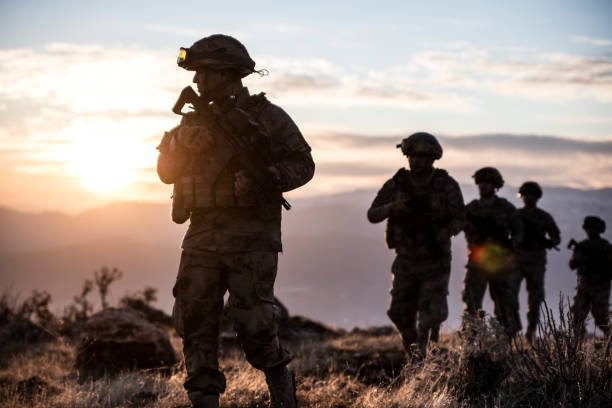
The Top 10 strongest militaries in Africa 2026 are determined by a complex evaluation of available manpower, diverse weapon inventories, and the overall logistical capability to sustain prolonged operations. As of 2026, the continent has seen an unprecedented shift toward digital warfare and advanced drone technology to combat regional insurgencies and secure national borders. These rankings reflect the strategic investments made by various governments to modernize their armed forces in response to evolving geopolitical challenges across the Sahara and sub-Saharan regions.
To understand the current hierarchy of power, we must look beyond just the number of soldiers in uniform. This analysis bridge explores the technical and financial metrics that separate the continent's elite defense forces from those of smaller nations.
These are the Top 10 strongest militaries in Africa 2026
The following list represents the most formidable military powers in Africa, based on the latest projections for defense modernization and operational readiness. These nations have prioritized the acquisition of fourth generation fighter jets, sophisticated missile defense systems, and massive armored divisions to ensure territorial integrity. The data used for these points include projected defense budgets, active personnel counts, and the diversity of hardware across land, air, and sea branches. Here is a comprehensive look at the nations currently leading the way in continental defense and regional security.
1. Egypt
Egypt consistently holds the top position as the most powerful military force in Africa, maintaining a massive standing army of over 450,000 active duty personnel. The Egyptian Armed Forces have benefited from decades of international military aid and a robust domestic manufacturing sector that produces armored vehicles and ammunition. Their air superiority is anchored by a fleet of over 1,000 aircraft, including advanced French Rafale jets and American F-16 Fighting Falcons. Egypt also operates two Mistral class helicopter carriers, making them one of the few African nations with significant power projection capabilities in the Mediterranean and Red Sea. By 2026, the government has further integrated satellite surveillance and cyber defense units to protect the vital Suez Canal corridor. This combination of numerical strength and high tech hardware ensures that Egypt remains the primary pillar of stability in North Africa.
2. Algeria
Algeria ranks as the second strongest military power, driven largely by the highest defense budget on the continent, which often exceeds 18 billion dollars annually. The Algerian People's National Army has heavily invested in sophisticated Russian hardware, including the S-400 missile defense system and Su-30 fighter jets. With nearly 2,000 tanks and a highly professionalized officer corps, Algeria maintains a qualitative edge over many of its regional neighbors. Their naval strength is also impressive, featuring Kilo class submarines that provide a significant deterrent in the Western Mediterranean. In 2026, the Algerian military is focused on border security and counter terrorism, utilizing long range drone technology to monitor its vast desert territories. The nation's financial independence from foreign aid allows it to maintain a highly autonomous and modernized military infrastructure.
3. South Africa
South Africa possesses one of the most technologically advanced militaries in the world, despite having a smaller active personnel count compared to the northern giants. The South African National Defence Force is supported by a world class domestic arms industry, led by companies like Denel that produce the Rooivalk attack helicopter and the G6 self propelled howitzer. While budget constraints have been a challenge, the technical proficiency of their special forces and their advanced electronic warfare capabilities keep them at the forefront of the continent. Their air force operates the Saab Gripen, a highly capable multi role fighter that provides significant regional air cover. South Africa is also a leader in maritime security, frequently conducting joint exercises with global powers to protect the Cape sea routes. By 2026, the military has shifted its focus toward unprecedented technological growth in coastal surveillance and modular armored vehicle production.
4. Nigeria
Nigeria has rapidly moved up the rankings due to its extensive combat experience in anti insurgency operations and a major push for hardware modernization. The Nigerian Armed Forces have recently acquired JF-17 Thunder multi role fighters and A-29 Super Tucano aircraft to bolster their air to ground strike capabilities against extremist groups. Nigeria's ground forces are the most battle hardened in West Africa, with significant experience in both domestic operations and regional peacekeeping missions. The Nigerian Navy has also seen a revitalization, adding several offshore patrol vessels to combat piracy in the oil rich Gulf of Guinea. Domestic manufacturing is becoming a priority, with the production of the Proforce Eland armored personnel carriers providing a boost to local industry. By 2026, Nigeria’s military is increasingly focused on intelligence led warfare and the integration of tactical drones for jungle and forest surveillance.
5. Ethiopia
Ethiopia maintains a massive and highly disciplined infantry base, which has historically been one of the most effective fighting forces in East Africa. The Ethiopian National Defense Force has successfully pivoted toward modern warfare by incorporating a significant number of unmanned aerial vehicles from Turkish and Iranian suppliers. Their armored divisions are vast, featuring hundreds of modernized T-72 tanks that are well suited for the varied terrain of the Horn of Africa. Ethiopia's air force is built around a core of Su-27 and MiG-23 aircraft, providing a capable shield for national infrastructure like the Grand Ethiopian Renaissance Dam. The military also plays a critical role in African Union peacekeeping missions, particularly in neighboring Somalia. In 2026, Ethiopia continues to emphasize professionalization and the development of a domestic defense industry to reduce reliance on imported components.
6. Morocco
Morocco has established one of the most professional and westernized military forces in Africa, benefiting from close strategic ties with the United States and France. The Royal Moroccan Armed Forces operate a sophisticated fleet of F-16 Block 72 fighters and M1A1 Abrams tanks, giving them a high level of interoperability with NATO forces. Morocco has also become a leader in drone technology in North Africa, utilizing Israeli and American systems for border monitoring and reconnaissance. Their naval presence in the Atlantic and Mediterranean is supported by modern frigates equipped with advanced anti ship and anti aircraft missiles. The military's defensive posture is heavily influenced by the ongoing tensions in the Western Sahara, leading to the creation of one of the world's most extensive defensive sand berms. By 2026, Morocco is investing heavily in satellite intelligence and electronic countermeasures to maintain its qualitative advantage in the region.
7. Angola
Angola retains a powerful military legacy from its long civil war, possessing one of the largest inventories of heavy weaponry in Southern Africa. The Angolan Armed Forces have been undergoing a steady modernization process, replacing older Soviet era equipment with newer Russian Su-30K fighters and improved armored platforms. Their navy is currently seeing a significant expansion, with new patrol vessels aimed at protecting the nation's vital offshore oil assets. Angola's ground forces remain formidable, with large numbers of tanks and mobile artillery units capable of rapid deployment across Central Africa. The government has prioritized the training of a new generation of pilots and technical engineers to maintain their high tech assets. In 2026, Angola remains a key regional power, acting as a deterrent against instability and participating in SADC security initiatives to ensure regional peace.
8. Libya
Libya’s inclusion in the top ten is a testament to the massive stockpiles of military hardware that exist within the country, despite the political divisions that have persisted for years. The Libyan National Army and various unified forces control thousands of armored vehicles, including T-62 and T-72 tanks, and a variety of rocket artillery systems. While the military structure is often fragmented, the sheer volume of available hardware and the battle experience of the personnel make it a significant force in North Africa. Recent efforts to unify the military command have seen the integration of various specialized units and the repair of grounded air assets like the MiG-21 and Su-22. Libya’s military potential is backed by its massive oil wealth, which provides the resources for future large scale modernization once a permanent political settlement is achieved. By 2026, the focus has shifted toward creating a unified national guard to secure the country’s porous desert borders.
9. Tunisia
Tunisia possesses a highly efficient and specialized military that has become a regional expert in counter terrorism and mountain warfare. The Tunisian Armed Forces have benefited from significant American and European aid, receiving Black Hawk helicopters and armored vehicles to combat border incursions. Unlike some of its larger neighbors, Tunisia focuses on quality over quantity, with its special forces being among the best trained in Africa. The military has played a crucial role in maintaining the country's democratic stability, traditionally staying out of politics while ensuring national security. Their navy is effective at patrolling the Mediterranean coastline, focusing on the prevention of illegal trafficking and maritime search and rescue. In 2026, Tunisia continues to modernize its electronic surveillance systems along the Libyan border to detect and neutralize threats before they reach urban centers.
10. Sudan
Sudan rounds out the list due to its extensive domestic defense industry, which is one of the largest and most capable in Africa. The Military Industry Corporation of Sudan produces a wide range of hardware, from small arms to licensed versions of Chinese armored vehicles and drones. Despite the internal challenges faced by the nation, the Sudanese Armed Forces maintain a massive inventory of tanks and heavy artillery that provide a significant conventional deterrent. Their air force operates a mix of Russian and Chinese aircraft, including Su-25 ground attack jets and MiG-29 fighters. Sudan's military has extensive experience in asymmetric warfare, having been involved in various internal and regional conflicts over the past several decades. By 2026, the military remains a central pillar of the nation's power structure, with a focus on self sufficiency in ammunition and light armored vehicle production.
Trends in African Defense Modernization and Military Personnel
The landscape of the Top 10 strongest militaries in Africa 2026 is being shaped by several critical trends that go beyond traditional hardware. One of the most significant changes is the rapid adoption of unmanned aerial systems for both surveillance and combat roles. Drones have proven to be cost effective tools for monitoring vast, sparsely populated areas like the Sahel and the Sahara, allowing militaries to respond to threats with greater speed and precision. This shift has allowed nations with smaller air forces to achieve a level of air support that was previously unaffordable. Additionally, there is an increasing focus on cyber security, as governments realize that national infrastructure is vulnerable to digital attacks from non state actors and foreign entities.
Another major trend is the professionalization of military personnel through international training partnerships and domestic academies. Many African nations are moving away from the old model of conscription toward a more professional, volunteer based force that is better equipped to handle complex modern weapon systems. These professional soldiers are trained in international humanitarian law and modern tactical doctrines, making them more effective in both combat and peacekeeping scenarios. Statistical data from recent years shows that countries with professionalized forces have higher mission success rates and lower casualty figures in active conflict zones. This human element is becoming just as important as the caliber of the tanks or the speed of the jets.
Defense spending across the continent is also becoming more transparent in some regions, as governments look to attract international investment and prove their stability. While North Africa still leads in total expenditure, countries in East and West Africa are seeing the highest percentage increases in their military budgets. This money is not just going toward foreign imports but is also fueling the growth of local defense contractors. For example, Nigeria and South Africa are now exporting armored vehicles and electronic components to other African nations, creating a regional market for defense goods. This intra African trade in military hardware is a significant step toward continental self reliance and reduced dependence on global superpowers.
The role of the military in domestic development is also evolving, with many armed forces taking on tasks such as infrastructure building, disaster relief, and even large scale agriculture. In countries like Egypt and Ethiopia, the military is a major economic player, managing large scale projects that contribute to the national GDP. While this can be controversial, it often provides the military with the logistical and financial resources needed to maintain high readiness levels. In 2026, the "dual use" nature of military assets is a common feature, where transport planes and engineering units are as busy with civilian projects as they are with defense duties. This integration into the national economy ensures that the military remains a well funded and respected institution.
Finally, the importance of naval power is increasing as African nations look to protect their blue economies. With trillions of dollars in offshore oil, gas, and fishing resources, the need for a capable navy has never been higher. Countries like Morocco, Egypt, and Nigeria are leading the way in acquiring modern frigates and patrol boats to secure their territorial waters. This maritime focus is also a response to the global problem of piracy, which has plagued the Gulf of Aden and the Gulf of Guinea. By 2026, the strongest militaries are those that can effectively project power into the ocean to protect the trade routes that are the lifeblood of the African economy.
| Country | Active Personnel | Total Aircraft | Main Battle Tanks |
|---|---|---|---|
| Egypt | 450,000 | 1,069 | 4,347 |
| Algeria | 130,000 | 547 | 1,700 |
| South Africa | 72,000 | 226 | 195 |
| Nigeria | 230,000 | 144 | 177 |
| Ethiopia | 150,000 | 92 | 465 |
Conclusion
The Top 10 strongest militaries in Africa 2026 demonstrate a continent that is rapidly modernizing its defense capabilities through technology, professionalization, and local industrial growth. Egypt and Algeria continue to lead the pack with massive conventional forces, while nations like Morocco and South Africa provide a template for high tech qualitative superiority. As drone warfare and cyber defense become central to national security, the ability to innovate and adapt will be the true measure of a military's strength. These ten nations are the guardians of regional stability, ensuring that Africa can defend its interests and protect its people in an increasingly complex world. Their continued development is essential for the long term peace and prosperity of the entire continent.
Enjoyed this read?
Share it with your friends and colleagues.