How Many Villages Are In Africa

BSC Insights Admin
October 01, 2026
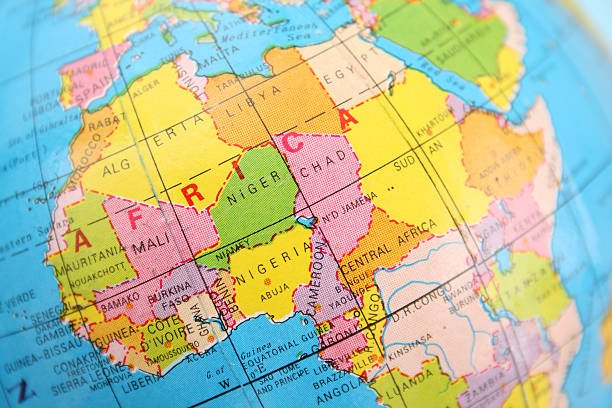
How many villages are in Africa is a question that reveals the continent's immense rural landscape and demographic complexity. While an exact, universally agreed-upon number is incredibly challenging to pinpoint due to varied definitions of what constitutes a 'village' and the dynamic nature of settlements, experts estimate there are millions of distinct villages and rural settlements spread across Africa's 54 diverse countries. These communities are home to a significant portion of Africa's population, forming the bedrock of its cultural heritage, agricultural production, and social fabric.
Understanding the sheer scale of rural life requires delving into demographics, geographical distribution, and the unique characteristics that define these communities. From the bustling market towns of West Africa to the scattered pastoralist settlements in the East, and the traditional hamlets nestled in Southern Africa, each 'village' plays a critical role in the continent's socio-economic and cultural tapestry. This article aims to explore the challenges of quantification, shed light on the characteristics of African villages, and discuss their vital importance and ongoing evolution.
Defining a Village in the African Context
The concept of a 'village' can vary significantly across different regions, countries, and even within communities in Africa. Unlike a city or a town, which often have specific administrative designations and population thresholds, a village is more fluid in its definition. Generally, an African village is characterized by:
- Population Size: Typically smaller than towns or cities, ranging from a few hundred to several thousand inhabitants. However, some large villages might exceed typical urban population figures in other parts of the world.
- Economic Activity: Primarily reliant on agriculture, pastoralism, fishing, or other natural resource-based activities. Subsistence farming is a common economic backbone.
- Infrastructure: Often characterized by more basic infrastructure compared to urban areas, including limited access to paved roads, piped water, electricity, and formal sanitation.
- Social Cohesion: Strong communal ties, extended family networks, and traditional leadership structures are frequently prominent features.
- Governance: May operate under traditional leaders, chiefs, or elders, often alongside or integrated with modern administrative structures.
In some countries, a village might be officially recognized as an administrative unit, while in others, it could simply be a cluster of homes and families without formal designation. This fluidity makes any precise count of how many villages exist in Africa an arduous task, highlighting the need for a nuanced understanding rather than a single, fixed number.
The Challenge of Quantifying African Villages
Obtaining an accurate count of African villages faces several methodological and practical challenges:
- Inconsistent Definitions: As mentioned, what one country calls a village, another might classify as a hamlet, a rural settlement, or even a small town. There is no continent-wide standard for population size, infrastructure level, or administrative status that universally defines a 'village'.
- Dynamic Populations: African rural populations are highly dynamic. Villages can grow rapidly due to birth rates, shrink due to rural-urban migration, or even merge with expanding towns, making counts quickly outdated.
- Data Collection Difficulties: Conducting comprehensive censuses in remote or sparsely populated areas can be challenging due to logistical hurdles, lack of infrastructure, and political instability in certain regions. Satellite imagery helps, but ground verification is still essential.
- Informal Settlements: Many rural settlements, particularly those formed by nomadic pastoralists or displaced populations, may not be officially mapped or recognized, further complicating enumeration efforts.
- Lack of Centralized Data: Information is often fragmented across national statistics offices, local government units, and non-governmental organizations, making aggregation difficult.
Despite these challenges, various national censuses and international organizations like the United Nations Human Settlements Programme (UN-Habitat) and the World Bank attempt to track rural populations and settlement patterns. While they don't provide a precise number of villages, they consistently point to a vast number of dispersed rural communities.
Estimates and Statistical Insights
Given the complexities, providing an exact figure for how many villages are in Africa is impossible. However, we can deduce the scale from population statistics:
- Africa's total population is estimated to be over 1.4 billion people.
- A significant portion, approximately 60-70% of the African population, still lives in rural areas, according to various sources like the World Bank and the African Development Bank. This translates to roughly 840 million to 980 million people living in rural settings.
If we consider that the average village size can range from a few hundred to a few thousand people, it becomes evident that there must be millions of individual villages and rural settlements across the continent. For example, if the average village has 1,000 people, then 840 million rural inhabitants would imply 840,000 villages. If the average is 200 people, it would mean 4.2 million villages. These are rough estimations, but they underscore the immense number of distinct communities.
Countries with large rural populations, such as Nigeria, Ethiopia, the Democratic Republic of Congo, Tanzania, and Kenya, inherently host hundreds of thousands, if not millions, of villages within their borders. Each of these villages contributes uniquely to the region's overall social and economic landscape.
Factors Influencing Village Distribution and Livelihoods
The distribution, size, and characteristics of African villages are shaped by a multitude of factors:
Geographical and Environmental Influences
- Arable Land and Water Access: Villages are often clustered around fertile land, river basins, lakes, or reliable water sources, crucial for agriculture and sustenance. The Nile Valley, the Great Lakes region, and coastal areas are examples.
- Climate Zones: Densely populated villages are found in areas with favorable climates for rain-fed agriculture, while sparse settlements characterize arid and semi-arid regions where pastoralism is more prevalent.
- Natural Resources: The presence of minerals, timber, or rich fishing grounds can also dictate settlement patterns and economic activities.
Historical and Cultural Factors
- Ethnic and Tribal Settlements: Many villages represent historical settlements of specific ethnic groups, maintaining unique cultural practices, languages, and social structures passed down through generations.
- Colonial Legacy: Colonial-era administrative boundaries and infrastructure development (e.g., roads, railways) sometimes influenced the growth or decline of certain settlements, though many villages predate colonial influence.
- Trade Routes: Historically, some villages grew along ancient trade routes, becoming market centers for local goods and regional commerce.
Economic Activities and Livelihoods
The primary economic activities vary but generally revolve around:
- Agriculture: Subsistence farming of staple crops (maize, cassava, millet, sorghum, yams) and cash crops (coffee, cocoa, cotton, tea, groundnuts) is the backbone of most rural economies.
- Pastoralism: In drier regions, nomadic or semi-nomadic pastoral communities rely on livestock rearing (cattle, goats, sheep, camels).
- Fishing: Communities along coastlines, rivers, and lakes derive livelihoods from fishing.
- Forestry and Foraging: In forested areas, sustainable harvesting of forest products and foraging contribute to livelihoods.
- Small-Scale Trade and Artisanship: Local markets, crafts, and small businesses are also vital components of village economies.
Life in African Villages: Community, Challenges, and Resilience
Life in African villages is characterized by strong community bonds, traditional practices, and often, significant challenges. Despite varying widely, common threads include:
Strong Social Structures and Communal Living
Villages often foster a deep sense of community and mutual support. Extended families live close by, and decisions are frequently made communally through elders or traditional leaders. Social events, rites of passage, and daily tasks are often shared, reinforcing collective identity and solidarity. Traditional African villages prioritize family and community welfare.
Access to Services and Infrastructure
One of the most pressing challenges facing many rural African communities is limited access to basic services. While progress is being made, many villages still struggle with:
- Healthcare: Remote locations often mean long distances to clinics or hospitals, and a scarcity of qualified medical personnel and essential medicines.
- Education: Schools may be overcrowded, understaffed, or require children to travel long distances, impacting attendance and educational outcomes.
- Clean Water: Access to safe, potable water remains a significant issue, with many relying on communal boreholes, wells, or natural sources that may be seasonal or contaminated.
- Electricity: Electrification rates in rural Africa are generally low, impacting economic activities, education, and quality of life.
- Roads and Transport: Poor road infrastructure can isolate villages, making it difficult to transport goods to markets or access services.
Economic Vulnerabilities and Climate Change
Rural economies are highly susceptible to environmental shocks and market fluctuations. Climate change, bringing more frequent droughts, floods, and erratic weather patterns, poses an existential threat to rain-fed agriculture and pastoralism, leading to food insecurity and displacement. Poverty is a pervasive challenge, often exacerbated by limited access to capital, technology, and market information.
Resilience and Innovation
Despite these challenges, African village life showcases remarkable resilience and adaptability. Communities often develop ingenious local solutions to resource scarcity, implement traditional coping mechanisms for environmental stress, and embrace new technologies (like solar power or mobile banking) to improve their livelihoods. Grassroots organizations and development initiatives often work hand-in-hand with villagers to build sustainable futures.
The Impact of Urbanization on African Villages
Africa is experiencing rapid urbanization, which profoundly impacts its villages. The lure of economic opportunities, better access to education, healthcare, and modern amenities in cities drives significant rural-urban migration. This phenomenon has several consequences for African villages:
- Population Decline: Many villages, particularly those with fewer opportunities, see a steady outflow of younger, working-age individuals, leaving behind older populations and children. This can lead to labor shortages in agriculture and a decline in vibrant community life.
- Remittances: Migrants often send money back to their families in the villages (remittances), which can be a vital source of income, supporting households and local economies.
- Changes in Traditional Structures: Urban influences and modern education can erode traditional practices and governance structures, leading to a shift in social dynamics within villages.
- Growth of Peri-Urban Areas: As cities expand, some villages on the outskirts are absorbed or transform into peri-urban areas, bridging the gap between rural and urban lifestyles, often with a mix of both challenges and opportunities.
- Transformation of Livelihoods: Even for those who remain, proximity to urban centers can introduce new market opportunities for agricultural produce and local crafts, diversifying economic activities beyond pure subsistence.
The interplay between urban growth and rural dynamics is a critical aspect of Africa's development trajectory, continuously reshaping the landscape of its villages.
The Enduring Importance of African Villages
Despite the challenges and transformative pressures, African villages remain incredibly important to the continent's present and future:
| Aspect of Importance | Description |
|---|---|
| Cultural Preservation | Villages are often the custodians of indigenous languages, traditional knowledge, customs, and spiritual practices, crucial for maintaining Africa's rich cultural heritage. |
| Food Security | Rural farmers are the backbone of food production, feeding both rural and urban populations and contributing significantly to national and regional food security. |
| Economic Foundation | Agriculture and other primary industries based in villages form a substantial part of many African nations' GDP, providing employment and raw materials. |
| Community Resilience | The strong social fabric of villages often provides a vital safety net during times of crisis, fostering collective action and mutual support. |
| Biodiversity Conservation | Many villages are situated near biodiversity hotspots, and their traditional land management practices can play a role in environmental stewardship. |
Recognizing this importance, many national governments and international bodies are prioritizing rural development initiatives to improve infrastructure, enhance access to services, and empower village communities.
Future Trends and Development Initiatives for Rural Africa
The future of African villages is closely tied to sustainable development efforts aimed at addressing current disparities and building resilient communities. Key trends and initiatives include:
- Sustainable Development Goals (SDGs): Global goals like ending poverty and hunger (SDG 1 & 2), ensuring good health and well-being (SDG 3), quality education (SDG 4), and access to clean water and sanitation (SDG 6) directly impact rural populations.
- Rural Electrification Projects: Initiatives to bring electricity, often through solar mini-grids or decentralized solutions, are transforming villages by enabling economic activities, powering schools and health clinics, and improving quality of life.
- Digital Inclusion: Expanding mobile network coverage and internet access allows villagers to access information, connect with markets, and leverage mobile banking, bridging the digital divide.
- Climate-Smart Agriculture: Promoting farming techniques that are resilient to climate change, conserve resources, and improve yields is crucial for the agricultural backbone of villages.
- Empowering Local Communities: Strengthening local governance, supporting community-led development projects, and investing in skills training empower villagers to drive their own development agendas.
- Value Chain Development: Helping rural producers add value to their agricultural products and connect to wider markets can significantly boost village economies.
These efforts aim to ensure that while urbanization continues, rural areas are not left behind but evolve into dynamic, well-connected, and prosperous communities where people can thrive.
Conclusion
In conclusion, while a definitive numerical answer to how many villages are in Africa remains elusive due to the sheer scale, diversity, and dynamic nature of its settlements, it is clear that there are millions of villages and rural communities across the continent. These villages are far more than mere clusters of homes; they are vibrant centers of culture, tradition, and economic activity, home to the majority of Africa's population. They face significant challenges, from limited access to basic services to the impacts of climate change and urbanization, yet they also embody immense resilience, innovation, and cultural richness. Recognizing their enduring importance and investing in their sustainable development is fundamental to Africa's overall progress and prosperity, ensuring that these vital communities continue to thrive and contribute to the continent's unique identity.
Enjoyed this read?
Share it with your friends and colleagues.