How And When Did Humans Leave Africa

BSC Insights Admin
September 30, 2026
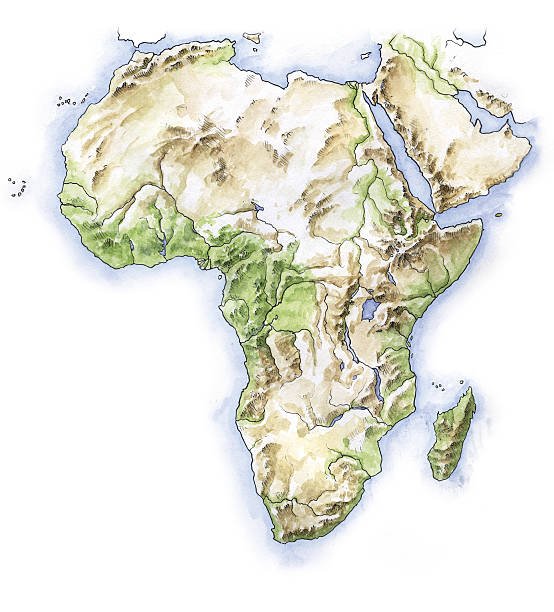
How And When Did Humans Leave Africa: The Epic Journey of Homo Sapiens
Humans, specifically anatomically modern Homo sapiens, left Africa in a series of dispersal waves, with the most significant and successful exodus occurring approximately 60,000 to 70,000 years ago. This major migration event, often referred to as the "Out of Africa" movement, saw our ancestors spread across the globe, fundamentally shaping human genetic diversity and the peopling of every continent. While there is compelling evidence for earlier, smaller-scale attempts at migration, it was this later wave that established enduring populations beyond the African continent.
Understanding how and when humans left Africa is one of the most compelling narratives in human history, pieced together through a rich tapestry of genetic, archaeological, and fossil evidence. This incredible journey highlights the resilience, adaptability, and exploratory spirit inherent in our species.
The "Out of Africa" Theory: A Fundamental Model of Human Dispersal
The prevailing scientific consensus on human origins and dispersal is the "Recent African Origin" model, popularly known as the "Out of Africa" theory. This model posits that all living humans descend from a population of Homo sapiens that originated in Africa roughly 200,000 to 300,000 years ago. After evolving in Africa, a relatively small group of these modern humans migrated out, eventually replacing earlier hominin populations like Neanderthals in Eurasia and Homo erectus in Asia, without significant interbreeding (though later genetic studies revealed some limited interbreeding).
This theory is strongly supported by genetic evidence, particularly studies of mitochondrial DNA (mtDNA) and Y-chromosome DNA. These genetic markers show the greatest diversity in African populations, indicating Africa as the ancestral homeland, and a pattern of decreasing diversity further away from Africa, consistent with a series of founder effects during migration. Additionally, a "genetic bottleneck" is evident in the non-African human population, suggesting that all non-Africans today descend from a relatively small founder group that left Africa.
Early Forays: Initial Dispersals and Their Limitations
Before the main, successful wave of migration, there were several earlier attempts by Homo sapiens to venture out of Africa, demonstrating a long history of human mobility:
- Misliya Cave, Israel (~180,000 years ago): Fossil evidence from this site suggests an earlier dispersal of Homo sapiens into the Levant. This predates many earlier estimates for the "Out of Africa" event, indicating that our ancestors were exploring beyond Africa much earlier than previously thought.
- Skhul and Qafzeh Caves, Israel (~90,000 - 120,000 years ago): Remains of modern humans in these caves also show an early presence in the Middle East. However, archaeological and genetic data suggest these populations did not expand widely into Eurasia and may have eventually died out or retreated back to Africa, possibly due to changing climatic conditions or competition with Neanderthals.
- Jebel Faya, UAE (~125,000 years ago): Stone tools found here suggest a possible early human presence on the Arabian Peninsula, indicating another route for early dispersal across the Red Sea during a period of lower sea levels. The presence of Homo sapiens fossils has yet to be confirmed at this site.
These early movements highlight that the journey out of Africa was not a single event but a complex process, with some groups testing the waters long before a sustained global expansion occurred. These early dispersals, however, did not lead to the widespread colonization that characterized the later main migration wave.
The Main Event: The Successful Dispersal ~60,000-70,000 Years Ago
The most crucial phase of human migration out of Africa began approximately 60,000 to 70,000 years ago. This period coincided with a favorable climatic window during the late Pleistocene epoch, where lower sea levels exposed coastal land bridges and made travel across certain waterways, like the Bab-el-Mandeb Strait at the southern end of the Red Sea, more feasible. This facilitated the so-called "Southern Route" of migration.
Factors Enabling the Major Migration:
- Climatic Conditions: Periods of increased rainfall in previously arid regions created "green corridors" through areas like the Arabian Desert, making overland travel possible. Lower global sea levels also exposed continental shelves, aiding coastal migration.
- Technological and Cognitive Advancements: By this time, Homo sapiens had developed more sophisticated tools, advanced hunting techniques, and a greater capacity for symbolic thought (evidenced by early art and personal adornments). These innovations likely provided a significant adaptive advantage, enabling them to exploit diverse environments and overcome new challenges.
- Population Pressure: Growing populations within Africa may have also provided an impetus for groups to seek new territories and resources.
The primary route taken by these successful migrants is believed to have been the Southern Coastal Route. From the Horn of Africa, small groups of humans crossed the narrow Bab-el-Mandeb Strait and moved along the coastlines of the Arabian Peninsula, then across the southern fringes of Asia (modern-day India and Southeast Asia). This route provided abundant marine and coastal resources, making the journey less challenging than inland travel through harsh desert environments.
Routes and Expansion Across Continents
Once out of Africa, Homo sapiens rapidly diversified and spread across the globe:
1. Asia and Australia
Following the Southern Route, humans quickly populated the coastal areas of the Arabian Peninsula, Iran, India, and Southeast Asia. The most astonishing early feat of maritime travel was the colonization of Sahul (the supercontinent comprising modern-day Australia and New Guinea). Archaeological evidence indicates humans reached Australia by at least 50,000 to 65,000 years ago, requiring significant open-sea crossings that demonstrate advanced navigation and boat-building skills. During their expansion across Asia, these early modern humans encountered and interbred with other hominin species, including Neanderthals and Denisovans, leaving small genetic traces in non-African populations today.
2. Europe
The colonization of Europe occurred later, around 45,000 years ago, primarily from the Middle East. This involved navigating colder climates and established Neanderthal populations. Modern humans, often associated with the Aurignacian culture (known for its sophisticated tools, art, and personal ornaments), gradually outcompeted or assimilated Neanderthals, who eventually became extinct around 40,000 years ago. The peopling of Europe was a complex process, involving multiple waves and cultural innovations to adapt to diverse environments.
3. The Americas
The final major continent to be settled was the Americas. It is widely accepted that humans crossed from Asia into North America via the Beringia land bridge, which connected Siberia and Alaska during periods of lowered sea levels. The exact timing and number of migration waves are still debated, but evidence suggests the first successful migrations occurred between 15,000 and 20,000 years ago. Some theories also propose an earlier "coastal migration hypothesis," where people traveled along the Pacific coast of North America in boats, predating or coinciding with the opening of an ice-free corridor in the interior.
Evidence Supporting the Human Migration Story
The narrative of human migration out of Africa is a robust scientific consensus, built upon converging lines of evidence:
Genetic Evidence:
- Mitochondrial DNA (mtDNA) and Y-chromosome studies: These maternally and paternally inherited genetic markers allow scientists to trace human lineages back to common African ancestors ("Mitochondrial Eve" and "Y-chromosomal Adam").
- Haplogroup Distribution: The geographical distribution of specific haplogroups (groups of genes that share a common ancestor) provides clear genetic routes mirroring the hypothesized migration paths. Genetic diversity consistently decreases with increasing distance from Africa.
- Ancient DNA: Analysis of DNA from ancient human remains further refines our understanding of migration patterns, population admixtures, and interactions with other hominins.
Archaeological Evidence:
- Stone Tools and Artifacts: The discovery of characteristic stone tools, such as the blade technologies and microliths associated with modern humans, at various sites across Eurasia helps track their presence and movement.
- Art and Symbolic Behavior: The appearance of cave paintings, portable art, and personal adornments (beads, pendants) provides insights into the cognitive and cultural sophistication of early Homo sapiens.
- Settlement Sites and Middens: Excavations of ancient living sites and refuse heaps (middens) reveal dietary habits, technologies, and environmental adaptations of migrating populations.
Fossil Evidence:
- Human Remains: The discovery and dating of anatomically modern human fossils outside Africa, such as those in the Levant, Asia, and Europe, provide direct evidence of their dispersal at specific times.
- Dating Methods: Advanced dating techniques, including radiocarbon dating, luminescence dating (OSL, TL), and uranium-series dating, accurately determine the age of archaeological sites and fossils, providing a chronological framework for the migrations.
Factors Influencing Human Dispersal
The success of human migration was not solely due to advanced biology but a complex interplay of environmental, cultural, and demographic factors:
| Factor | Impact on Migration |
|---|---|
| Climate Cycles | Alternating glacial (cold, dry) and interglacial (warm, wet) periods influenced sea levels, vegetation, and resource availability, opening or closing migration corridors. |
| Resource Tracking | Humans followed animal herds and exploited new food sources, particularly rich coastal and riverine environments. |
| Technological Innovation | Development of new tools (e.g., spear throwers, bows and arrows), clothing, and shelter allowed adaptation to diverse and challenging environments. |
| Social Organization | Complex social structures, cooperation, and knowledge sharing facilitated survival and expansion into new territories. |
| Population Growth | Increasing populations within Africa likely created pressure for groups to seek new territories and reduce competition. |
The Impact of Human Migration on Global Populations
The "Out of Africa" migrations were not just about geographical movement; they had profound evolutionary and demographic consequences:
- Global Colonization: By approximately 12,000 years ago, Homo sapiens had colonized nearly every habitable landmass on Earth, demonstrating unparalleled adaptability.
- Genetic Diversity: The successive founder effects during migration led to a hierarchical pattern of genetic diversity, with African populations retaining the most variation, and populations further from Africa showing reduced diversity.
- Interaction and Extinction of Other Hominins: The arrival of Homo sapiens in new territories led to interactions with existing hominin populations like Neanderthals and Denisovans, resulting in periods of coexistence, limited interbreeding, and ultimately, the extinction of these other groups.
- Cultural Evolution: Adaptation to diverse environments spurred immense cultural innovation, leading to a vast array of distinct human societies and technologies.
Ongoing Research and Future Discoveries
The story of how and when humans left Africa is continuously being refined by new discoveries. Advances in archaeogenetics, high-resolution dating techniques, and the discovery of new archaeological sites are constantly challenging and enriching our understanding. Debates continue regarding the precise timing of early dispersals, the exact routes taken, the extent of interbreeding with other hominins, and the specific environmental and cultural triggers for migration.
For example, recent discoveries of very old Homo sapiens remains in places like Greece (Apidima Cave) are prompting re-evaluations of early human presence in Europe, although their genetic legacy remains unclear. Such findings underscore the dynamic nature of paleoanthropological research and the ongoing quest to fully map humanity's ancient journeys.
Conclusion: A Journey of Discovery and Resilience
The journey of Homo sapiens leaving Africa stands as a testament to our species' extraordinary capacity for exploration, adaptation, and survival. While early, smaller dispersals occurred, the pivotal moment for global colonization was the major migration wave approximately 60,000 to 70,000 years ago, primarily via the Southern Route. This epic movement, driven by a combination of environmental opportunities, technological advancements, and perhaps demographic pressures, laid the foundation for all modern human populations worldwide.
The wealth of genetic, archaeological, and fossil evidence consistently points to Africa as the cradle of humanity and provides an increasingly detailed picture of the complex paths our ancestors took to populate every corner of the planet. It is a story not just of movement, but of incredible resilience, innovation, and the enduring human spirit of discovery.
Enjoyed this read?
Share it with your friends and colleagues.