Which Country In Africa Speak Creole

BSC Insights Admin
October 01, 2026
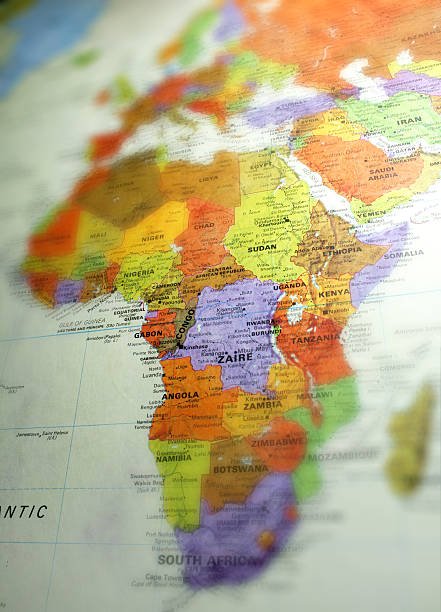
Cape Verde is a primary country in Africa speak Creole because the national language, known as Kriolu, serves as the daily medium of communication for almost its entire population. These unique languages emerged from the historical contact between European settlers and African populations, blending diverse vocabularies with simplified grammatical structures. Identifying the various regions where these dialects flourish offers a fascinating insight into the cultural and linguistic evolution of the African continent.
Exploring the linguistic map of the region reveals that while many nations use European languages for official business, the heart of social life often beats in a Creole tongue. This article examines the specific island nations and mainland territories where these vibrant and resilient languages have become central to national identity.
These are the Countries In Africa That Speak Creole
While hundreds of indigenous languages exist across the continent, several countries in Africa that speak Creole have elevated these dialects to the status of national or official languages. This linguistic phenomenon is most common in island nations and coastal regions that were historically part of major maritime trade routes and plantation economies. In these locations, Creole is not just a simplified dialect but a sophisticated language with its own literature, music, and academic study. The following list identifies the nations where Creole is a dominant force in daily life and explains the unique origins and characteristics of each specific variety.
1. Cape Verde
Cape Verde is the quintessential African country which speak Creole as its mother tongue, with the Portuguese-based Kriolu being the heart of the nation’s cultural identity. This language formed during the 15th century when Portuguese settlers and enslaved West Africans met on the previously uninhabited islands, creating one of the oldest Creoles in existence. While Portuguese remains the official language for government and education, Kriolu is used in nearly all informal and creative settings, from family dinners to the soulful Morna music made famous by Cesária Évora. The language is divided into several dialects based on the different islands, with the Badiu dialect of Santiago and the São Vicente variety being the most prominent. Linguists and local activists have spent decades working to formalize the orthography of Kriolu to ensure it can be used more effectively in schools and literature. For any visitor, hearing the melodic flow of Kriolu provides an immediate connection to the history and resilient spirit of the Cape Verdean people.
2. Seychelles
The Seychelles stands out as a unique country in Africa speak Creole because it is one of the few nations where a Creole language has official status alongside English and French. Known as Seychellois Creole or Seselwa, this French-based language is spoken by nearly 95 percent of the population as their first language. It originated from the contact between French settlers and enslaved people from Africa and Madagascar during the late 18th century. Unlike some other Creoles that are viewed as informal, Seselwa is used in the national parliament, in news broadcasts, and as a medium of instruction in early primary education. The government established the Creole Institute of Seychelles to preserve and promote the language, ensuring it evolves to meet modern technical and scientific needs. The language is celebrated every year during the Festival Kreol, a massive cultural event that showcases the dance, cuisine, and literature of the Seychellois people. In many ways, the success of Seselwa serves as a global model for the institutionalization of Creole languages.
3. Mauritius
Mauritius is another prominent African country which speak Creole as the primary lingua franca, with Mauritian Creole or Morisyen being understood by nearly everyone on the island. While English is the official language of the parliament and French is widely used in the media, Morisyen is the true language of the street and the home. This French-based Creole has absorbed significant vocabulary from Malagasy, various Indian languages like Bhojpuri, and even English, reflecting the island's diverse migration history. It is a highly expressive language that serves as the medium for the Sega, a traditional dance and music style that is recognized by UNESCO as part of the intangible cultural heritage of humanity. In recent years, the Mauritian government has introduced Creole into the school curriculum, allowing children to learn in their mother tongue for the first time. The language acts as a vital bridge between the different ethnic groups on the island, providing a common identity that transcends religious and cultural differences. Most travelers find that learning a few phrases of Morisyen, such as "Ki manière?" for "How are you?", opens doors to the legendary hospitality of the Mauritian people.
4. Guinea-Bissau
Guinea-Bissau is an African country which speak Creole as a vital tool for national unity, with Guinea-Bissau Creole or Kiriol serving as the primary language of communication. Although Portuguese is the official language, it is spoken fluently by only a small percentage of the population, whereas Kiriol is used by over 90 percent of people as either a first or second language. This Portuguese-based Creole originated from the trade outposts along the coast and eventually spread inland, becoming a symbol of resistance against colonial rule during the liberation struggle. Kiriol is used extensively in the national media, in music, and in the vibrant street life of the capital city, Bissau. It is closely related to the Creole of Cape Verde, and speakers of the two languages can generally understand each other with ease. The language continues to expand as urbanization brings people from different ethnic groups together, forcing them to rely on Kiriol as their shared tongue. For the citizens of Guinea-Bissau, Kiriol is not just a language but a political and social glue that holds the diverse nation together.
5. Sierra Leone
Sierra Leone is a country in Africa speak Creole through its dominant language, Krio, which is an English-based Creole spoken by nearly the entire population. Krio was originally the language of the Krio people, descendants of freed enslaved people from the Americas and the Caribbean who settled in Freetown in the late 18th and early 19th centuries. Today, it has evolved into a national lingua franca that is essential for trade, politics, and social interaction across the country's many ethnic groups. While English remains the language of the classroom and the courtroom, Krio is the language of the soul, used in everything from religious sermons to popular hip-hop music. The language is incredibly rich, blending English vocabulary with the grammatical structures and idioms of West African languages like Yoruba and Temne. Krio is known for its humor and its ability to convey complex social meanings through proverbs and metaphors. For anyone visiting Sierra Leone, the sound of Krio in the bustling markets of Freetown is the defining auditory experience of the nation.
6. Sao Tome and Principe
Sao Tome and Principe is a country in Africa speak Creole with a fascinating linguistic landscape featuring several distinct Portuguese-based Creoles. The most widely spoken is Forro, which is used by the majority of the population on the island of Sao Tome and reflects the early plantation history of the islands. On the island of Principe, a smaller and more endangered Creole called Lunguyie is spoken, while the Angolar Creole is used by a specific community believed to be descendants of survivors from a shipwreck of enslaved people. These languages are essential markers of the different historical migrations and social groups that have shaped the archipelago over the centuries. While Portuguese is the official language and is widely understood, the Creoles are used in the home and for traditional cultural expressions. The isolation of the islands has allowed these languages to preserve many archaic Portuguese words that have since disappeared from the modern language. The government has made efforts to document and protect these Creoles as vital parts of the national heritage, recognizing their importance in defining the unique identity of the islands.
7. Equatorial Guinea
Equatorial Guinea is a unique African country which speak Creole due to its history of various colonial influences and maritime connections. On the island of Annobon, the population speaks Annobonese Creole, a Portuguese-based language that has survived despite the country’s official languages being Spanish and French. This language is a testament to the island's early history as a Portuguese territory before it was traded to Spain. Additionally, in the capital city of Malabo and along the coast, a form of English-based Creole known as Pichinglis is used as a language of trade and informal communication. Pichinglis was introduced by workers and traders from neighboring West African countries like Nigeria and Sierra Leone during the colonial era. While the government promotes Spanish as the language of the state, these Creoles remain the primary way that people in specific regions connect with their neighbors and their history. The linguistic diversity of Equatorial Guinea reflects its position as a crossroads of Atlantic and Central African cultures.
8. Reunion (France)
Reunion is technically an overseas department of France, but geographically it is an African country which speak Creole in every sense, situated in the Indian Ocean near Mauritius. Reunionese Creole is a French-based language that is the mother tongue of nearly the entire island’s population. It is a vibrant and evolving language that reflects the diverse origins of the island’s people, including those of African, Indian, Chinese, and European descent. While French is the language of administration and schooling, Creole is used in the streets, in the home, and in the powerful Maloya music, which was once banned by the colonial authorities but is now a symbol of national pride. Reunionese Creole is distinct from Mauritian or Seychellois Creole, featuring its own unique vocabulary and pronunciation. In recent years, there has been a significant movement to increase the presence of Creole in schools and the media, as the people of Reunion seek to balance their French citizenship with their unique Indian Ocean identity. The language is a central part of the island’s "kréolité," a concept of shared identity that celebrates the mixing of cultures.
9. Nigeria (Naija/Pidgin)
Nigeria is a country in Africa speak Creole in a way that is currently transforming the linguistic landscape of the entire continent through Nigerian Pidgin, often called Naija. While linguists traditionally categorized it as a pidgin, it has now become a Creole for millions of people in cities like Lagos and Warri, who grow up speaking it as their first and only language. Naija is an English-based language that has absorbed words and grammatical features from hundreds of local languages, including Igbo, Yoruba, and Hausa. It is the language of the massive Nollywood film industry and the global Afrobeats music movement, making it one of the most influential languages in Africa today. Although it is not the official language of the state, it is used by the government in public health campaigns and election broadcasts to ensure the message reaches everyone. Naija is a language of wit, creativity, and social commentary, and it is spoken by people across all social classes, from street vendors to university professors. Its growth is a direct reflection of the rapid urbanization and cultural dominance of Nigeria on the international stage.
10. Cameroon
Cameroon is another African country which speak Creole extensively through its variety of English-based Creole, known as Cameroonian Pidgin or Wes Cos. This language is a vital bridge in a country that is divided between French-speaking and English-speaking regions, as it provides a common ground for people of all backgrounds. It is particularly dominant in the northwest and southwest regions, but it is also used as a language of trade in the massive markets of Douala and Yaoundé. Cameroonian Pidgin is used in popular music, in the bustling "benskid" motorcycle taxi ranks, and in the humorous social sketches that are popular on social media. While the government officially recognizes French and English, the Pidgin is the language that most people feel most comfortable using in their daily lives. It is a resilient language that has survived decades of official neglect, proving its utility as a tool for communication in a highly diverse society. For travelers moving between the different regions of Cameroon, a basic understanding of this Creole is essential for navigating the local culture and building rapport with the people.
Reasons Why These Countries Speak Creole in Africa
1. The Legacy of Plantation Economies: Many of the countries in Africa that speak Creole were originally developed as plantation colonies by European powers like France and Portugal. In these settings, enslaved people from various ethnic groups were brought together and forced to communicate in a way that their overseers could not easily understand, while also incorporating the language of the colonizer. Over several generations, these simplified trade languages evolved into full-fledged Creoles with complex grammars and rich vocabularies. This African country which speak Creole history is most evident in island nations like Mauritius and Cape Verde, where the plantation system was the primary driver of social organization. The language became a tool of survival and, eventually, a symbol of a new, mixed identity.
2. The Atlantic and Indian Ocean Slave Trade: The brutal history of the slave trade is the fundamental reason why certain African countries that speak Creole possess these unique languages. As people were captured from different parts of the continent and held in coastal forts or transported to islands, they had to create a new way to speak with one another. These languages were forged in a crucible of trauma and resistance, often serving as a secret code or a way to maintain a sense of community in a hostile environment. The resulting Creoles are a linguistic record of the diverse cultures that were brought together, preserving fragments of languages that might have otherwise been lost. This historical connection to the slave trade gives these languages a deep emotional and political significance for the modern populations.
3. Maritime Trade and Coastal Isolation: Several African countries that speak Creole developed th
Enjoyed this read?
Share it with your friends and colleagues.